
There is a quiet wisdom our bodies have about places. Think of the difference between sitting on a park bench in a gentle, curving alcove versus standing at a wide, windy intersection. One feels settled and calm. The other feels exposed and hurried.
We don’t need a textbook to tell us which one is more relaxing. We just feel it. This innate understanding of how an environment affects us is the very heart of Feng Shui.
For thousands of years, before it was a philosophy of interior design, Feng Shui was a practical art of survival. It was about finding the safest, most nourishing place to build a home—a place protected from harsh winds, with access to clean water, and with a clear view of the surrounding landscape.
This guide is about returning to that origin. We’ll be stepping outside your front door to explore the world your home lives in; the Feng Shui exterior, the environment and landscape that quietly shape the energy around you. It’s not about finding the “perfect” home location but exploring the Feng Shui of your surroundings and developing a deeper awareness of your environment; the streets, land, and structures.
In this pillar guide, I’ve gathered the foundational principles of what is often called “Form School” Feng Shui. This is the oldest branch of the practice, focused entirely on the physical shapes and flows of the natural and man-made world. We will explore:
- The Historical Roots: Understanding how ancient observation shaped these timeless principles.
- The Armchair Formation: A simple, powerful concept for understanding support and protection.
- Land and Slopes: How the ground beneath your home can influence its feeling of stability.
- Streets and Pathways: Viewing roads as modern rivers that guide energy to your door.
- Common Street Layouts: Looking at T-junctions, cul-de-sacs, and curves with a gentle eye.
- Neighbors and Buildings: How the structures around you contribute to the story of your home.
- Natural Elements: The role of trees and water in the landscape.
- Working With Your Space: Simple, practical ways to create a sense of balance and harmony.
My hope is that this guide serves as a friendly mentor, walking with you around your property. It’s an invitation to see your home not as an isolated box, but as a living part of a much larger, interconnected environment.
A Little History: From Survival to Sanctuary
To truly appreciate the ideas of landscape Feng Shui, it helps to travel back in time. Imagine being an ancient farmer in China, thousands of years ago. Your family’s survival depended entirely on the land.
You would need a place to build your home that was safe from the biting winter winds that swept down from the north. You would look for a location with a hill or a mountain behind it to act as a natural shield. This wasn’t superstition; it was practical insulation.
You would also need access to fresh, clean water for drinking and for your crops. A gently meandering stream nearby would be ideal—not a raging river that could flood, and not a stagnant pool that could breed disease. This was about health and sustenance.
Finally, you would want a clear, open view in front of your home. This allowed the gentle sun from the south to warm your home and fields. It also let you see who or what was approaching, giving you a sense of security.
These core observations—seeking protection, finding nourishment, and ensuring a sense of safety—are the bedrock of Form School Feng Shui. The language used to describe these formations evolved over centuries, but the fundamental wisdom remains the same. It’s about finding a place where life can flourish with ease, rather than struggle against the elements.
The Ideal Armchair: Understanding the Four Celestial Animals
These ideas come from what is known as Form School Feng Shui, an approach that focuses on the physical shapes and features of the landscape. One of the most beautiful and intuitive concepts in Form School is the idea of the “armchair formation.” It’s a simple metaphor for that ideal, protected spot our ancestors were searching for.
Imagine sitting in a large, comfortable armchair. You have a high, solid back supporting you. You have two armrests of slightly different heights to lean on. And you have an open space in front of you for your legs and a footstool.
This feeling of being held and supported is what Feng Shui seeks in a landscape. This formation is described using the poetic names of four celestial animals.
The Black Tortoise: Support at Your Back
The back of the armchair is the Black Tortoise. This represents the principle of support, stability, and security. In a natural landscape, this would be a tall mountain or a large hill behind the home.
In a modern suburban or urban setting, the Tortoise could be a taller building behind yours, a dense line of healthy, mature trees, or even a solid, high garden wall. It provides a feeling of being anchored and protected from behind.
Some people find that a home without a strong Tortoise feature can feel a bit exposed or vulnerable, as if there’s nothing “watching its back.”
The Green Dragon: The Left Armrest
As you sit in the chair, the armrest to your left is the Green Dragon. This side is associated with growth, development, and masculine or Yang energy. Ideally, the Dragon is represented by gently rolling hills that are slightly higher than the right side.
In your own neighborhood, the Dragon could be the neighbor’s house to the left (when facing out from your front door), a line of trees, or a gentle rise in the land. A balanced Dragon side is thought by some to support ambition and new opportunities.
The White Tiger: The Right Armrest
The armrest to your right is the White Tiger. This side is associated with protection, stillness, and feminine or Yin energy. The ideal Tiger formation is a bit lower than the Dragon side, creating a sense of balanced enclosure.
The Tiger in your landscape might be the house to your right, a fence, or a small hill. A strong but gentle Tiger is seen as protective. If the Tiger side is much higher or more aggressive than the Dragon side, some people find it can feel a bit overwhelming or restrictive.
The Red Phoenix: The Open Space in Front
Finally, the open space in front of your armchair is the Red Phoenix. This is your view, your footstool. In Feng Shui, this area is called the Ming Tang, or “Bright Hall.”
This is an open, clear space where energy, or Qi, can gather and settle before entering your home. It could be a small, well-tended front lawn, a calm body of water, or simply an unobstructed view.
A cluttered or chaotic space in front of the home can make it feel difficult for good energy and opportunities to arrive. The Phoenix represents your future and your potential, so having a clear, inspiring space here is something many people consider.
The Ground Beneath You: The Shape and Slope of Your Land
Just as important as the surrounding features is the actual piece of land your home rests upon. Its shape and slope can create a subtle but constant influence on the feeling of the property.
Understanding Slopes
Think about how it feels to walk up a hill versus down a hill. One requires effort and builds momentum, while the other can feel like you’re rushing or losing control. The land your home is on has a similar dynamic.
A gentle, gradual slope upwards from the street to your front door is often seen as favorable. It’s like a natural red carpet, guiding energy and opportunity up to your home in a measured way.
Land that slopes down and away from the front door can feel as though resources and energy are rolling away from the home too quickly. A steep drop-off behind the house, where the “Tortoise” support should be, can create a feeling of instability or lack of grounding for some.
If your property has a challenging slope, you don’t need to move. Simple landscaping techniques, like creating terraces or installing a retaining wall, can visually and energetically “level out” the land, creating a greater sense of stability and calm.
The Shape of the Lot
In Feng Shui, shapes that feel complete and balanced, like squares and rectangles, are often preferred for property lots. They are seen as stable, grounding, and easy to work with.
Irregularly shaped lots, such as triangular or L-shaped parcels, are sometimes seen as having “missing” areas. This doesn’t mean they are “bad,” but it can be helpful to be aware of them. For example, a pie-shaped lot that is narrow at the front and wide at the back is often considered more auspicious than one that is wide at the street and narrows towards the back.
The key is not to worry about having a “perfect” shape, but to understand the shape you have. You might consider using landscaping, lighting, or garden features to create a sense of balance and wholeness in any areas that feel incomplete.
Modern Rivers: Feng Shui Street Layouts and the Flow of Energy
In the ancient world, rivers and streams were the primary conduits of Qi. They carried life-giving water and created fertile land. In our modern world, streets, roads, and driveways serve a similar function.
They are the arteries and veins of our neighborhoods, carrying a constant flow of energy in the form of cars, people, and activity. The way this energy approaches your home has a significant impact on its overall feel.
The Quality of Flow
Imagine a gently meandering stream. The water flows slowly, calmly, and peacefully. Now imagine a fire hose. The water is fast, direct, and powerful—even destructive.
The energy flowing along our streets has a similar quality. A quiet, curving street encourages a slow, meandering quality of Qi. A long, straight, busy road encourages Qi that is fast, direct, and potentially overwhelming. This fast-moving energy is sometimes called “Sha Qi” or attacking energy.
Many people find that a steady, gentle flow of energy arriving at your front door, which is considered the “mouth of Qi” for your home, feels most harmonious.
Common Street Layouts and Their Feel
Certain street configurations are given special attention in Feng Shui because of how directly they channel energy toward a property.
The T-Junction (or T-Intersection)
A house located at the top of a “T” is one of the most discussed situations in Feng Shui. The road acts like a long, straight channel, directing all the energy of the traffic directly at the front of the house.
Think of the headlights of cars at night shining directly into your living room. This constant, direct rush of energy can feel unsettling or aggressive. It’s like standing in front of that fire hose.
If your home is on a T-junction, the focus is often on softening and deflecting this direct flow. A curved pathway to the front door, a hedge, a low fence, or a strategically planted tree can all help to break up and slow down the energy before it reaches your home.
The Cul-de-Sac
A cul-de-sac presents a different kind of energy pattern. Some perspectives see the end of a cul-de-sac as a place where energy can become stagnant or trapped, as it has nowhere to go.
However, another view is that a cul-de-sac can be a wonderfully quiet and protected area, where energy pools in a calm, gentle way. The feeling often depends on the specific cul-de-sac. Is it open and bright, or is it cluttered and neglected?
The key is to encourage gentle movement. Keeping the front yard vibrant with healthy plants and good lighting can help keep the energy fresh and circulating.
Curved Roads
A road that gently curves toward your home, as if giving it a hug, is generally seen as very positive. This is called an “inner bow,” and it’s thought to embrace the property with nourishing, supportive energy.
Conversely, a home on the outside of a curve can feel as though energy is being sliced away from it. This is sometimes called a “cutting bow,” like the edge of a blade. The flow of traffic can feel like it’s pulling energy away from the property rather than bringing it toward it.
Again, landscaping can be a wonderful friend here. A well-placed berm, a row of shrubs, or a fence along the property line can create a protective buffer, softening the cutting effect of the curve.
Neighbors, Buildings, and the Bigger Picture
Your home doesn’t exist in a vacuum. The buildings, structures, and general environment around you are all part of your home’s larger energy field.
The Impact of Surrounding Structures
Take a look at the buildings around you. Are they of a similar scale to your own home? A massive apartment building looming over a small single-family house can feel oppressive and cast literal and energetic shadows.
However, a slightly taller building behind your home can serve as a wonderful “Black Tortoise,” providing that sense of support and stability.
You might pay attention to the rooflines and corners of neighboring buildings. In Feng Shui, sharp, angular corners pointed directly at your front door or a primary window are sometimes referred to as “poison arrows” (a dramatic term for a simple concept). It’s the feeling of having a finger pointed at you constantly. It can create a subtle sense of being “on guard.”
The Condition of the Neighborhood
The overall upkeep of your immediate surroundings also plays a role. A neighborhood with well-tended gardens, clean streets, and a sense of community pride contributes to a positive and uplifting flow of Qi.
Conversely, living next to a derelict building or a poorly maintained property can feel draining. It’s not about judgment, but about acknowledging that the energy of our surroundings inevitably affects our own.
The Living Landscape: The Role of Water and Trees
Natural elements like water and trees are powerful components of a landscape, each bringing a unique quality of energy.
Water Features
Water is deeply connected to the flow of abundance and resources in Feng Shui. A clean, gently moving body of water, like a meandering stream or a well-maintained pond, is considered very auspicious by many, especially when located in front of the home.
The quality of the water is important. Stagnant, murky water can represent blocked or unhealthy energy. A fast-moving river too close to the home can feel overwhelming, as if it’s washing resources away.
If you’re considering adding a water feature like a fountain, a common suggestion is to have the water flowing towards the front door, symbolically guiding wealth and opportunity into the home.
Trees and Plants
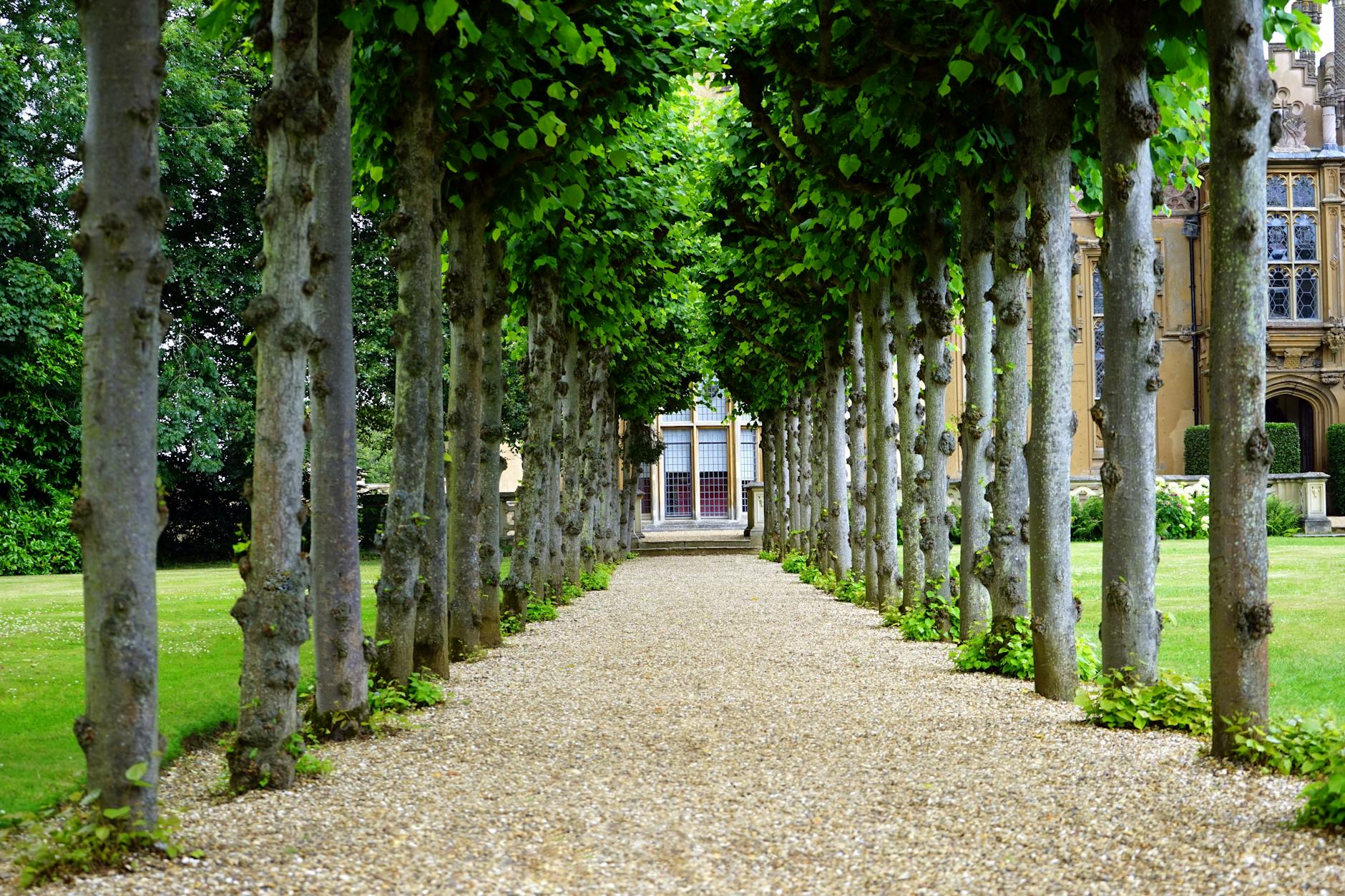
Trees are seen as grounding, protective, and life-affirming. Healthy, vibrant trees can act as excellent buffers, softening harsh winds, blocking unsightly views, and slowing down fast-moving Qi from a busy street.
Their placement matters. A single, large tree planted directly in front of the main door can feel as though it’s blocking the entrance, making it difficult for energy to enter. Trees are generally more supportive when placed to the sides or back of the home.
It’s also important to care for the health of your plants. A dead or dying tree on the property is often seen as a source of draining energy, and many people find it helpful to remove it and replace it with something healthy and new.
Where to Go From Here: Your Next Gentle Step
We’ve covered a lot of ground, from the ancient hills of China to the cul-de-sac at the end of your street. It can feel like a lot to take in, but the purpose of this knowledge is not to create worry or to make you feel that your home is flawed.
The true purpose is to empower you with awareness. It’s an invitation to see your home with new eyes and to understand the subtle forces that shape its character. You’ve now learned the language to describe the feelings you’ve probably already had about certain places.
The most important takeaway is this: Your home is part of a larger ecosystem. Its well-being is connected to the health and harmony of its surroundings.
So, what’s next? I invite you to take a simple, unhurried walk.
- Start inside your front door and look out. What do you see? How does the view feel?
- Walk down your driveway to the street. Turn around and look at your home. How does it sit on the land? Does it feel welcoming?
- Walk around the block. Notice the flow of the streets, the placement of the houses, the health of the gardens.
Just observe. There is no need to judge or fix anything right away. The simple act of paying attention is the most powerful first step.
If you feel drawn to learn more, you might enjoy exploring how this external energy crosses the threshold in our guide to the Feng Shui of the Front Door. Or, if you found yourself fascinated by the role of plants and pathways, our articles on Garden Feng Shui could be a wonderful place to continue your journey.
Above all, remember that these are principles, not rigid rules. Your intuition is your best guide. Your home is your sanctuary, and you have the power to create a space that feels supportive, nourishing, and uniquely yours.
Featured Photo by David McBee on Pexels.
Related Reading
- Cul-de-Sacs and Dead Ends
- T-Intersections: Homes at the End of a Street
- Irregular Lots: Non-Rectangular Properties
- Water on the Property: Ponds, Streams, and Drainage
- The Ecological Origins: Feng Shui as Ancient Observation