
There is a certain feeling that comes from walking up a hill. You feel the ground beneath your feet, the effort in your legs. When you reach the top and turn around, the world unfolds below you. It’s a feeling of accomplishment, of a new perspective.
Living in a home built on a slope can feel a bit like that every day. These homes, whether they are dramatic hillside structures or classic split-levels, have a unique relationship with the land they sit on. They follow the contours of the earth rather than flattening it.
This creates a home with a distinct character and a dynamic flow. Exploring these spaces through the gentle lens of Feng Shui isn’t about finding problems. It’s about noticing the story the land and the architecture are telling together.
The Feeling of a Hillside Home
In Feng Shui, there is a deep appreciation for the natural landscape. The flow of energy, or Qi, is often compared to the flow of water. On a slope, this energy is naturally in motion.
A home built on a hill interacts with this flow in a very direct way. The placement of the house in relation to the slope can shape the feeling of the entire property.
The “Armchair” Position
One of the most classic and sought-after arrangements in landscape Feng Shui is known as the “armchair” position. Imagine your home sitting comfortably in a sturdy chair.
The solid hill rises behind the house, acting like the high back of the chair. This is often associated with a feeling of support, stability, and protection. It’s as if the land itself is watching over the home.
When you stand in your backyard and feel the gentle rise of the earth behind you, it can create a sense of security. The home feels anchored and settled into its environment.
Facing the Downward Slope
Many hillside homes are built to maximize a beautiful view. This often means the front of the house, or a large wall of windows at the back, faces out over a downward slope.
The feeling here is one of expansion and openness. Your gaze is drawn outward and downward, toward the horizon. This can be incredibly inspiring and uplifting.
Some Feng Shui perspectives suggest that a steep drop-off in front of the home might encourage energy to dissipate quickly. The invitation here is to notice your own response. Does the view make you feel free and expansive, or does it feel a little ungrounded, as if you’re on the edge of a cliff?
There is no right or wrong answer. It is simply about how the space makes you feel.
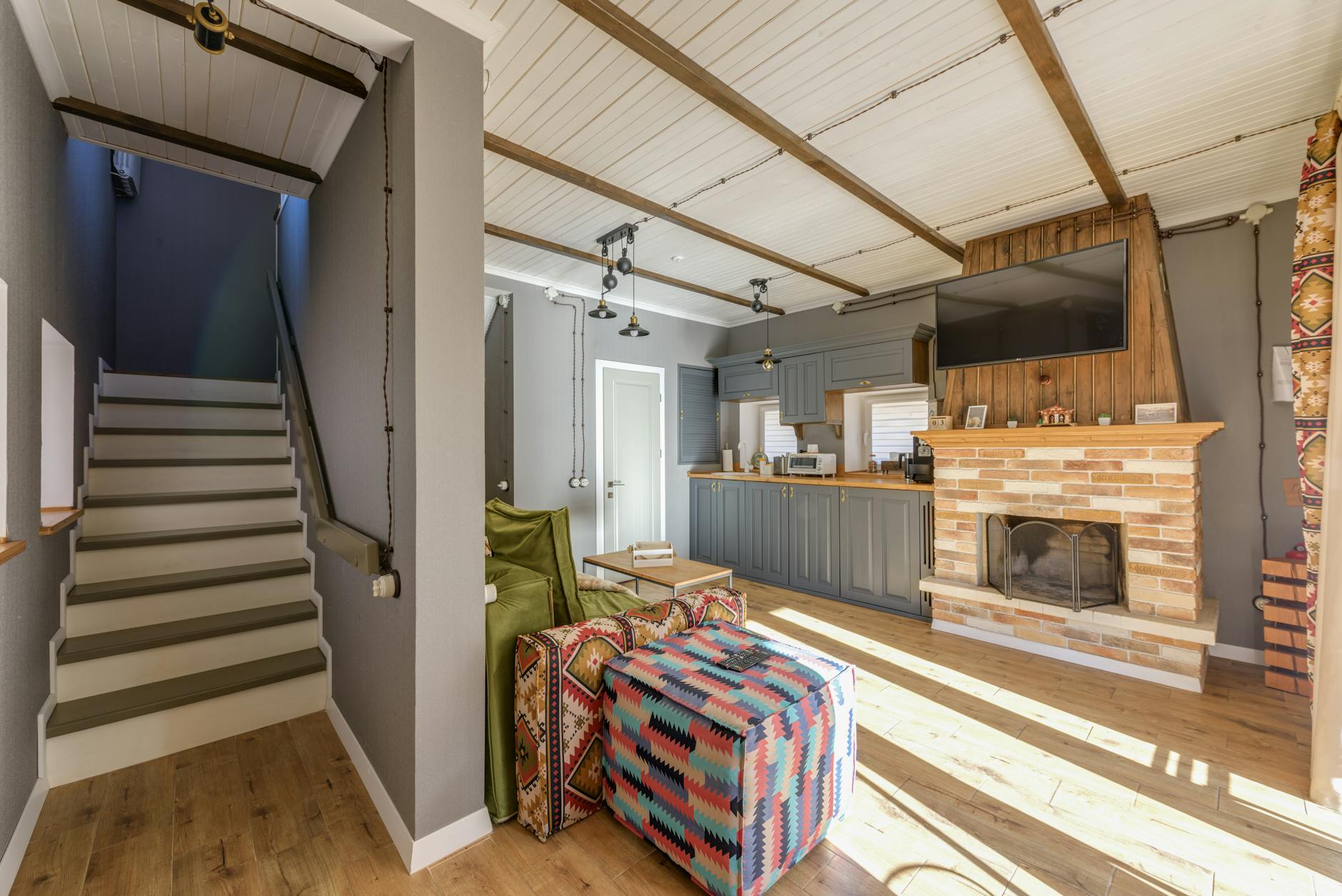
Exploring the Split-Level Design
The split-level home is a clever architectural solution for building on a gentle or moderate slope. Instead of one or two full stories, the home is divided into multiple, staggered levels connected by short flights of stairs.
This design works with the land, creating a unique interior landscape that mirrors the exterior. Moving through a split-level home is a different experience than moving through a traditional two-story house.
The Journey Through Your Home
Life in a split-level involves a series of small journeys. You go up a few steps to the living room, down a few to the family den. This can create a wonderful separation of spaces.
Each level can have its own distinct purpose and feeling. The short staircases act as transitions, marking the shift from a public space to a private one, or from a noisy area to a quiet one.
For some, this separation feels wonderfully organized. For others, it might feel a bit disconnected. Noticing how you feel as you move between the levels is the first step in understanding your home’s unique energy.
Energy on Different Levels
The different elevations within a split-level home can also influence the atmosphere of the rooms.
Lower levels, which are closer to or even partially in the earth, often feel more grounded and quiet. This is a more Yin energy, associated with rest and stillness. These spaces can be wonderful for bedrooms, cozy dens, or meditation rooms.
Upper levels are typically brighter and more exposed to light and air. They have a more active, or Yang, energy. This makes them a natural fit for kitchens, living rooms, and social spaces where conversation and activity happen.
Practical Considerations for Sloped Properties
Feng Shui is, at its heart, the study of how our environment affects us. This includes very practical observations about the land.
Water and Drainage
On a sloped property, water is always moving. It’s important to observe where rainwater flows. Does it run quickly away from the house, or does it pool in certain areas?
Proper drainage can be important for the health of the home and the stability of the land. Guiding water gently around and away from the foundation might contribute to a feeling of safety and security.
Access and Pathways
Think about the journey to your front door. Is the path steep and direct, requiring a lot of effort? Or is it a gentle, meandering path that allows you to arrive calmly?
The approach to your home is the first chapter of its story. A welcoming, well-lit, and stable path can help create a sense of positive energy and might make guests feel at ease before they even step inside.
Landscaping as a Gentle Guide
Your garden and landscaping are powerful tools for working with the energy of a slope. They are not just decorative; they can help shape the feeling of the entire property.
- Terracing: Building retaining walls to create level tiers can slow down the slope. This creates usable garden space and adds a strong sense of stability.
- Curved Paths: A path that curves gently up or down a hill feels less abrupt than a straight one. It encourages a slower, more mindful pace.
- Strong Plantings: Trees, shrubs, and groundcover with deep roots can help hold the soil in place, adding to the physical and energetic stability of the land.
Finding Balance and Harmony
Living on a slope is about finding a beautiful balance between feeling grounded and embracing an expansive view. There are many simple ways to enhance this balance within your home.
Grounding the Space
If your home feels a bit too much like it’s floating, you can introduce elements that add a sense of weight and stability.
Consider using heavier furniture, especially on the lower levels. Natural materials like wood, stone, and ceramic can feel very earthy. Colors found in nature—deep browns, soft grays, and warm terracotta—can also help a space feel more anchored.
Embracing the View
If your home has a stunning view, celebrate it. Large windows let in light and connect you to the world outside. At the same time, notice how you feel in that space at night.
Sometimes, a large, dark window can feel like a void. Having the option of curtains or blinds can provide a sense of coziness and privacy when you want to turn your attention inward.
Connecting the Levels
In a split-level home, creating a sense of visual connection between the floors can make the whole house feel more unified.
This can be done with a consistent color palette that flows from one level to the next. Using similar materials for flooring or trim can also tie the spaces together. Good, warm lighting in the stairwells can also be helpful, making the transitions feel safe and inviting.
A Note on the Main Entrance
The front door is often called the “Mouth of Qi,” as it’s where energy enters the home. On a sloped lot, the entrance needs a little extra attention.
If your door opens onto a steep downward path, creating a level landing or a small porch can be very helpful. This might offer a space for energy to settle and gather before it comes inside. It gives you a moment to pause, find your keys, and transition from the outside world.
If your entrance is on a lower level, below the street, make sure the path down is clear, well-lit, and welcoming. This can help the journey to your door feel easy and uplifting.
Your Personal Observation is Key
These ideas are not rules to be followed. They are simply invitations to look at your home with fresh eyes and a curious heart.
The best way to understand the energy of your hillside or split-level home is to spend time in it and notice how you feel. Walk the property. Sit in different rooms at different times of day.
Ask yourself a few gentle questions:
- How does my body feel when I walk up to my front door?
- When I look out my main window, do I feel expansive or exposed?
- Do the different levels of my home feel like a cohesive whole?
- Does my home feel like it is resting peacefully on the land?
The answers will be unique to you. A home that feels precariously perched to one person might feel wonderfully liberating to another. A split-level that feels disjointed to a guest might feel perfectly zoned for the family that lives there.
Ultimately, your home is yours. It is your sanctuary and your foundation. The goal is to create a space that supports, comforts, and inspires you, in perfect harmony with the beautiful piece of earth it calls home.
Featured Photo by Erik Mclean on Pexels.


