
We don’t just cook in our kitchens. We leave notes on the fridge, unload the weight of the day, and sometimes just stare out the window while the kettle boils. The shape of that room can quietly shape those moments.
Two of the most common kitchen designs are the galley and the open plan. Each has a distinct feeling, a different way of guiding movement and light. Noticing that feeling can help you make the most of the space you have.
A Walk Down the Galley Kitchen
Picture a corridor. Two parallel runs of cabinetry and appliances face each other. There’s an entry at one end, and often an exit at the other. This is the classic galley layout.
It’s efficient. Everything you need is within arm’s reach, a step to the left or right. It feels focused, almost purposeful in its design.
A Feng Shui Perspective on Flow
In Feng Shui, we sometimes talk about chi—a word for the natural energy that moves through a space. Some people like to imagine this energy moving like a gentle meandering river, not a rushing torrent or a stagnant pond.
A galley kitchen creates a very clear path for movement. It has a defined direction. This can be a wonderful thing. It brings a sense of order and containment.
The thing to notice, of course, is whether the flow feels too direct. It might feel like a hallway you pass through, rather than a room you inhabit. The feeling can whisk through without pausing to nourish the space.
Practical Observations for a Galley Kitchen
If your kitchen is a galley, take a moment to stand in it. How does it feel?
- The Pathway: Is the walkway between the counters wide enough for two people to pass comfortably? Or does it create a feeling of congestion? Physical tightness can sometimes translate to a feeling of constriction.
- The Ends: What’s at each end of the galley? A blank wall can feel like a full stop. A window, a piece of art, or a thriving plant can give the eye a pleasant place to rest.
- Light and Air: Galley kitchens can sometimes feel dark if they rely on a single source of light. Layering light—under-cabinet task lighting, overhead ambient light—can lift the entire feeling of the space.
The idea isn’t to change the layout, but to soften its inherent directness. You’re inviting the feeling to linger where you prepare food.
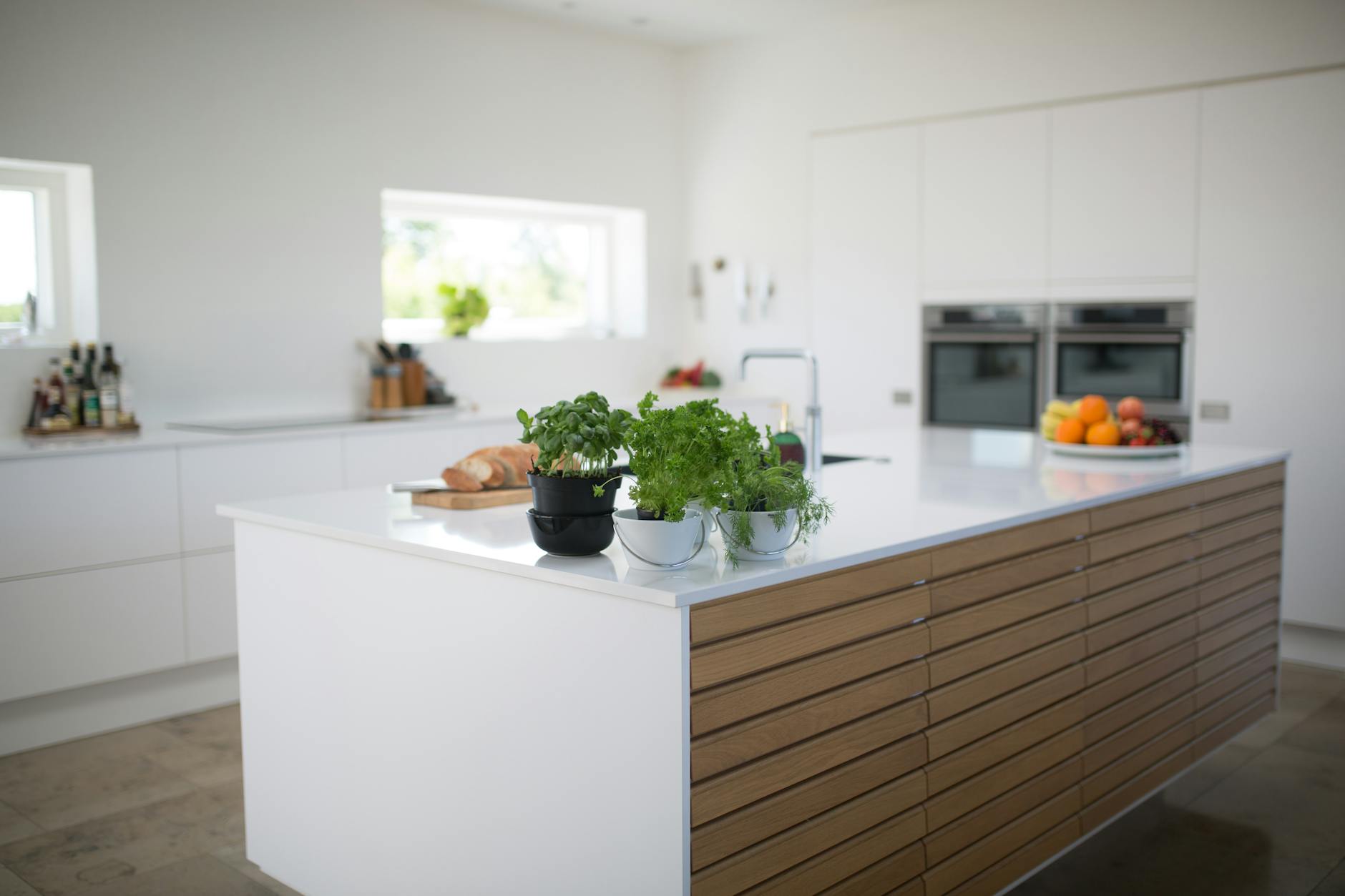
The Embrace of the Open Plan Kitchen
Now, picture a room without walls. The kitchen flows into the dining area, which flows into the living space. This is the open plan.
It’s social. It’s connected. The cook is part of the conversation, not shut away behind a door. It feels expansive and modern.
A Feng Shui Perspective on Boundaries
Here, the conversation shifts from directing flow to noticing gentle boundaries. In an open plan, the energy of cooking, chatting, relaxing, and watching television all mix together.
This can create a vibrant, lively atmosphere. It can also become a bit energetically noisy or feel scattered if one activity overwhelms the others.
The idea is simply to define the kitchen area without building walls. We create a sense of “here is where we cook” within the larger “here is where we live.”
Practical Observations for an Open Kitchen
Sit in your living area and look at your open kitchen. Does it feel like a harmonious part of the whole, or does it dominate?
- The Island as Anchor: A kitchen island often naturally defines the space. It can act as a symbolic boundary and a gathering spot. Keeping its surface relatively clear can prevent it from feeling like a barrier.
- Sightlines: What do you see from the kitchen sink? A pleasant view can transform a chore. If the view is of clutter or a blank wall, a small adjustment—a plant on the windowsill, a beautiful dish rack—can help.
- Containing Cooking Energy: The smells, sounds, and steam of cooking are wonderful, but they can spread. A good extractor fan is practical. Some people also enjoy using a stylish room divider, a rug, or even a change in flooring material to subtly mark the transition.
The work here is about integration, not isolation. You’re allowing the nourishing feeling of the kitchen to benefit the whole space, while keeping its functional bustle in check.
Listening to What Your Kitchen Needs
There is no single perfect layout. There is only the layout you have, and how you live within it.
A galley kitchen might feel too narrow to someone who loves to entertain. To another person, its cozy, ship-like efficiency feels safe and wonderfully contained.
An open plan might feel too exposed to someone who finds peace in the ritual of cooking alone. To another, it is the heart of family life, where homework and dinner prep happen side-by-side.
The Quiet Question of the Sink and Stove
In many Feng Shui traditions, two key elements are the stove (fire) and the sink (water). There’s an old observation that placing them directly opposite or next to each other can be seen as a dynamic of contrasting elements.
In a galley kitchen, they are often facing each other. In an open plan, they might be on the same run.
Rather than a rule, see this as a curiosity about balance. Does the setup feel harmonious to you? If the idea of that elemental dynamic is interesting, a simple wooden cutting board or a ceramic canister between them can act as a gentle, symbolic buffer for your own perception.
It’s about intention, not prescription.
Making It Yours, in Any Layout
A few final thoughts, for whichever kitchen you call your own.
First, what is one thing you genuinely love in your kitchen? A favorite mug, the morning light on the counter, a utensil from a grandparent. Place it where you can see it. This anchors your personal joy in the space.
Second, you might consider the element of life. A bowl of fresh fruit, a pot of herbs, or a simple vase with a single stem adds a quality of growth and vitality that many people find every layout benefits from.
Finally, feel free to move things around. Sometimes we get used to a setup that doesn’t quite work. Try the trash bin on the other side. See if the toaster would feel better under that cabinet. Your own movement and comfort are the best guides.
Your Home is Yours
Galley or open plan, your kitchen is a space of creation. It’s where raw ingredients become a meal. The layout is simply the stage.
By noticing how energy—your energy—moves through it, you can arrange that stage to support your daily life. Not with rules, but with small acts of attention.
Look at your kitchen today not for what it lacks, but for the quiet potential it holds. The simplest shift often starts with a single observation.
Featured Photo by Lee Salem on Pexels.


