
We often talk about rooms in our home. The bedroom. The kitchen. The living room.
But sometimes, the most interesting room doesn’t have four walls.
It has a railing. Or a step down to the grass. It’s a space where the indoors ends and the outdoors begins.
A Space in Between
A balcony or a patio is an in-between place. It’s part of your home, yet not fully inside.
You can feel this shift the moment you step out. The light is different. The air moves in a new way. Sounds come from farther away.
In the language of Feng Shui, this space can be seen as a bridge. It connects the energy of your private interior world with the vast, public energy of everything outside.
It’s less about a specific rule and more about noticing what happens there.
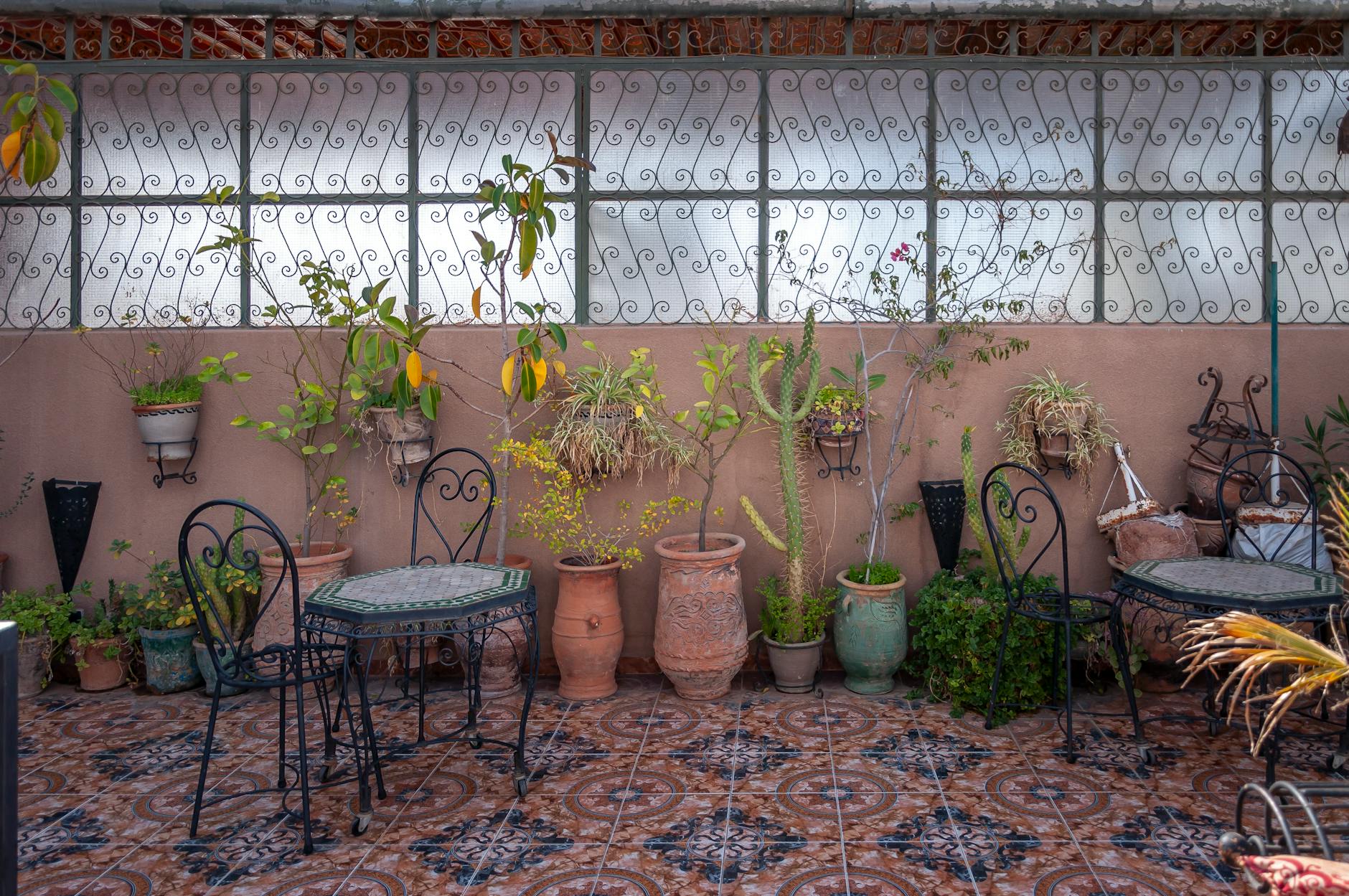
The Feng Shui Perspective: The Transition Zone
Feng Shui, at its heart, is about the movement of life force—what’s often called Qi.
Some traditions observe that Qi often moves in gentle curves. It doesn’t seem to like to rush in or get stuck.
You might think of your balcony door or patio slider as the main gate for this energy. What happens just outside that gate can set the tone for what comes inside.
This outdoor space can act like a welcome mat for the world. It might smooth the transition from the busy street to your quiet couch.
It can also be a place where you literally catch your breath.
The Role of Elements
Because it’s outdoors, the five elements are naturally present here. We can observe them.
- Wood: In potted plants, wooden furniture, or the view of trees.
- Fire: In sunlight, a string of lights, or a safe, contained candle.
- Earth: In clay pots, ceramic tiles, or a small stone.
- Metal: In a wrought-iron chair, a wind chime, or the railing itself.
- Water: In the rain, a small birdbath, or the feeling of humidity.
The balance isn’t something you need to calculate. It’s about noticing what feels good to you.
Maybe after a day at a computer, the solid earth of a terracotta pot feels grounding. On a cool evening, the gentle fire of a lantern feels comforting.
Practical Observations for Your Space
This isn’t a checklist. It’s a series of quiet questions you can ask yourself next time you’re out there.
How Does It Feel to Enter?
What’s the first thing you see when you open the door? Does it feel inviting, or is there a sense of clutter?
Sometimes, we use these spaces as storage for things we don’t know what to do with. A bike, empty planters, a broken chair.
Notice if that feels okay to you. For some, it feels practical. For others, it might make the entrance feel heavy or blocked.
Clearing just a small area by the door can change how the whole space feels.
What Can You See?
Sit down. Look out. What’s in your sightline?
In Feng Shui, a pleasant view is sometimes called “having Ming Tang” or a bright hall. It’s simply about an open, pleasing prospect.
If your view is of a beautiful tree or the sky, that’s a gift. If it’s a brick wall, that’s okay too.
You can work with what you have. A climbing plant on a trellis can soften a wall. A beautiful pot with a flowering plant can give your eyes a gentle place to rest.
The idea is to create a focal point that feels good to you.
How Does the Air Move?
Is your balcony windy and gusty? Or does the air feel still and stale?
Feng Shui often speaks of wanting Qi to meander, not to blast through or stagnate.
A wind chime can help break up a strong, direct wind into a softer sound and movement.
A plant with gentle, moving leaves can show you the air is circulating, even if you can’t feel it.
The Idea of Boundaries and Openness
This is a fascinating dance for a balcony or patio. It is a boundary of your home, but it’s also open to the world.
How do you manage that feeling?
A railing is a clear boundary. Some people like to make it feel secure and cozy with draping plants.
Others prefer to keep it minimal, to emphasize the openness and view.
There’s no right answer. It’s about what makes you feel comfortable enough to actually use the space.
If you feel too exposed, you might not relax. If you feel too closed in, you might forget it’s there.
Simple Ways to Connect with the Space
You don’t need to remodel. Small actions can shift your relationship with this outdoor room.
Add One Living Thing
A single plant in a pot you love changes everything. It brings growth, life, and a daily reason to step outside—even just to water it.
You might consider choosing something that thrives with the light you have. A thriving plant often feels better than a struggling one.
Create a Reason to Be There
Place a chair. Just one. A comfortable spot where you can sit for five minutes with your morning tea or evening thoughts.
If there’s a chair, you are more likely to use the space. A used space often has a different feeling than a forgotten one.
Pay Attention to the Floor
The ground under your feet matters. A clean, swept surface feels different than a gritty, littered one.
An outdoor rug can define the area and make it feel more like an outdoor living room.
When the Space Feels Challenging
Not every balcony has a perfect view. Some face a parking lot. Some are very small. Some are dark.
The principle is the same: work with what you have.
For a view you’d rather not see, you might consider a screen of bamboo or a tall, narrow planter to draw your eye upward.
For a small space, thinking vertical can help. Hanging plants or wall-mounted shelves use air space instead of floor space.
For a dark patio, focusing on texture and reflection might be interesting. Smooth stones, a mirror placed safely and thoughtfully to reflect what light there is, or pale-colored furniture can help it feel brighter.
The goal is not to create a magazine cover. The goal is to make it feel like a space you enjoy for a few moments.
Different Angles, Different Feelings
The direction your balcony faces brings different qualities, not good or bad, just different.
A south-facing space gets strong, warm light. It can feel naturally energizing.
A north-facing one gets cooler, indirect light. It can feel more calm and reflective.
An east-facing patio greets the morning sun—a beautiful place for breakfast.
A west-facing one catches the afternoon and evening light, which can be perfect for watching the day soften.
Notice what your direction offers, and see if you can align your use with it.
Your Personal Outdoor Room
In the end, this space is an extension of you. It’s a breath of fresh air for your home.
It doesn’t need to be perfect. It just needs to be acknowledged.
The simple act of stepping out, feeling the air, and looking at the sky is a Feng Shui practice in itself. It connects you to the larger world.
So maybe this weekend, open that door. Sit for a minute. See what the space is telling you. Maybe it wants a plant. Maybe it just wants you to visit.
Your home is yours, walls or no walls. This little bridge between inside and out is a quiet gift, waiting for you to notice it.
Featured Photo by Michelle Leman on Pexels.


