
For years, I slept badly. I blamed everything you’re supposed to blame: the late-afternoon coffee, the stress from work, the blue light from my phone.
It never once occurred to me to blame my nightstand.
It seemed so innocent, just a simple piece of furniture holding my essentials. But one evening, feeling particularly restless, I looked at it with fresh eyes. And I realized the space right next to my head wasn’t a peaceful sanctuary. It was a cluttered landscape of obligations.
That night, I made a small change. It took less than five minutes. And it completely shifted the way I experience rest.
What My Nightstand Used to Look Like
My bedside table was less of a table and more of a holding station. It was a physical to-do list that I stared at right before closing my eyes.
There was a teetering stack of three books I felt I *was expected to* be reading. My laptop, which I’d often promise myself I’d put away but never did. A tangle of charging cables for my phone and watch.
There was also a glass of water, a tube of hand cream, and usually a stray pen or two. It wasn’t messy in a chaotic way, but it was full. Every square inch had a job.
The Unspoken Message
Without realizing it, this collection of items was sending me a constant, low-level signal. The books whispered, “You haven’t finished us.” The laptop hummed with the energy of unanswered emails.
The phone charger was a reminder of the digital world I was supposed to be disconnecting from. My last view before sleep and my first view upon waking was a collection of tasks, duties, and digital tethers.
It created a subtle but persistent feeling of being behind, of never quite being “done” for the day. It was a space of doing, not a space of being.
The Simple, Five-Minute Adjustment
That evening, I decided to try something different. It wasn’t a grand decluttering project. It was just a small, intentional reset.
First, I took everything off the nightstand. Everything. I placed it all on the floor, out of sight for a moment.
Then, I took a cloth and simply wiped the surface clean. This small act felt surprisingly significant. It was like clearing a slate, creating a blank canvas right where I needed calm the most.
Choosing What to Bring Back
This was the most important part. I didn’t just put things back neatly. I asked a quiet question: What truly supports my rest?
The lamp, of course, came back. Its soft light was essential for winding down.
I chose just one book—the one I was actually reading and enjoying, not the ones I felt obligated to finish. The other two went to a bookshelf across the room.
I added a small, beautiful ceramic dish. It had no purpose other than to be lovely and to hold my wedding ring while I slept. The laptop was closed and placed in my office. The tangle of chargers was moved to a power strip on the other side of the room.
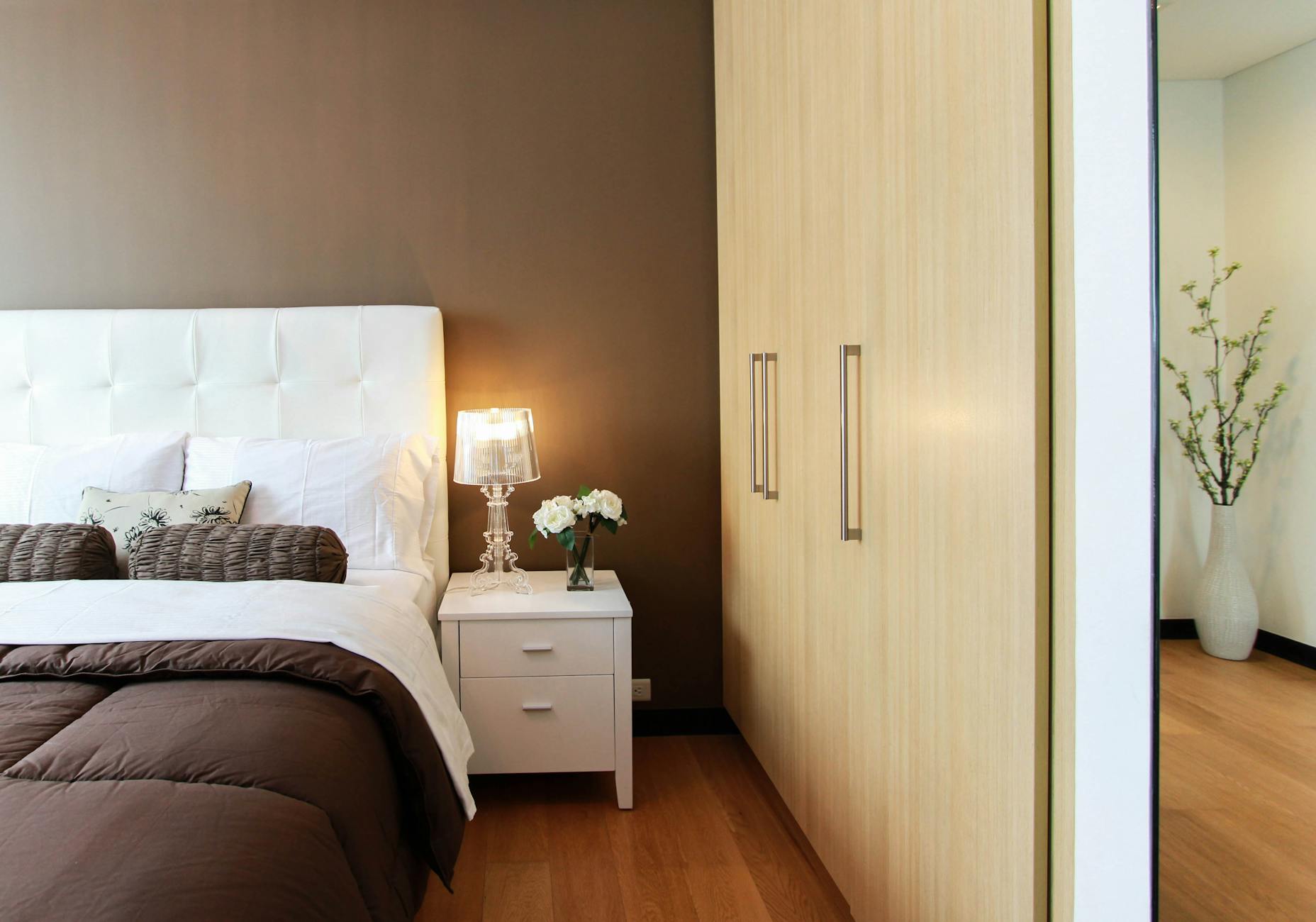
In five minutes, my nightstand went from a cluttered command center to a quiet, breathing space. The change in the room’s atmosphere was immediate.
Why Does This Seem to Matter? A Gentle Look at Qi
In Feng Shui, there’s a concept called Qi (pronounced “chee”). You can think of it as the life force or the invisible energy that flows through a space and connects everything within it.
The idea is that this energy can be flowing and vibrant, or it can become stagnant and blocked. The quality of Qi in our environment is thought to affect how we feel.
The area immediately surrounding your bed is considered especially important. This is where your body is most passive and receptive for many hours each night. It’s the space you “breathe in” while you rest and recharge.
The Energy of Clutter
From a Feng Shui perspective, clutter is often seen as a form of stagnant Qi. It represents postponed decisions and unfinished business. When that stagnant energy is right next to your head, it can make it harder for your own personal energy to settle and restore itself.
By clearing the physical objects, you are, in a sense, clearing the energetic field around you. You’re allowing for a smoother, more peaceful flow of Qi, which can create a more supportive environment for deep sleep.
The Symbolism of What’s Beside You
Feng Shui also pays close attention to symbolism. Every object in your home carries a certain meaning or association.
A work laptop symbolizes work, stress, and deadlines. A pile of bills symbolizes financial pressure. Even a stack of unread “self-improvement” books can symbolize a feeling of not being good enough.
When these symbols are the last thing you see at night, they can seep into your subconscious. Replacing them with objects that symbolize peace, beauty, or calm—like a single flower, a smooth stone, or a favorite photo—can change the entire narrative of your resting space.
It’s Not Just About Energy—It’s About Your Brain
You don’t have to think in terms of Qi to understand why this works. There’s a very practical, psychological reason that a clear bedside table can lead to better sleep.
Our brains are constantly processing our surroundings, even on a subconscious level. Visual clutter in our environment can contribute to mental clutter in our minds.
When your eyes land on a pile of work or a list of tasks, it can trigger a cascade of thoughts related to those things. It keeps your brain in problem-solving mode, which is the opposite of the restful state you need for sleep.
Creating a “Sanctuary Signal”
By curating a calm, simple nightstand, you’re creating a powerful visual cue. You are sending a clear signal to your brain: “This is a place for rest. The work is done. The world can wait.”
This simple act helps establish a boundary between your active day and your restorative night. It’s like closing a door on your worries, both literally and figuratively. Over time, your brain learns to associate this clean space with relaxation, making it easier to switch off and drift to sleep.
Other Small Shifts You Might Explore
The magic of the five-minute shift isn’t really about the nightstand itself. It’s about the power of one small, intentional change. If this idea resonates with you, here are a few other gentle experiments you could try.
- The View from Your Pillow. What is the very first thing your eyes land on when you wake up? Is it a pile of laundry waiting to be folded, or is it a clear path to the door and a window with morning light? Seeing a clear, open space first thing can set a different tone for the day.
- Under the Bed. In some Feng Shui schools, the space under the bed is thought to be important for energy circulation while you sleep. Some people find that storing things under the bed can create a feeling of heaviness. If you need the storage, consider keeping only soft items there, like spare blankets or linens, rather than old shoes or boxes of paperwork.
- The Path to the Door. Can you walk from your bed to your bedroom door easily and safely in the middle of the night? A clear pathway is often associated with a sense of security and a clear mind. It’s a practical shift that can also bring a surprising sense of ease.
- One Clear Corner. You don’t have to tackle the whole room. Try clearing just one corner. Remove everything, wipe it down, and leave it empty or place a single, simple object there, like a plant or a basket. Changing one small zone can lift the feeling of the entire space.
More Than Just Tidying
It’s easy to dismiss this as just another form of cleaning. But the five-minute shift is different. It’s an act of intention.
It’s not about achieving a perfect, magazine-worthy bedroom. It’s about consciously deciding how you want to feel in your most personal space. It’s about asking what supports your well-being and what detracts from it.
That small act of clearing my nightstand was a way of telling myself that my rest was valuable. It was a quiet declaration that I deserved a peaceful transition into sleep, free from the clutter of the day.
Your Bedroom, Your Rules
Perhaps for you, a stack of books by the bed is the ultimate comfort. Maybe seeing your running shoes laid out for the morning is motivating, not stressful. There are no universal rules.
The invitation here is not to copy what I did, but to borrow the practice of looking. Take five minutes to simply observe the space around your bed. Notice the objects. Notice the feelings they bring up.
Your home is yours. The most powerful tool you have is your own awareness. Pay attention to how your space makes you feel. That feeling is the most important guide you will ever have.
Featured Photo by Ron Lach on Pexels.
Related Reading
- Bed Placement: Traditional Perspectives
- Storage: Containing Without Hiding
- Three Living Rooms: Common Furniture Arrangements


