
You pull back the curtain with your morning coffee in hand.
And there, directly across the way, is your neighbor’s kitchen window. They might be making their own coffee, too. For a moment, your gazes meet.
You both offer a quick, polite smile before looking away. It’s a tiny, ordinary moment of modern living.
That Feeling of Being Seen
It’s not about anyone doing anything wrong. It’s not about suspicion or unfriendliness.
It’s simply that subtle feeling. The awareness that your private, inward space has a direct visual line to another’s.
In the close quarters of neighborhoods and apartment buildings, these sight lines are inevitable. They are a design fact.
Feng Shui has a quiet interest in this phenomenon. It looks at how these visual connections—or the lack of them—shape the feeling of a home.
More Than Privacy Fences
At its heart, this is about the flow of qi, or life energy.
The idea is that energy, like light and view, travels in straight lines. When your front door looks directly into another’s, or your bedroom window stares squarely into a neighbor’s living room, that energy has a very direct, unimpeded path.
Some traditions call this an “arrow” of energy.
But let’s soften that term. It’s not about attack or harm. Think of it more like a constant, focused beam of attention. It can make a space feel less restful, less like a true retreat.
Your home is your sanctuary. It’s where you unwind, be yourself, and recharge. A strong, direct sight line can subtly work against that feeling of seclusion.
The Bedroom Window
This is often where people feel it most.
The bedroom is for rest and intimacy. It’s the most personal room. A direct view from another home into this space can sometimes create a low-level sense of exposure.
You might not even be conscious of it. You might just feel you never quite relax fully.
It’s not about your neighbors watching. It’s about the potential for it. It’s about the architectural layout that leaves the room feeling open in a way that doesn’t serve sleep.
The Front Door Alignment
Here’s another common scenario. Two front doors directly facing each other across a hall or a narrow street.
In Feng Shui, the front door is called the “Mouth of Qi.” It’s the main point where energy enters your home.
When two “mouths” face off, the idea is that the entering energies can feel competitive or rushed. It can create a subtle feeling of friction before you even step inside.
Again, this isn’t about your neighbor as a person. It’s about the design dynamic.
A Gentle Guide to Awareness
So, what can you do? The goal is not to live in a fortress or to view your neighbors as a problem.
The goal is simply to cultivate a feeling of comfortable seclusion inside your own walls. It’s about managing the flow of attention, both given and received.
Here are some simple angles to consider. These are observations, not prescriptions.
Create a Soft Buffer
You might not need a tall fence. Sometimes, a gentle, living barrier is enough to break the direct line.
A tall potted plant placed inside, near the window, can gracefully filter the view. A climbing vine on a trellis on a balcony creates a lovely, leafy screen.
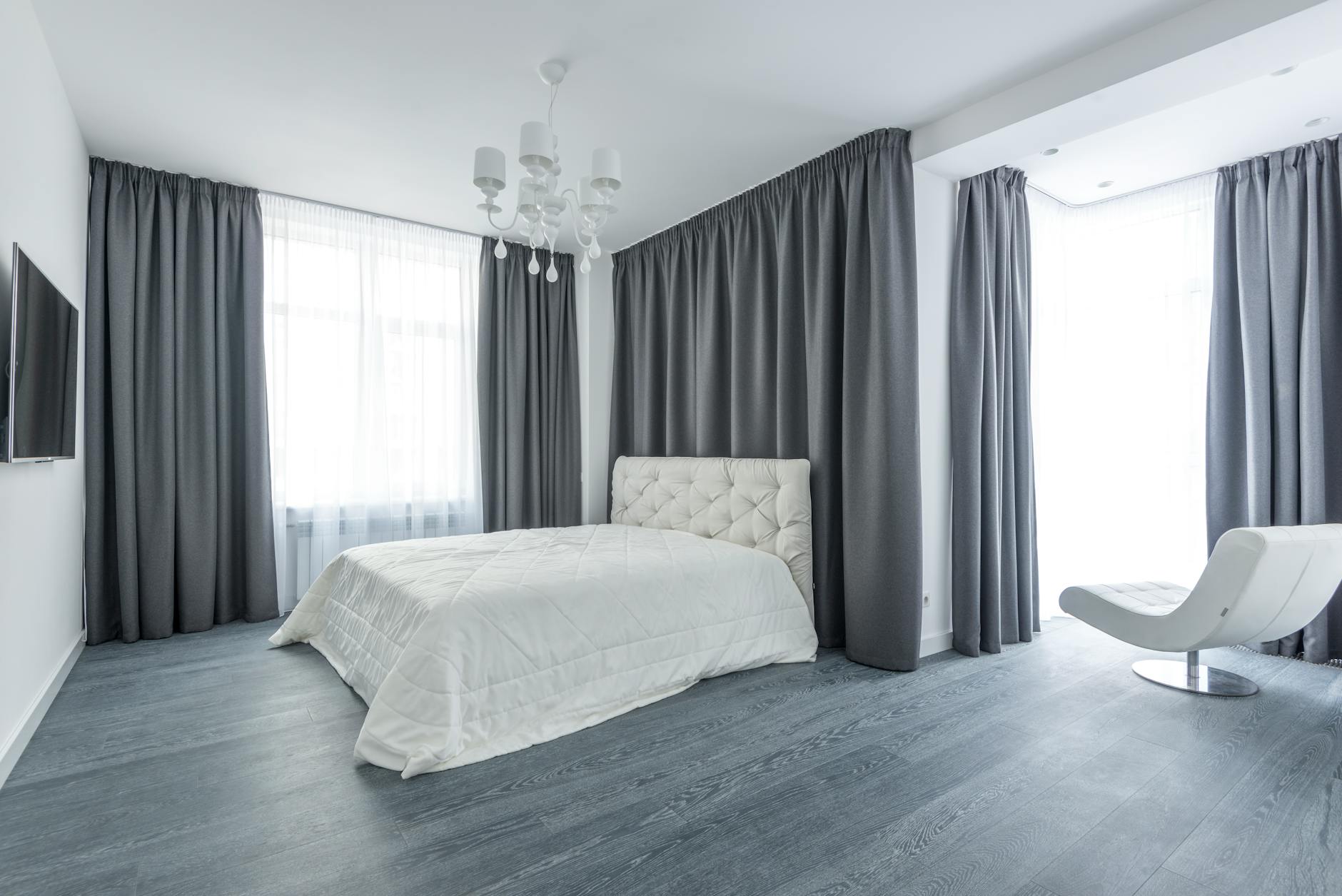
Sheer curtains are a wonderful tool. They let in light but diffuse the hard outline of the opposing building, softening the sight line.
Window film that provides privacy while still allowing light is another modern solution. It turns a clear “arrow” into a soft glow.
Redirect the Focus
Sometimes, you can’t block the view. So, you might redirect your own attention.
If your sitting area faces the neighbor’s wall, you could try turning the chairs slightly. Angle them toward a pleasant internal focus, like a bookshelf or a piece of art.
Using an interesting interior object—a floor lamp, a decorative screen, a large vase—can break the direct visual path from your favorite chair to their window.
The idea is to create a visual journey inside your room that doesn’t end abruptly at the glass of another home.
Consider the Door
For directly aligned front doors, a simple doormat can act as a symbolic pause.
Inside, a small table or a console with a welcoming item—a bowl, a plant—just inside the door might help the energy turn and settle, rather than rushing straight through.
A curtain or a bead strand in the entryway, if space allows, creates a physical and visual buffer.
These are tiny adjustments. They can feel like saying, “Welcome, but let’s slow down here first.”
The Other Side of the Coin
It’s important to hold this all lightly. Sight lines are not inherently bad.
In some cultures and designs, visibility between homes fosters a sense of community and safety. Knowing your neighbors can be a great comfort.
A view into a beautiful, distant landscape is a prized sight line. The key is the quality and intention of what you’re seeing.
This practice is about conscious choice. It’s about asking: Does this view support how I want to feel in this room?
If the answer is no, you might consider a gentle change. If the answer is yes, or it doesn’t bother you, then there is absolutely nothing to fix.
When Connection is the Goal
Perhaps you have a lovely rapport with the neighbor across the yard. Your sight line might be a thread of connection, a way to share a wave.
In that case, the energy feels friendly and open. The Feng Shui principle is the same—energy flows along that line—but the feeling it carries is positive because of the relationship.
This shows how fluid this all is. The same physical layout can feel very different based on human connection and personal perception.
Your Home, Your Feeling
Feng Shui, at its best, is not a set of rigid rules about sight lines. It’s a language for noticing how your space makes you feel.
That feeling when you catch a neighbor’s eye? It’s a data point. It tells you something about the boundaries of your sanctuary.
The solutions are almost always simple, soft, and kind. A plant. A curtain. A slight shift in furniture.
You are not building a wall against the world. You are simply curating the atmosphere within your own walls. You are choosing what to let in, and how.
So, tomorrow with your coffee, just notice. Where does your eye naturally go when you look out?
Does the view feel open and expansive, or does it feel like a direct conduit to another’s private life?
There’s no right or wrong answer. There’s only your answer. And from that place of quiet awareness, you can choose what, if anything, to adjust.
Your home is yours. Its comfort is the only rule that matters.
Featured Photo by Kadir Bozdağ on Pexels.


