
Most houses have one room that’s not quite a room at all.
It sits above everything else, quiet and separate. It might have slanted ceilings and a pull-down ladder. It’s the place where old suitcases go to rest, where holiday decorations live eleven months of the year.
This is your attic.
For some, it’s a treasure trove of memories, packed away in boxes. For others, it’s an untapped possibility, a future room waiting to be discovered.
The question of what your attic could be—storage or living space—isn’t just about square footage. It feels deeper than that.
The Language of an Attic
Every part of our home speaks to us in a way. The kitchen hums with activity. The bedroom whispers of rest.
What does an attic say?
In Feng Shui, we look at the purpose and flow of a space. We notice how it feels to be there. Qi, or life energy, is a simple concept. It just likes to move.
It likes clear pathways and intention. It thrives where there’s light and air.
An attic, by its very design, is often cut off from the main flow of the house. Its energy can become very still. Or, if it’s packed to the rafters, it can feel stuck.
How you use this space can change that conversation.
When the Attic is for Storage
Let’s be clear. There is absolutely nothing wrong with using your attic for storage.
Homes need practical spaces. The key is in *how* we store things.
Think of your attic as the memory center of your home. It holds the physical pieces of your past. That’s a beautiful function.
But memories can be heavy. They can also be joyful.
The goal is to store with awareness. To choose what deserves this special, separate space.
Storage with Intention
An attic filled with boxes you haven’t opened in a decade tells a story of holding on. It’s not a story of right or wrong. It’s just a feeling.
It might feel like a weight on the top of your house.
Some people find that going through their attic, even once a year, helps. You don’t have to get rid of everything. You might simply decide what you’re keeping, and why.
Is that box of college textbooks a happy memory, or a dusty obligation?
Labeling boxes clearly can be helpful. Using sturdy shelving to keep things off the floor, if you can, might create a different feeling. This isn’t about perfection. It’s about creating a sense of order in a place that’s out of sight.
A clean, organized storage attic can feel very different from a chaotic, overflowing one.
The energy up there might feel more calm. More cared for. Less forgotten.
When the Attic Becomes a Room
Then there’s the other path. The transformation.
Turning an attic into a living space is a powerful act. You’re bringing light, air, and daily life to the highest point in your home.
In some schools of Feng Shui, the upper floors are sometimes associated with future possibilities and expansion. They’re about what’s ahead.
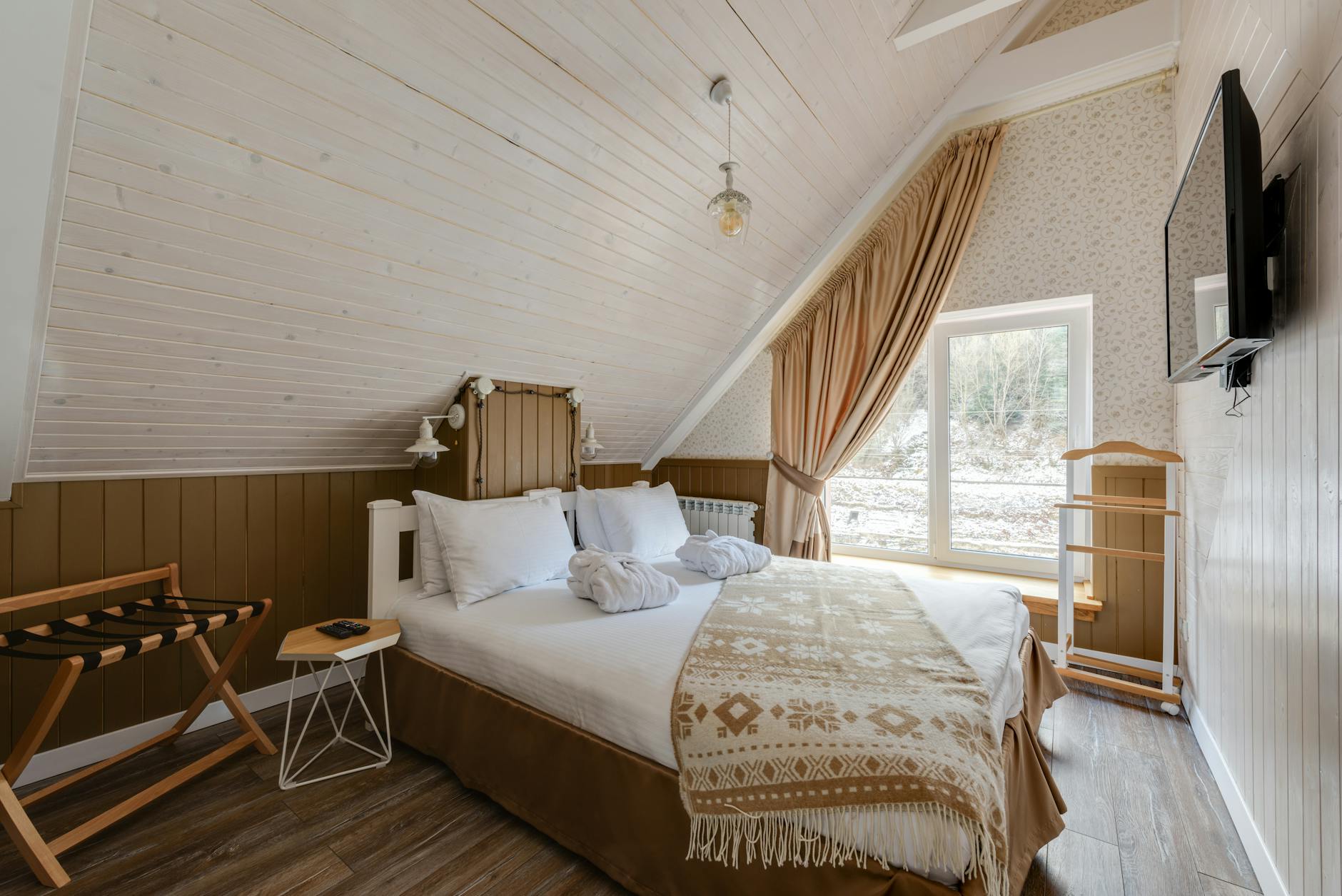
An attic room could be a quiet study, a creative studio, or a cozy guest retreat.
The Feel of a Lived-In Attic
The design challenges are also Feng Shui considerations.
Those low, slanted ceilings can feel cozy or confining. It depends on how you work with them.
Using light colors on the walls and ceiling can help the space feel more open. Strategic lighting is often essential—a dark attic room can sometimes feel isolating.
Ventilation is key. You might want that high-up energy to be fresh, not stale.
Perhaps most importantly, you could give the room a clear, loving purpose. What will happen here? Reading? Painting? Dreaming?
Furnishing it for that purpose can help. A lived-in attic becomes a destination, not an afterthought. The energy there can become active and inviting.
The Middle Ground: A Gentle Observation
Life isn’t always one or the other.
Maybe your attic is partly finished. One side has boxes, the other has a futon and a reading lamp.
This hybrid space is very common. From a Feng Shui perspective, the main thing some people consider is creating a boundary.
Could you separate the storage area from the living area? Even a simple room divider, a bookshelf, or a curtain might help.
This creates two distinct “realms” under one roof. The storage side can be orderly and contained. The living side can feel open and dedicated to its purpose.
Without that boundary, the energy of the stored items—the past—can mingle with the energy of the living space—the present. For some people, this can make the room feel unfocused.
Listening to Your Attic
A simple idea is to spend a little time there.
Pull down the ladder on a quiet afternoon. Go sit in your attic, just for a few minutes.
What do you feel?
- Does it feel peaceful and spacious, even with boxes?
- Does it feel heavy and dense, like the air itself is thick?
- Does it spark an idea for what it could become?
- Or does it feel perfectly fine just as it is?
Your intuition here is a powerful guide. It will often tell you what the space needs more clearly than any rule.
Maybe it’s asking for a good clear-out. Maybe it’s asking for a coat of white paint and a comfortable chair.
Maybe it’s telling you it’s happy being the keeper of your family’s history, neatly stacked and respected.
A Note on History and Structure
It’s worth remembering what an attic is, structurally.
In very old homes, attics were often unfinished spaces below the roof beams. They were for insulation and the practical workings of the house.
The modern idea of an attic as a bonus room is a relatively new one. It came with better construction and a desire for more space.
This history matters because it reminds us that an attic’s primary job is to shelter. It protects the rooms below from heat, cold, and weather.
Whatever you choose to do with your attic, honoring its structural role is part of the practice. Keeping it well-insulated, dry, and in good repair is a foundational act of care for your entire home.
Permission for Your Path
There is no single answer to the attic question.
For a family with young children, an attic full of labeled bins of outgrown clothes might be a practical blessing. That organization can support the flow of daily life.
For an empty-nester, transforming that same attic into a sunny yoga room might feel like a new beginning. It could support a different kind of flow.
Both choices are valid. Both can be done with mindfulness.
Feng Shui, at its heart, isn’t about following rigid rules for each room. It’s about noticing how the spaces in your home make you feel.
It’s about making small adjustments so that your environment supports you, rather than weighs on you.
Your Home is Yours
So, look up at your ceiling. Think about the space just above you.
Is it a library of your past, carefully curated? Is it a blank canvas for your future? Or is it a simple, useful closet that does its job well?
Any of those choices can be the right one. The use of your attic that feels best is the one that brings a sense of peace and rightness to you, and to your home.
It’s the one that makes the top of your house feel light, intentional, and truly yours.
Featured Photo by Victor Zissou on Pexels.


