
You look at a floorplan before you buy a house or rent an apartment. You see the square footage and the little icons for sinks and toilets.
You picture where your bed might go. But have you ever wondered how the shape of the room itself might shape your rest?
That’s a quiet question Feng Shui loves to explore. It’s less about rules for furniture and more about listening to the space you have.
Different room shapes create different feelings. They guide energy, or Qi, in different ways.
Some layouts feel naturally supportive. Others might feel a bit unsettled without our noticing why.
Today, let’s walk through four common bedroom floorplans. We won’t tell you what you must do.
Instead, we’ll simply notice what each shape offers. We’ll see how small, conscious adjustments can help any room feel more like a true place of rest.
The Classic, Symmetrical Square
Picture a room that’s roughly a square. The door is on one wall, and perhaps a window is directly opposite.
This is a simple, stable shape. In Feng Shui, the square is often linked with the Earth element.
Earth energy can feel grounding, supportive, and calm. A square room often has a natural sense of balance.
The energy can move evenly through the space. It doesn’t get rushed down a long corridor or stuck in a corner.
This layout gives you options. You might consider placing your bed on a solid wall, away from the door, with a clear view of the entrance.
Some people find this position helps them feel secure and relaxed. The symmetry of the room can support this centered feeling.
If a square room feels too static or heavy, you might introduce gentle movement. A soft, flowing curtain or a mobile can do this.
A plant in a rounded pot can bring a touch of the Wood element, suggesting growth and gentle change.
The main invitation here is to work with the room’s inherent stability. It’s a forgiving canvas for creating peace.
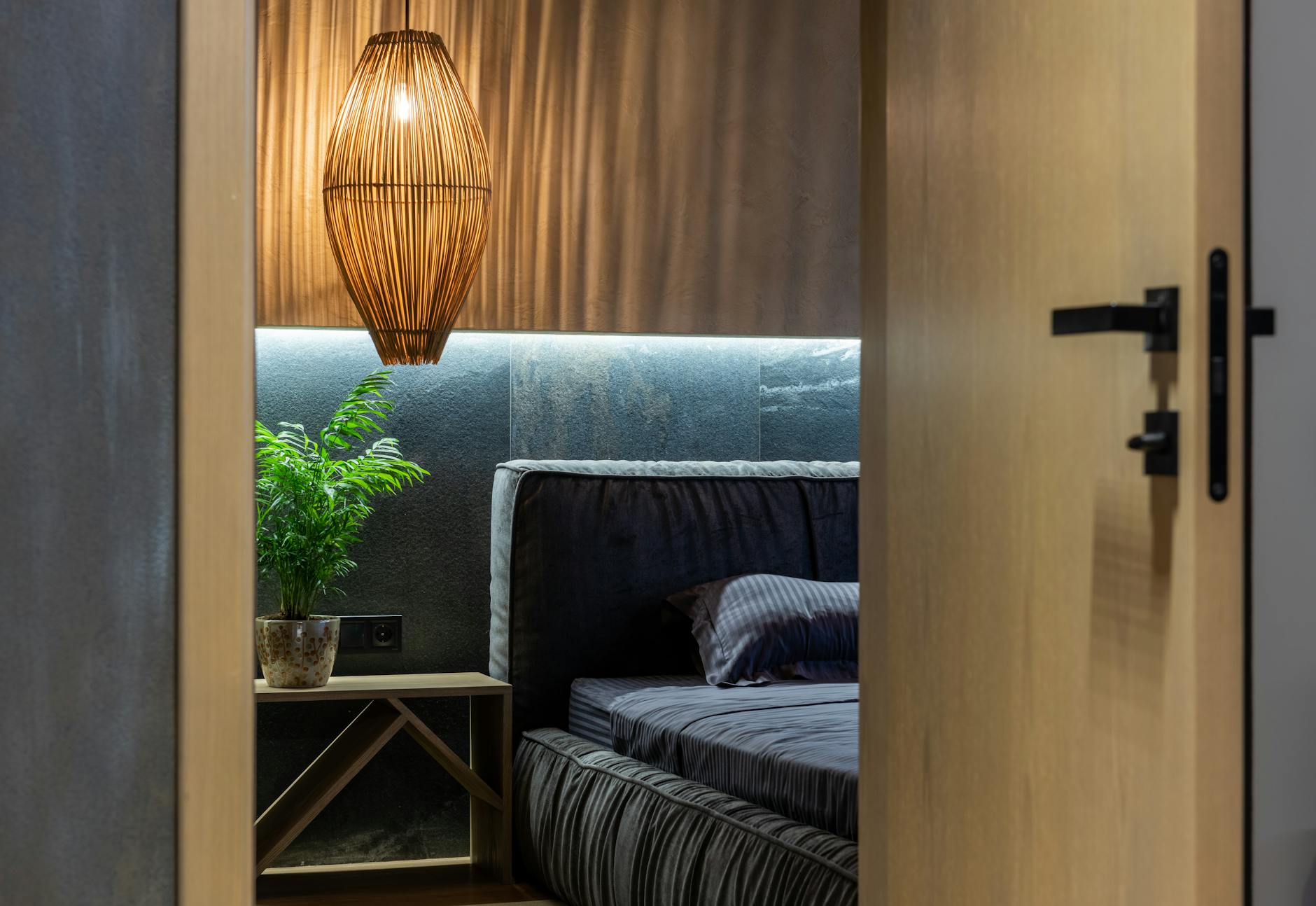
The Long, Rectangular Gallery
Now imagine a bedroom that is noticeably longer than it is wide. The door is at one end.
This shape can feel like a hallway. Energy often seems to rush from the door straight to the far wall.
It might feel hard to settle. Your sleep area might feel exposed in the flow of that movement.
A first step is often to slow things down. You could create a sense of pause between the door and the bed.
A low bench or a small rug just inside the door can act as a visual landing spot. It can suggest, “The rush stops here.”
Then, you might think about defining the sleeping zone within the long room. A room divider isn’t always needed.
A different texture on the floor, like a large area rug under the bed, can anchor the space. So can a canopy or a tall headboard.
These things create a subtle boundary. They can help the energy collect and settle around your bed instead of shooting past it.
Lighting is a friend here. You might avoid a single, bright light in the center. Using softer lamps at the bedside can create pockets of warm, still light.
This invites the energy to meander and soften, not race.
The L-Shaped or Alcove Layout
Some bedrooms have an nook or an L-shape. Maybe the door opens into a small area before turning into the main sleeping space.
Or perhaps there’s a deep alcove perfect for the bed. This layout creates a natural sense of privacy and retreat.
The bed, tucked away, can feel protected and cozy. This can be wonderful for rest.
The consideration can be the “missing” corner or the sharp angle of the L. In Feng Shui, a room’s corners are sometimes seen as its anchors.
A deeply recessed alcove might feel like it has weak corners. The energy might pool there and feel stagnant.
The idea is not to fix a problem, but to gently support the space. Light is again a powerful tool.
You might ensure the alcove is well-lit, but with soft, warm light. A mirror on a side wall in the alcove can help reflect light and give a sense of expanded space.
If the L-shape creates a long, narrow section, you could treat it like its own little zone. Make it useful and beautiful.
It could be a perfect spot for a comfortable chair and a small bookshelf. This honors the whole shape of the room.
It suggests to the energy there is purpose in every part, not just the main sleeping area.
The Open-Plan or Studio Bedroom
This is perhaps the most modern consideration. Your bed is in a corner of a larger room that also holds your living, dining, or workspace.
There are no walls separating these areas of your life. The energy of cooking, working, and socializing all shares space with the energy of sleep.
Rest often benefits from a sense of separation. An approach here is to create a visual and energetic “bedroom” within a room.
You can do this without building walls. A tall screen or a curtain on a ceiling track can create a physical boundary when you want to sleep.
Even without that, you can define the zone. A large rug exclusively under the bed sets a clear floor boundary.
You might try to avoid facing your bed directly toward your workspace or kitchen. If you can, position it so your view from bed is of something calm, like a piece of art.
Storage is key here. Keeping work items and kitchen clutter out of sight from the bed can help.
A closed cabinet instead of open shelving can make a big difference. It contains the active energy of other life tasks.
At night, you might cover your computer screen or desk with a beautiful cloth. This is a simple ritual that can signal, “This area is closed for the day.”
It can help your mind make the shift into rest mode.
Listening to Your Room
These are just four common blueprints. Your room is unique.
The real practice is in observation. Stand in your bedroom doorway. What do you feel?
Does the space feel rushed or still? Does your bed feel anchored or adrift?
Walk the path from the door to your bed. Is it clear, or is it cluttered? How does it feel to lie in bed and look around?
These are the most important questions. They matter more than any rule from any book.
Feng Shui offers perspectives, not prescriptions. It suggests that how a space is shaped influences how we feel in it.
Once you notice that, you can start a conversation with your room. You can make small, thoughtful changes.
You might shift a lamp. You might add a plant. You might simply tidy the path to your bed.
Each small act is a way of saying, “This is a place for rest.” It’s a way of arranging not just furniture, but intention.
A Gentle Invitation
So tonight, or this weekend, spend a few quiet moments with your bedroom floorplan. Not the one on paper, but the one you live in.
Notice its shape. Thank it for sheltering you.
Then ask if there’s one tiny thing you could adjust to help it feel more peaceful. Maybe it’s turning a nightstand so the drawer doesn’t block a walkway.
Maybe it’s hanging a picture that makes you smile when you wake up.
Arranging for rest is a slow, kind process. It’s about cooperation with the space you have.
Your home is yours. Your rest is yours. However your room is shaped, may you find deep peace within its walls.
Featured Photo by Max Vakhtbovych on Pexels.
Related Reading
- Five Bedrooms, Five Approaches: Placement in Different Layouts
- Bedroom Overview: Creating Restful Space
- Bed Placement: Traditional Perspectives


