
There is a quiet language that every home speaks. You feel it when you walk in the door. Some rooms seem to give you a warm hug, inviting you to stay and rest. Others feel busy and full of energy, a place where things get done. We often don’t think about why a space feels the way it does, but we notice it all the same.
What if we could learn to understand this language? What if we could see our homes not just as a collection of rooms, but as a living, breathing environment that supports us?
This is one of the core ideas behind Feng Shui. It’s a gentle practice of observing the energy in our surroundings and making small, thoughtful adjustments. It’s about seeing how the flow of life, or Chi, moves through our spaces and how each room plays a unique role in our daily lives.
This Feng Shui Room By Room guide is a comprehensive tour of your home, room by room. We will walk through each space together, from the front door to the back garden. We won’t be following strict rules or making grand promises. Instead, we will simply explore the purpose and personality of each room through the lens of Feng Shui.
My hope is that this journey gives you a new way to see the spaces you inhabit every day. You might discover why your living room feels so welcoming, or why you find it hard to relax in your bedroom. This is a collection of ideas and observations, a starting point for your own curiosity. Let’s begin our walk through the home.
A Brief History: From Ancient Courtyards to Modern Apartments
To understand how Feng Shui looks at our homes today, it can be helpful to glance back at how homes were once designed. For thousands of years, traditional Chinese homes were often built with a very different philosophy than the houses many of us live in now.
Imagine a home built around a central, open-air courtyard. The front gate was the main entrance, and it opened into this private, protected space. The most important rooms, like those for elders or for ceremonies, were located at the back, furthest from the entrance and shielded from the outside world. This created a natural hierarchy and a clear, intentional flow of movement and energy.
The layout was designed for protection, for community, and for a deep connection to nature through the central courtyard. Each part of the home had a distinct purpose, and its location reflected its importance.
Modern homes, especially in the West, are often designed differently. We have open-plan living areas, hallways that twist and turn, and rooms that serve multiple functions. A kitchen might also be a dining room and a homework station. A bedroom might also be an office.
This doesn’t mean Feng Shui principles don’t apply. It simply means we adapt them. The core ideas of balance, flow, and intention are universal. The goal is not to replicate an ancient courtyard house, but to take the wisdom from that design—the importance of a clear entrance, a protected space for rest, and a central heart of the home—and apply it to our own unique living situations.
The Foundation: Understanding Chi and Intention
Before we step into the first room, let’s touch on a simple but foundational concept in Feng Shui: Chi.
You can think of Chi as life force energy. It’s in the air we breathe, the sunlight that warms our skin, and the world around us. In the context of a home, Feng Shui looks at how this energy flows through our living spaces.
Some people find that when Chi meanders gently and smoothly through a home, like a slow-moving stream, it can feel supportive. When it moves very fast—down a long, straight hallway, for example—it can sometimes feel unsettling. When it gets stuck or stagnant—in a cluttered corner or a room we never use—the space can feel heavy and lifeless.
Each room in our home also has its own energetic quality, often described in terms of Yin and Yang. Yin represents quiet, dark, and restful energy. Yang represents bright, active, and social energy. A bedroom, for instance, is naturally a Yin space, while a kitchen is a very Yang space. Understanding this can help us explore aligning the room’s environment with its intended purpose.
The Entryway: The Mouth of Chi
Our journey begins where your home’s journey begins: the front door and the entryway. In Feng Shui, this area is often called the “Mouth of Chi” because it’s the primary point through which energy, opportunities, and people enter your home.
Think of your entryway as the first impression your home makes, both on guests and on you. It sets the tone for the rest of the house. When you come home after a long day, does this space welcome you and allow you to take a deep breath? Or does it feel cramped and chaotic?
Many people find that a welcoming and unobstructed entryway allows energy to flow in smoothly and distribute itself throughout the home.
Creating a Welcoming Entrance
A clear and inviting entryway doesn’t require a grand foyer. Even the smallest of spaces can feel open and gracious.
- A Clear Path: Some people find that a clear path from the door into the home feels supportive. Piles of shoes, bags, and mail can create a sense of blockage right at the entrance.
- Good Lighting: A well-lit entryway often feels safe and welcoming. If you don’t have natural light, a warm lamp or an updated light fixture can make a significant difference.
- The Front Door: You might consider the door itself. A clean door with functioning hardware that opens easily and fully is a simple way to support a smooth flow of energy.
From the entryway, Chi moves into the rest of the home, often through hallways or up staircases. Keeping these connecting paths clear can help ensure that the energy entering your home can reach every room.
The Living Room: The Heart of the Home
From the entryway, we often move into the living room or family room. This space is typically the social heart of the home. It’s where family gathers, where we entertain friends, and where we connect with one another.
The energy of a living room is generally active and social—it’s a Yang space. The focus here is often on comfort, connection, and creating an environment that encourages conversation and relaxation.
Arranging for Connection
How furniture is arranged has a huge impact on how a room feels. In a living room, you might explore creating a layout that feels inclusive and makes it easy for people to interact.
Consider arranging sofas and chairs so they face each other, rather than all facing a television. This simple shift can encourage conversation. A central coffee table or a soft rug can help anchor the seating area and create a defined zone for gathering.
It can also be interesting to explore a balance of elements. If you have a lot of hard surfaces like wood floors and glass tables, adding soft textures through pillows, throws, and curtains can make the space feel cozier and more inviting.
This is the room where you can display things that represent who you are as a family—photos, art, and meaningful objects. It makes the space feel personal and full of life. The living room often connects to other social areas, like a dining room, and keeping a clear flow between these spaces can help the home feel more cohesive.
The Bedroom: A Sanctuary for Rest
Next, we move to one of the most important rooms in the house: the bedroom. If the living room is the heart of the home, the bedroom is its soul. This is our personal sanctuary, the space where we rest, recharge, and spend roughly a third of our lives.
The primary purpose of the bedroom is rest. Therefore, its energy is often seen as predominantly Yin—calm, quiet, and restorative. The goal is to explore creating an environment that signals to your body and mind that it’s time to slow down and let go of the day’s stresses.
Cultivating a Restful Environment
Everything in the bedroom can either support or detract from a sense of peace. The most significant piece of furniture is, of course, the bed.
- Bed Placement: In Feng Shui, an ideal bed placement is often called the “commanding position.” This generally means placing the bed so that you can see the door without being directly in line with it. Some people find this creates a subconscious sense of security, allowing them to relax more deeply.
- A Supportive Headboard: A solid headboard placed against a solid wall is thought by some to provide a sense of stability and support while you sleep.
- Minimize Electronics: The active, Yang energy of televisions, computers, and exercise equipment can feel disruptive to the calm, Yin energy needed for sleep. If possible, you might consider keeping these items out of the bedroom.
- Calming Colors and Soft Lighting: Soft, neutral, and skin-tone colors are often recommended for bedrooms. Dimmer switches or soft lamps allow you to lower the light in the evening, signaling to your body that it’s time to wind down.
Clearing clutter, especially from under the bed, is also a common suggestion. This allows energy to circulate freely around you while you sleep, which some find contributes to a more peaceful night’s rest.
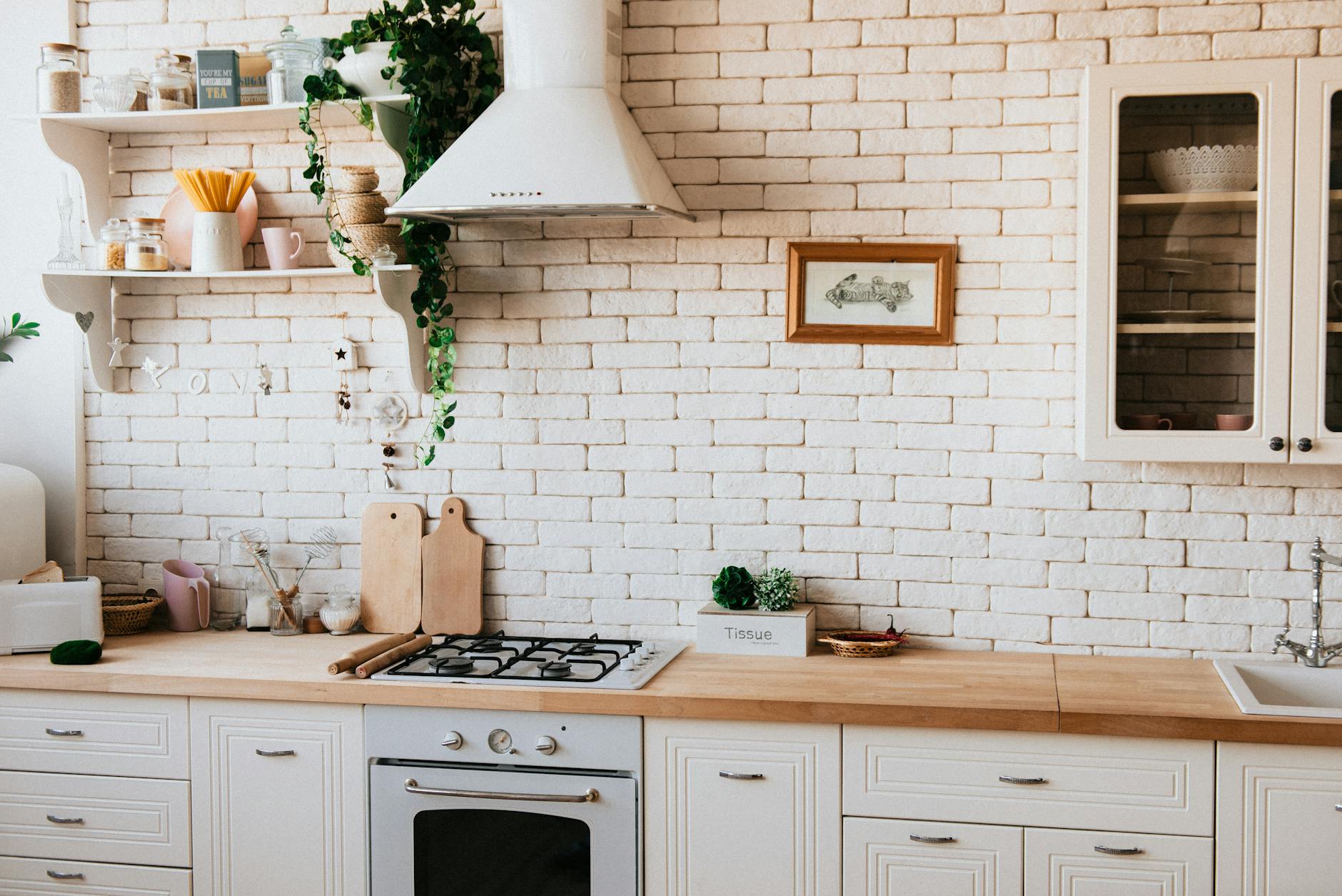
The Kitchen: The Center of Nourishment
The kitchen is another vital area of the home. It is often considered a center of health and nourishment, as it’s where we prepare the food that nourishes our bodies and sustains our families.
The kitchen is a hub of activity and transformation. It’s a very Yang space, full of the dynamic energy of fire (the stove) and water (the sink). One of the key principles of kitchen Feng Shui is exploring the balance between these two powerful elements.
Balancing Fire and Water
In the Five Elements framework, Fire and Water are seen as opposing forces. When the stove (Fire) is placed directly opposite or next to the sink or refrigerator (Water), some feel it can create a sense of conflict in the space. If your kitchen is set up this way, don’t worry—it’s very common in modern design.
A simple way to explore creating a buffer is to place a Wood element between them. This could be a small plant, a wooden cutting board, or even a green rug on the floor. The Wood element is thought to help mediate the energy between Fire and Water.
A clean and organized kitchen is also a lovely focus. A clean stove is seen by some as supporting a sense of abundance, as it’s the tool we use to transform raw ingredients into nourishing meals. Keeping the pantry and refrigerator organized ensures that you are using fresh, vibrant ingredients, which contributes to the overall feeling of health in the household.
The Bathroom: A Space for Cleansing
Bathrooms have a unique and important function in the home. They are spaces for cleansing, purification, and letting go. However, in Feng Shui, they are sometimes viewed with a particular awareness because of the presence of so many drains.
The idea is that the downward-flowing water can represent a draining of the home’s energy or Chi. But with a few mindful habits, a bathroom can be a refreshing, spa-like space that supports well-being.
Containing the Draining Energy
The simplest and most common suggestions for bathrooms are also very practical.
Keeping the toilet lid down when not in use and keeping the bathroom door closed are two easy habits. This symbolically contains the draining energy within the space. Good ventilation is also key, as it prevents the buildup of stagnant, damp energy (and mildew).
You can elevate the feeling of a bathroom by making it feel like a small sanctuary. Add elements that feel clean and refreshing, like healthy plants that thrive in humidity, beautiful soap dispensers, or soft, fluffy towels. The goal is to make it a space that feels good to be in, a place for renewal and self-care.
The Home Office: A Place for Focus
With more people working from home than ever before, the home office has become a critical space. This room can support focus, productivity, and a sense of accomplishment. At the same time, it’s interesting to explore creating clear energetic boundaries between your work life and your personal life.
If you have a dedicated room for an office, you can treat it as a self-contained world of work. If your “office” is a corner of the living room or bedroom, creating a sense of separation becomes even more inviting to explore.
Designing for Productivity and Clarity
Similar to the bedroom, the placement of your desk is a key consideration. If possible, you might consider positioning your desk in the “commanding position,” where you can see the door to the room. Some find this helps them feel more in command of their work and aware of their surroundings.
Sitting with your back to a solid wall can provide a sense of support for some people. Organization is also a lovely focus. A cluttered desk can lead to a cluttered mind. Keeping your workspace tidy can help you think more clearly and feel less overwhelmed.
At the end of the workday, it can be helpful to have a small ritual to signal the transition from work time to personal time. This could be as simple as closing your laptop, tidying your desk, and turning off the office light. If your desk is in a shared space, you might cover it with a beautiful cloth to energetically put your work “to bed.”
The Supporting Spaces: Garages, Basements, and Attics
While we don’t “live” in them in the same way, spaces like garages, basements, and attics play an important supporting role in the feeling of our home. These are often the areas where clutter accumulates, and they can become pockets of stagnant Chi if neglected.
The garage is often a secondary entrance to the home. If you enter through a cluttered, disorganized garage every day, that’s the first energy you encounter. Keeping it as tidy as possible can make a big difference in how you feel when you arrive home.
Basements and attics are often seen as representing the subconscious mind or things from our past. They are where we store things we don’t need every day. Regularly going through these spaces and letting go of what you no longer need can feel like a huge energetic release, making the entire home feel lighter.
Extending Outward: Patios, Balconies, and Gardens
Finally, our home doesn’t end at its walls. Patios, balconies, gardens, and even the front porch are extensions of our living space. They are the transition between our private sanctuary and the wider world.
Creating a welcoming and vibrant outdoor space invites positive energy toward your home. Healthy, thriving plants are a wonderful way to cultivate life energy around your property. A clear, sweeping path to your front door is like a welcome mat for good Chi.
Even a small balcony can become a mini-oasis with a few potted plants and a comfortable chair. These spaces connect us to nature and the changing seasons, reminding us that our home is part of a larger ecosystem.
Where to Go Next on Your Journey
We’ve walked through the entire home, from the front door to the back garden. As you’ve seen, each room has its own personality and its own purpose. The bedroom asks for quiet, the kitchen thrives on activity, and the living room invites connection.
The core idea is simple: when we explore aligning a room’s environment with its intended function, the whole home can feel more harmonious and supportive. It’s not about perfection; it’s about intention.
If you’re curious to learn more, you might enjoy exploring the Bagua Map. This is a Feng Shui energy map that you can lay over your home’s floor plan to see how different rooms correspond to different areas of your life, such as career, relationships, or health.
Another wonderful path is to learn more about the Five Elements—Wood, Fire, Earth, Metal, and Water. Understanding how to balance these elements in each room can add another layer of depth to your practice.
But for now, just start by observing. Walk through your home with new eyes. Notice how each room feels. Your home is your own, a unique reflection of you. Trust your intuition. The best changes are the ones that feel right and bring you a sense of peace and ease in your own space.
Featured Photo by Pixabay on Pexels.
Related Reading
- Three Living Rooms: Common Furniture Arrangements
- Bed Placement: Traditional Perspectives
- Fireplaces: Warmth, Symbolism, and Placement