
It’s the first truly warm day. You step into that special room, the one with all the windows, and you don’t just feel the sun. You feel a shift.
The air is different here. It holds the scent of damp earth from the garden and the faint promise of rain. The light doesn’t just fall on a floor; it moves across it, tracing patterns as the day unfolds. This room isn’t quite inside, and it isn’t quite outside.
It’s a threshold space. And in the gentle art of Feng Shui, such places are quietly fascinating.
Sunrooms, solariums, three-season porches—they go by many names. But they all share a single, beautiful purpose: to bring the outside in, and to hold us in a soft space between worlds.
Today, let’s sit in that light together. Not with rules, but with curiosity. What is this room, really? And how might we see it through a lens of simple, ancient awareness?
A Room Made of Light and Air
Architecturally, these rooms are unique. They are built for connection, not separation. Their walls are often more window than wall.
This design means something. In Feng Shui, we often talk about the flow of energy, or ‘chi’, as the movement of light and air through a home.
A sunroom is like a giant, gentle intake valve for that flow. It is constantly gathering sunlight, witnessing weather, and framing the life of your garden or yard.
Because of this, its energy can feel very active and vibrant. It is a Yang space—full of light, warmth, and movement. This is wonderful, and it can be interesting to be aware of it.
A room that is all Yang can sometimes feel restless or overwhelming if not balanced. The key can be in how we relate to it.
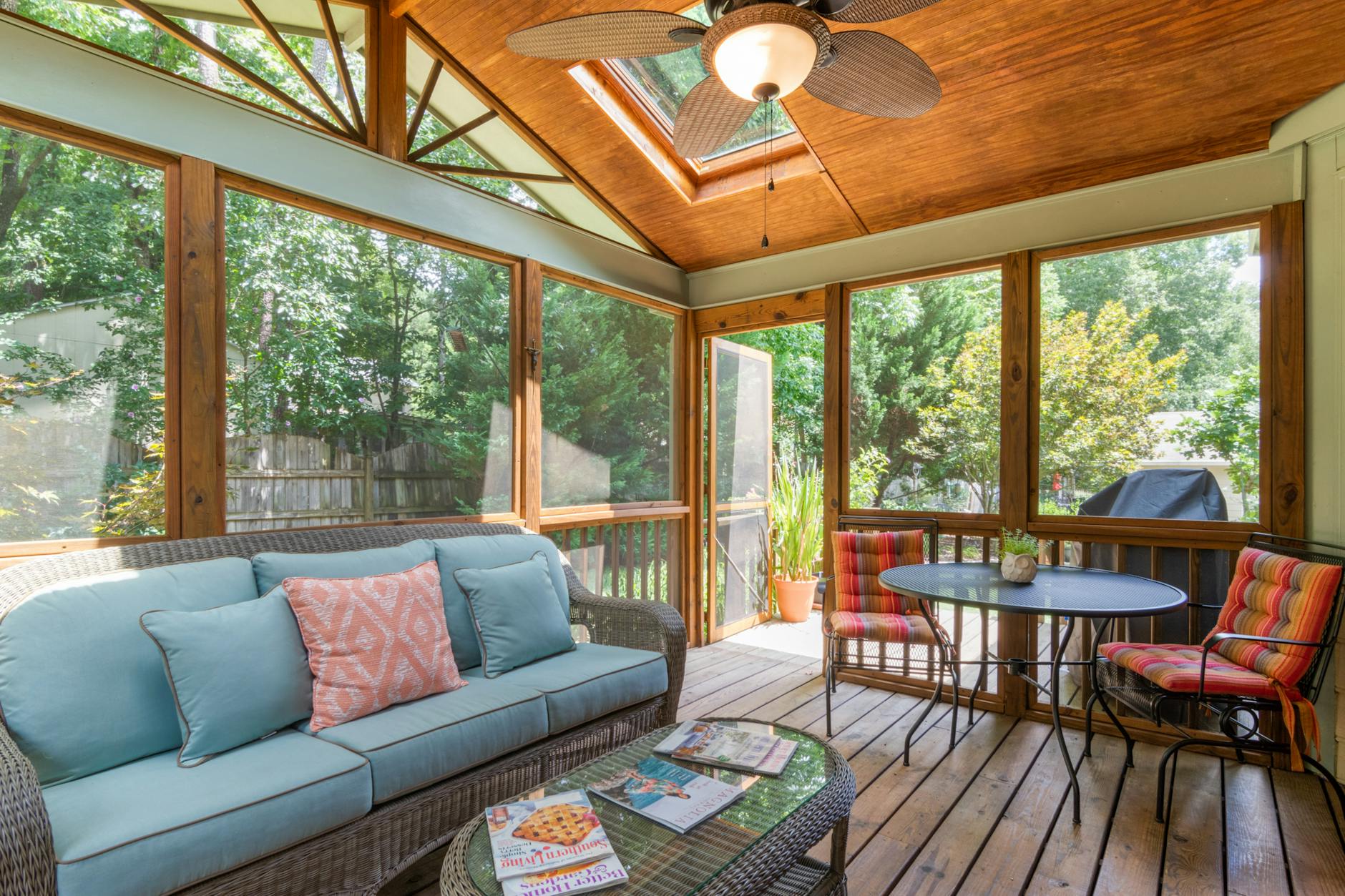
The Element of Wood in Full Bloom
If we look at the Five Elements in Feng Shui, a sunroom often resonates most strongly with the Wood element.
Think of what grows in the sun. Trees, plants, flowers. Wood is about upward growth, expansion, and vitality. It is the energy of a new idea, a fresh start, a morning in spring.
Your glass-walled room can be a physical expression of Wood energy. It reaches upward and outward. It often supports life—many houseplants thrive there.
This connection makes it a natural place for activities that align with growth. Reading a book that inspires you. Sketching. Planning a garden. Simply sitting with a morning cup of tea and letting new thoughts arrive.
It is not typically the spot some people choose for deep, Yin sleep (a more enclosed, dark bedroom is often preferred for that), but it can be a perfect place to wake up your spirit.
The Practical Feel of the Space
Let’s move from theory to the simple feel of things. Walk into your sunroom right now. What do you notice?
Is the air stale, or does it move? Are the windows clean, letting the full strength of the light pour in? Can you sit comfortably, or is the space cluttered with broken pots and forgotten furniture?
These aren’t judgments. They are observations. The goal is not a perfect magazine spread. The goal is a space that feels good to you.
A few gentle things you might consider:
Clear the View
Windows are the eyes of this room. When they are dirty or blocked by overgrown bushes, it can feel like squinting. The connection to the outside world might feel strained.
Clearing the view, both inside and out, is one of the most straightforward things you can do. It can honor the room’s primary purpose: to see and be in relationship with nature.
Welcome Movement
Since this is a room of air, you might let the air move. A small, quiet fan in the corner can help prevent energy from becoming stagnant on a still day.
If you can safely open windows, you might try it. The cross-breeze doesn’t just cool the room; it can refresh the entire home’s energy flow.
Choose Furnishings That Belong
Furniture here often faces a unique challenge: sunlight. Fabrics fade. Materials can warp.
Choosing pieces that are sun-friendly can feel respectful. Wicker, teak, aluminum, or indoor-outdoor fabrics aren’t just practical—they can speak the language of a room that lives between inside and out.
Their textures and colors often feel more natural, which can help the room feel cohesive rather than conflicted.
The Three-Season Porch: A Different Rhythm
A three-season porch is a close cousin to the sunroom, but with a different character. It is often less insulated, more exposed to the sounds and smells of the outdoors.
Its use is seasonal. It has a clear beginning and end in the yearly cycle. This gives it a beautiful, rhythmic quality.
In Feng Shui, there can be power in acknowledging cycles. The act of opening the porch in spring can be a ritual. It’s a way of saying, “We are ready for this phase.”
Furnishing it and then putting it to bed in the fall is another. This conscious transition can align your home life with the natural world in a very tangible way.
Because it is more permeable, a porch’s energy can feel even more dynamic and changeable. One day it’s a sunny haven; the next, a drumming symphony during a storm.
Embracing that changeability is part of its charm. It can teach us flexibility.
When the Space Feels “Off”
Sometimes, despite the light, a sunroom feels like a place you avoid. It might feel too hot, too cluttered, or strangely empty and echoey.
These can be clues, not failures.
- Too Much Yang (Hot, Harsh, Restless): An overabundance of sun can feel aggressive for some. Softening can be an answer. Sheer curtains that diffuse light, adjustable shades, or a few well-placed leafy plants can create pockets of gentle shade. The Water element, in the form of a small indoor fountain or even a bowl of water with floating petals, can introduce a cooling, calming presence.
- Stagnant Energy (Dusty, Forgotten, Stale): This can happen when a room isn’t loved or used. The simplest cure is often presence. Go sit there, even for five minutes. Bring in a living plant. Play music. Use it. Energy often flows where attention goes.
- An Awkward Passage: Is your sunroom just a hallway to the backyard? A pass-through space can feel unsettled. If possible, you might create a small “destination” within it—a reading nook in a corner, a game table, a single comfortable chair facing the best view. This can give the energy a reason to pause and gather.
Your Room, Your Relationship
The most important perspective is always your own. What do you want from this room?
For some, it is a vibrant social space for morning coffee with friends. For others, it is a solitary greenhouse for orchids and quiet contemplation.
Both are valid. The Feng Shui perspective can adjust to support the intention.
A social space might feel supported by a circular seating arrangement (which can encourage conversation) and bright, cheerful colors in the Earth element family, like soft yellows or terracotta, to promote a sense of warmth and connection.
A contemplative space might lean into the natural greens of Wood, have a single, comfortable chair, and perhaps a simple symbol of the Metal element—like a smooth, round stone or a bronze bell—to support a feeling of clarity and focus.
It’s about asking the room what it wants to be, and then listening to your own answer.
A Gentle Invitation to Notice
This week, you might spend a little time in your sunroom or porch at different hours.
Notice where the morning light lands first. See where the evening shadows are longest. Feel where the room is warmest, and where a cool draft might sneak in.
These are not problems to solve, but conversations to have. This room is your home’s most honest connection to the world outside.
By tending to it—clearing a window, watering a plant, simply sitting in it—you are tending to that relationship. You are acknowledging that your home is not a sealed box, but a living part of a larger, breathing landscape.
That awareness, in itself, is a beautiful practice. It needs no complicated rules. It just needs you, a bit of light, and the willingness to notice.
Your home is yours. These ideas are simply whispers from an old tradition of paying attention. Take what feels gentle and useful, and let the rest drift away like a breeze through an open screen door.
Featured Photo by Curtis Adams on Pexels.


