
Think about the last time you felt truly, deeply rested. Not just the absence of tiredness, but a genuine sense of renewal. It’s a feeling that seems to come from somewhere deeper than just a good night’s sleep.
Our bodies and minds crave this kind of rest. We look for it in quiet moments, in a deep breath, or in the comfort of a favorite chair. It’s a natural human instinct to seek sanctuary.
Often, we hope to find this sanctuary in our bedrooms. But sometimes, these spaces can feel more like storage rooms or extensions of our busy lives than places of genuine peace. This is where a gentle awareness of our environment can make a quiet, profound difference.
A Feng Shui Perspective on Rest
In Feng Shui, there’s a simple idea about the energy of a space, often called Qi. You don’t need to understand ancient texts to feel it. You know it when you walk into a room that feels calm and another that feels chaotic.
Different rooms in a home are thought to have different energetic needs. A kitchen or a living room might thrive on bright, active, social energy. This is sometimes called Yang energy.
The bedroom, however, is different. It’s a space for healing, dreaming, and quiet connection. Its ideal energy is thought to be the opposite: slow, soft, and nurturing. This is often referred to as Yin energy.
Creating a sanctuary for sleep is really about inviting this gentle, Yin quality into your space. It’s less about following rules and more about making choices that feel calming and supportive to you.
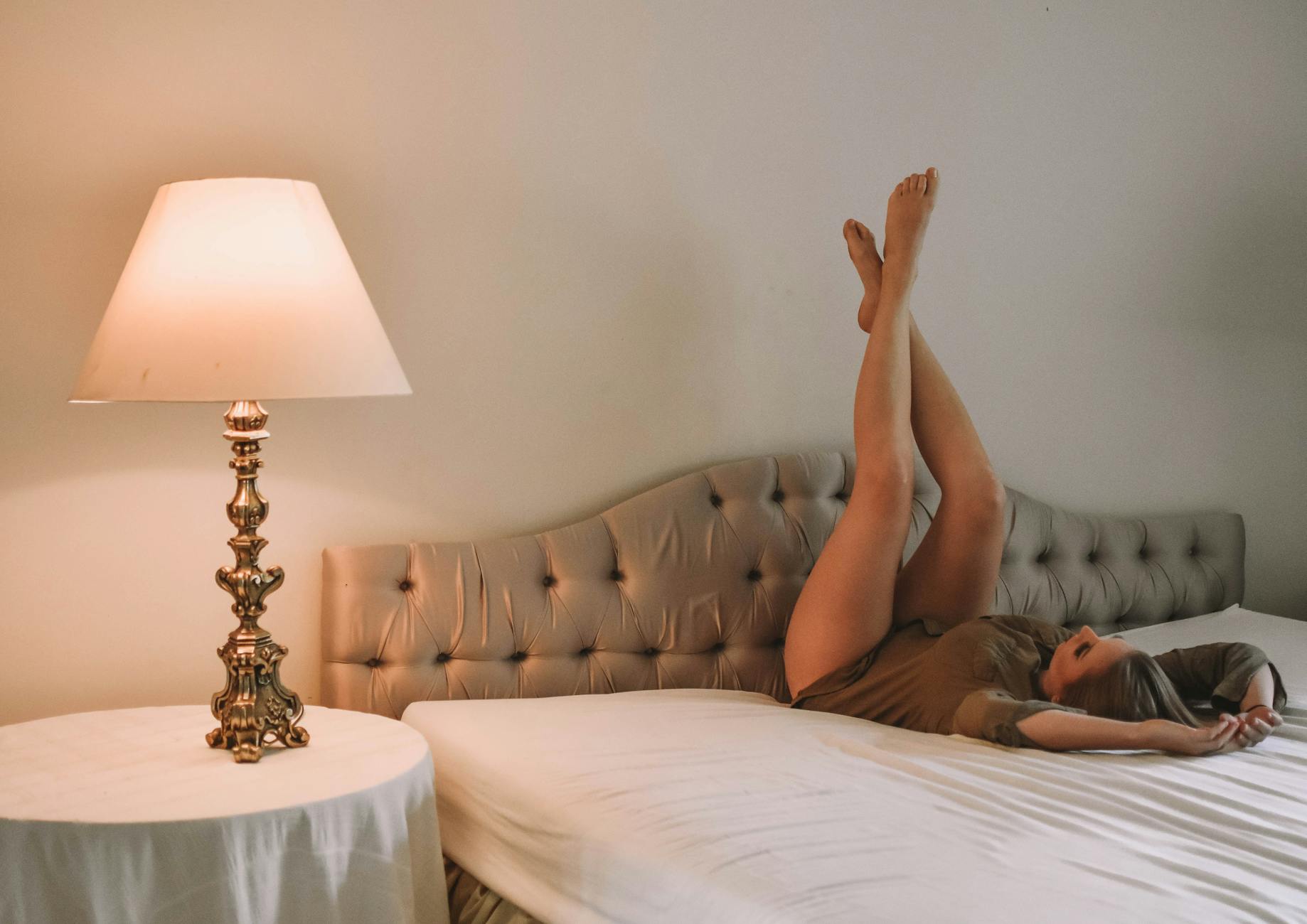
The Heart of the Room: The Bed
Your bed is the centerpiece of your sanctuary. How it’s placed and how it feels can set the tone for the entire room. It’s your personal island of rest.
A Sense of Security
Have you ever noticed how you instinctively choose a seat in a restaurant? Many people prefer a spot where they can see the entrance and have their back to a wall. It’s a primal feeling of security.
In Feng Shui, this is often called the “commanding position.” The idea is that when you can see the door to your room from your bed (without being directly in line with it), your nervous system can relax a little more. You’re not easily startled.
This isn’t a strict rule. If your room’s layout doesn’t allow for it, that’s perfectly okay. The principle is about feeling safe and at ease. You might explore what position feels best for you.
A Feeling of Support
A solid wall behind your bed is also thought by some to provide a sense of stability and support. It’s like having a strong mountain at your back.
A sturdy headboard can offer a similar feeling. It creates a gentle boundary between you and the rest of the world, a symbolic anchor for your rest. If you don’t have a headboard, even a few firm pillows can create that sense of enclosure.
Clearing Space for Calm
A cluttered room can sometimes feel like a cluttered mind. Our eyes are constantly taking in information, and when a space is full of objects, our brains have to process it all. This can create a low level of background noise that interferes with rest.
What’s in Your Line of Sight?
Take a moment to lie in your bed and just look around. What’s the first thing you see when you wake up? What’s the last thing you see before you close your eyes?
Is it a pile of laundry? A stack of work papers? An exercise bike? These things carry an energy of activity and to-do lists. They are subtle reminders of daytime responsibilities.
Gently clearing your immediate line of sight can be a powerful first step. You don’t have to declutter the entire room at once. Simply clearing your nightstand can make a noticeable difference.
The Space Beneath
The area under the bed is another place to consider. In Feng Shui, it’s suggested that the energy, or Qi, should be able to flow freely around you as you sleep.
Storing things under the bed can sometimes create a feeling of stagnation or heaviness. This is especially true for items with strong emotional attachments or reminders of the past.
If you need the storage space, that’s a practical reality. In that case, some people choose to store only soft items related to sleep, like extra blankets, pillows, or linens. The invitation is to keep this space as clear and calm as possible.
The Language of Light and Color
Light and color speak to us on a subconscious level. They tell our bodies when to wake and when to wind down. Working with them consciously can help support your natural sleep rhythms.
Embracing Natural Light
Sunlight during the day helps regulate our internal clocks. Letting natural light into your bedroom in the morning can be a wonderful way to signal to your body that it’s time to be awake and alert.
Softening the Evening
As evening approaches, bright, overhead lights can be jarring. They mimic the midday sun and can keep our minds in an active state.
You might consider using lamps with warm-toned bulbs for a softer glow. Dimmers are also a wonderful tool for gradually lowering the light level as you prepare for bed. This gentle transition helps your body and mind begin to unwind.
Blackout curtains or simple blinds can also be helpful. They create a dark, cocoon-like environment, protecting your sleep from streetlights or early morning sun if you wish to sleep in.
Colors for Rest
There are no “right” or “wrong” colors for a bedroom. The best colors are the ones that make you feel calm and peaceful.
In Feng Shui, colors associated with rest are often found in nature. Think of the soft, earthy tones of sand, clay, and stone. Gentle blues of the sky or muted greens of foliage are also popular choices.
These colors are sometimes called “skin tones” because they are variations of the tones found in the human complexion. They feel familiar, grounding, and deeply comforting to many people.
What to Leave at the Door
Creating a sanctuary is as much about what you leave out as what you bring in. The bedroom is ideally a space dedicated to rest, rejuvenation, and intimacy. When other activities creep in, the purpose of the room can become diluted.
Work and Technology
Laptops, work papers, and even our phones connect us to the demands of the outside world. When these items live in the bedroom, it can be difficult for our minds to fully switch off.
Creating a designated charging station for electronics outside the bedroom can be a simple but powerful boundary. It sends a clear signal that the bedroom is a tech-free zone for rest.
Exercise Equipment
A treadmill or set of weights holds a very active, Yang energy. While exercise is wonderful for health, having the equipment in your resting space can create an energetic conflict. If possible, you might find another home for these items.
A Note on Mirrors
Mirrors are an interesting element in the bedroom. They can make a space feel larger and brighter. However, from a Feng Shui perspective, they are also seen as activators.
A mirror that reflects the bed is thought by some to disturb sleep. The idea is that it bounces energy around the room and can even reflect your own movements, creating a subtle sense of being watched.
If you have a mirror facing your bed and sleep perfectly well, there is no need to change a thing. If you struggle with rest, you might experiment with covering the mirror at night to see if you notice a difference in how you feel.
Engaging All the Senses
A true sanctuary appeals to more than just our eyes. Consider how you can invite calm through your other senses.
- Touch: How do your sheets and blankets feel against your skin? Soft, natural fibers like cotton, linen, or bamboo can feel wonderful. A soft rug underfoot can make getting out of bed a more pleasant experience.
- Sound: Is your room quiet? Or are there noises from the street or other parts of the house? Some people find that a white noise machine or a simple fan can mask disruptive sounds and create a soothing auditory backdrop.
- Scent: Gentle, natural scents can be very calming. A few drops of lavender essential oil on a cotton ball placed near your pillow, or a sachet of chamomile, can help signal to your brain that it’s time for sleep.
A Gentle Invitation
This is not a checklist of things you must do. It is an invitation to become more aware of your own space and how it makes you feel.
Try this simple exercise. Find a few quiet minutes to sit in your bedroom. Close your eyes and take a few deep breaths. Then, open them and just notice.
What do you see? What do you hear? How does the air feel? Don’t judge anything as “good” or “bad.” Simply observe. Your own feelings are your best guide.
Perhaps you’ll notice that the light from your alarm clock is brighter than you thought. Or that the stack of books on your nightstand feels a little overwhelming. From this place of quiet observation, you can choose one small thing to adjust.
Maybe you’ll simply move a pile of clothes. Or open a window for a few minutes. Small, gentle shifts are often the most sustainable and powerful.
Your Sanctuary, Your Way
Ultimately, your bedroom is your personal space. The goal of exploring these ideas is not to create a perfect room that follows every “rule.” It is to create a room that feels perfectly supportive of *you*.
Trust your intuition. If a bright, vibrant color makes you feel happy and rested, then that is the right color for you. If you love having a mirror in your room, then it belongs there.
Your home is yours. The most beautiful and effective sanctuary is one that reflects your own needs and brings you a genuine sense of peace, night after night.
Featured Photo by Burst on Pexels.
Related Reading
- Bed Placement: Traditional Perspectives
- Storage: Containing Without Hiding
- Fireplaces: Warmth, Symbolism, and Placement


