
A Different Kind of Space
There is a particular feeling that comes with living in a studio or a tiny apartment. It is a feeling of everything being close at hand. Your bed is also your sofa. Your kitchen is also your entryway. Some people find this cozy. Others find it a little tight.
In Feng Shui, space is not just about square footage. It is about how energy, or chi, moves through a room. When a space is small, that energy can feel stuck. It can feel heavy. The goal is not to pretend you have more room than you do. The goal is to let the room breathe.
You can make a small home feel spacious without knocking down a single wall. It starts with a few simple shifts in how you see your space.
Mirror Tricks That Open a Room
Mirrors are one of the most practical tools for a small space. In Feng Shui, a mirror is seen as a way to expand energy. It doubles what it reflects. If you place it thoughtfully, it can make a room feel twice as large.
The trick is knowing where to put it. A mirror placed across from a window will reflect the outdoors. This brings light and a sense of openness deep into the room. It is like borrowing space from outside.
Some people avoid placing a mirror directly across from the front door. In Feng Shui, this can push energy back out the door before it has a chance to settle. Instead, you might consider placing it on a wall perpendicular to the door. This allows the energy to circulate.
Another good spot is behind a lamp or a candle. The reflection multiplies the light. This makes the room feel brighter and less cramped. A full-length mirror on the back of a closet door also helps. It gives the eye a place to rest that feels larger than the actual wall.
Furniture Scaling: The Right Size Matters
One of the biggest mistakes in a small apartment is buying furniture that is too large. A massive sectional sofa might look comfortable in a showroom. In a tiny living area, it can swallow the whole room.
In Feng Shui, furniture is like a container for energy. If the container is too big, it overwhelms the space. If it is too small, the energy feels scattered. The goal is balance.
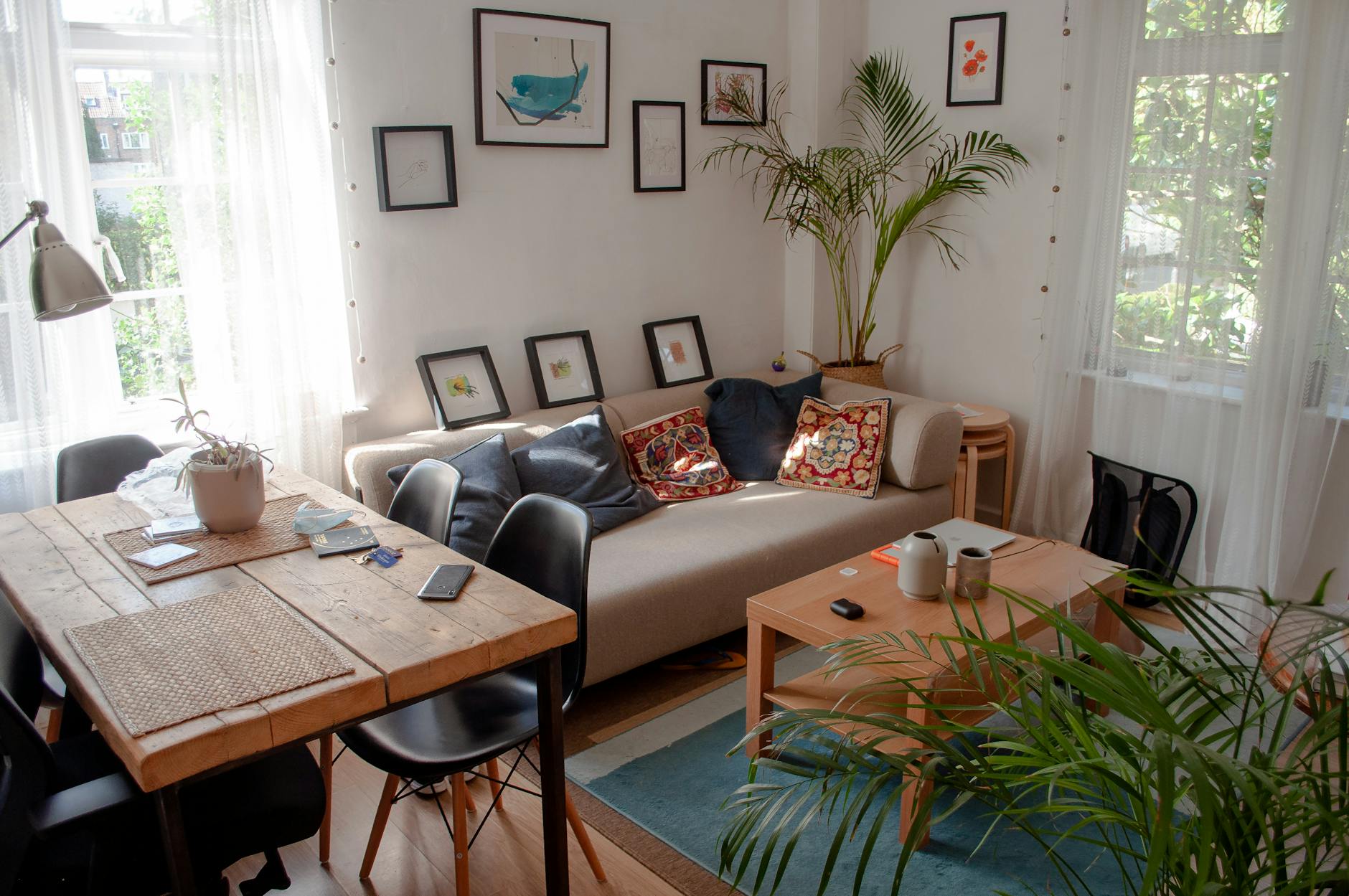
Look for furniture that is scaled to your room. A slim sofa with exposed legs creates a sense of air underneath. This allows chi to flow freely. A low-profile bed frame does the same thing. It keeps the visual weight low, which makes the ceiling feel higher.
You can also choose pieces that serve more than one purpose. A storage ottoman works as a seat, a footrest, and a place to hide blankets. A dining table that folds down when not in use keeps the floor plan open. Every piece should earn its place.
Vertical vs. Horizontal Energy
Small spaces often feel cramped because we focus on the floor. We arrange furniture along the walls, creating a horizontal layout. This can make a room feel like a narrow hallway.
In Feng Shui, vertical energy is your friend. It draws the eye upward. This makes the ceiling feel taller and the room more expansive. You can encourage vertical energy with a few simple choices.
Hang curtains high above the window frame. This tricks the eye into thinking the window is taller than it is. Use tall, narrow bookshelves instead of wide, low ones. They store the same amount of items but take up less visual floor space.
Wall-mounted shelves are another good option. They keep the floor clear and draw attention upward. You can place a few small plants or meaningful objects on them. This adds life without clutter.
Artwork hung at eye level also helps. If you hang a piece too low, it pulls the energy down. Keep it at a height that feels natural when you stand. This keeps the room feeling balanced.
Color Strategies for Small Rooms
Color has a powerful effect on how a room feels. In Feng Shui, colors are associated with different elements. Light, soft colors tend to expand a space. Dark, heavy colors can make it feel smaller.
For a tiny apartment, consider a palette of light neutrals. Whites, creams, soft grays, and pale beiges reflect light. They create a sense of airiness. You can add warmth with natural wood tones or soft textiles.
If you love color, use it as an accent. A single wall painted a soft sage green or a muted blue can add depth without closing the room in. These colors are associated with the wood and water elements. They bring a calm, grounding energy.
Some people find that using too many dark colors on the walls absorbs light and can make a small room feel like a cave. If you want a dark accent, you might consider using it on a small piece of furniture or a throw pillow. This keeps the energy light.
Another trick is to paint the ceiling a shade lighter than the walls. This makes the ceiling feel higher. It is a subtle shift, but it can make a noticeable difference.
Studio Zoning Without Walls
A studio apartment is one room that serves many purposes. You sleep, eat, work, and relax in the same space. Without walls, it can feel chaotic. The energy from one activity can spill into another.
In Feng Shui, zoning is about creating visual boundaries. You do not need a wall to separate your bed from your desk. You just need a clear signal that this area is for one thing and that area is for another.
Rugs are one of the best tools for this. A rug under your bed defines the sleeping zone. A different rug under your sofa defines the living zone. The change in texture and color tells your brain that these are separate spaces.
Furniture placement also helps. Place the back of your sofa toward your bed. This creates a natural divider. A tall plant or a folding screen can also work. They block the view from one zone to another without closing off the room.
Lighting is another way to zone. Use a warm, dim lamp near your bed for sleeping. Use a brighter, cooler light near your desk for working. This shifts the energy based on what you are doing.
You can also use curtains. A ceiling-mounted curtain can separate your bed from the rest of the room at night. During the day, you can pull it back. This gives you privacy when you need it and openness when you do not.
Letting the Room Breathe
Clutter is the enemy of small spaces. It blocks the flow of chi and makes a room feel smaller than it is. In Feng Shui, clutter is seen as stagnant energy. It weighs down the space and the people in it.
You do not need to become a minimalist. You just need to be intentional. Keep surfaces clear. Store items out of sight when possible. A few meaningful objects are better than many small ones.
Plants are a wonderful addition to a small space. They bring life and fresh energy. A small snake plant or a pothos on a shelf adds green without taking up floor space. They also help purify the air.
Natural light is another key element. Keep windows uncovered or use sheer curtains. This lets light flow freely. If you do not have much natural light, use warm, layered lighting. A mix of floor lamps, table lamps, and wall sconces creates a soft glow.
A Gentle Invitation
Your home is yours. It does not need to be large to feel spacious. It just needs to feel like a place where you can breathe.
Start with one small change. Move a mirror. Swap a dark throw pillow for a light one. Clear a single surface. Notice how the room feels different. That is the energy shifting.
Feng Shui is not about perfection. It is about creating a space that supports you. A tiny apartment can feel like a sanctuary. It just takes a little intention.
Your home is yours. Let it feel open.


