
There’s a quiet ache that comes with renting. You walk into a space that’s technically yours for a year or two, but the walls are white, the light fixtures are builder-grade, and the landlord’s rulebook says no nails, no paint, no permanent changes. It can feel like you’re living in a waiting room—functional, but not yours.
I remember my first rental after college. The living room had a ceiling fan that wobbled, a carpet that smelled faintly of someone else’s life, and a window that faced a brick wall. I wanted to make it feel like home, but I was terrified of losing my deposit. So I did nothing. For six months, I sat on a hand-me-down couch and felt like a guest in my own life.
Then I learned something simple: Feng Shui isn’t about drilling holes. It’s about how you arrange what’s already there. It’s about intention, not renovation.
The Rental Reality
Most Feng Shui advice assumes you own your home. You can paint the front door red, install a new light fixture, or knock down a wall. But for renters, those options are off the table. And that’s okay.
Feng Shui, at its heart, is about the relationship between you and your space. It’s not a set of rules you have to follow. It’s a way of seeing. When you’re renting, you have to get creative. You have to work with what you have, not what you wish you had.
That’s where the real magic happens. Constraints can actually make you more intentional. You stop looking for the perfect solution and start noticing what’s already working.
Non-Permanent Fixes That Feel Permanent
Let’s start with the basics. You can’t drill holes, but you can still change how a room feels. The key is to focus on things that move with you.
Removable Hooks and Adhesive Strips
These are your best friends. Command hooks and adhesive strips have come a long way. You can hang lightweight art, mirrors, or even small shelves without damaging the wall. Just make sure to follow the instructions for removal—slow and steady, straight down.
I use them to hang a small mirror near my front door. In Feng Shui, a mirror can help you see who’s coming, which creates a sense of safety. It also makes a narrow hallway feel wider. And when I move out, the mirror comes with me, and the wall is untouched.
Furniture as Room Dividers
Open-plan rentals are common in the US. You might have a living room, dining area, and kitchen all in one big box. That can feel chaotic. Your energy has nowhere to settle.
Instead of building a wall, use furniture. A tall bookshelf placed perpendicular to the wall can separate your living area from your dining space. A sofa with its back to the kitchen creates a clear boundary. Even a large plant can act as a visual divider.
This isn’t about blocking light or making the room feel smaller. It’s about creating zones. Your brain needs cues to know when you’re relaxing versus when you’re eating or working. Furniture can give you those cues without a single nail.
Plants as Living Art
Rentals often come with blank walls. You can’t paint, but you can bring in plants. A tall fiddle-leaf fig in a woven basket adds height and life. A row of small succulents on a windowsill creates a soft, green border.
In Feng Shui, plants are associated with growth and vitality. They also soften the hard edges of a rental—the white walls, the laminate floors, the generic light switches. A plant doesn’t care if you’re renting. It just grows.
If you don’t have a green thumb, start with something forgiving. A snake plant or a pothos can survive low light and irregular watering. They’re also easy to move when you leave.
Command Position Workarounds for Awkward Layouts
One of the most common Feng Shui concepts is the command position. It’s the idea that you might feel more comfortable if you can see the door from your bed, desk, or sofa without being directly in line with it. This can create a sense of safety and control.
But rentals often have awkward layouts. Your bed might be forced against a wall. Your desk might face a corner. Your sofa might be under a window. What do you do?
If Your Bed Is Against a Wall
Many US bedrooms are small. The bed ends up pushed against one wall, leaving only one side to get in and out. In Feng Shui, this is sometimes called the “wall hugger” position. It’s not ideal, but it’s common.
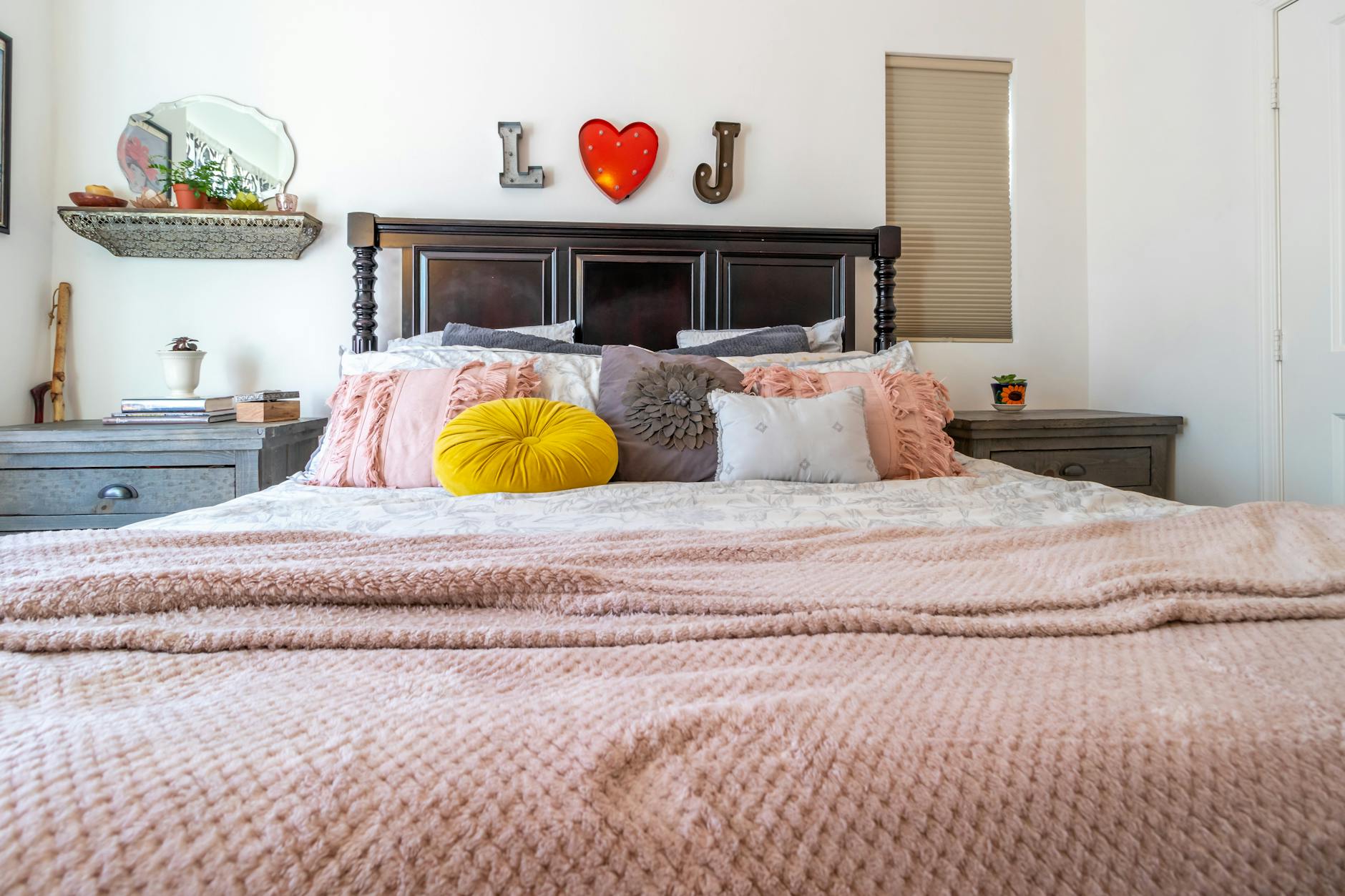
You can still create a sense of security. Some people find that placing a small side table or a stack of books on the wall side helps create a visual boundary. Hanging a piece of art or a mirror on the wall above the bed can draw the eye upward. If you can, angling the bed slightly so you have a partial view of the door might also help.
The goal isn’t perfection. It’s about feeling like you can rest without being startled. Even a small adjustment can shift how you feel in the room.
If Your Desk Faces a Wall
Working from home is common now, but many rentals don’t have a dedicated office. You might end up with your desk facing a wall. That can feel closed off and draining.
You might consider this: place a small mirror on the desk or on the wall in front of you. It doesn’t have to be big. A small round mirror can reflect the room behind you, giving you a sense of the space. You can also angle your chair slightly so you’re not staring directly at the wall.
Another option is to place a plant or a small object on your desk that draws your eye upward. A tall, narrow vase with a single branch can break the flatness of the wall. It’s a small change, but it can make the space feel more open.
If Your Sofa Is Under a Window
In many living rooms, the sofa ends up under a window because that’s where the wall space is. But in Feng Shui, sitting with your back to a window can feel exposed. You can’t see who’s behind you.
If you can’t move the sofa, you might try adding a low bookshelf or a console table behind it. This creates a physical and visual barrier. You can also hang a curtain or a blind that you can close when you want to feel more enclosed. Even a large floor lamp placed next to the sofa can help define the space.
Remember, the command position is a guideline, not a law. The real goal is to feel comfortable and safe in your own home. If you can’t see the door, you can still create a sense of security through other means—lighting, texture, and arrangement.
The Emotional Side of Making a Rental Feel Like Yours
This is the part that often gets overlooked. You can move furniture and hang plants, but if your mind still sees the space as temporary, it will never feel like home.
There’s a mindset shift that needs to happen. You have to give yourself permission to care about a space you don’t own. It’s easy to say, “Why bother? I’m moving in a year.” But that thinking keeps you in a state of waiting. You’re waiting for the next place, the next job, the next chapter. Meanwhile, you’re living your life right now.
Feng Shui teaches that your environment affects your energy. If you treat your rental like a holding cell, you’ll feel stuck. If you treat it like a home, you’ll feel settled. It’s that simple—and that hard.
Small Rituals to Claim Your Space
You don’t need to paint a wall to make a space yours. You can do small things that signal to your brain: this is my home.
- Change the lightbulbs. Rentals often have harsh, cool-toned bulbs. Swapping them for warm, soft light is a five-minute change that can transform the mood of a room.
- Add a welcome mat. It’s a small gesture, but it marks the threshold. Every time you step on it, you’re saying, “I’m home.”
- Use fabric. Throw blankets, pillows, and rugs add color and texture. They also absorb sound, making a space feel quieter and more intimate.
- Burn something. A candle, incense, or a diffuser with a scent you love. Smell is strongly tied to memory. A familiar scent can make a new place feel like yours.
Letting Go of the Landlord’s Aesthetic
One of the biggest challenges is that rentals often have a generic look. Beige walls, gray carpet, white blinds. It’s designed to appeal to everyone, which means it appeals to no one.
You don’t have to accept that aesthetic. You can layer your own style on top of it. A bright rug, a colorful piece of art, a collection of objects that mean something to you. These things don’t require permission. They just require intention.
I once lived in a rental with a hideous brown tile floor in the kitchen. I couldn’t change it, so I bought a large, patterned runner that covered most of it. Suddenly, the floor wasn’t the first thing I saw. The runner was. It was a small act of defiance, and it made the kitchen feel like mine.
A Gentle Invitation
If you’re reading this and you’re in a rental that doesn’t feel like home, I want to invite you to try one small thing. Not a renovation. Not a big purchase. Just one thing.
Maybe it’s moving your bed so you can see the door. Maybe it’s hanging a piece of art with a removable hook. Maybe it’s buying a plant and placing it where you’ll see it first thing in the morning.
Notice how it feels. Does the room feel a little lighter? Do you feel a little more present? That’s Feng Shui working. Not because you followed a rule, but because you paid attention.
Your Home Is Yours
At the end of the day, a rental is just a building. It’s the walls and the floors and the fixtures that someone else chose. But a home is something you create. It’s the way you arrange your furniture, the objects you keep close, the rituals you practice.
You don’t need to drill a hole to make a space feel like yours. You just need to show up. You need to care. You need to decide that this place, right now, is worthy of your attention.
And it is. It always is.


