
There is a particular kind of quiet that settles over a room when you finally close the closet door. The surfaces are clear, the floor is tidy. But sometimes, we know what lies behind that door—a jumble of things, pushed into the dark.
We call it “putting things away,” but often, it feels more like hiding. It’s a quick solution to the visual noise of daily life. But what if storage could be something different? What if it could be less about hiding and more about mindfully containing?
This is a gentle exploration of our relationship with storage. It’s a shift in perspective from seeing closets and drawers as places to conceal clutter, to seeing them as respectful homes for the items we choose to keep.
The Feeling of Our Storage
Every part of our home has a certain feeling, or energy. A sunny window feels light and open. A cramped hallway can feel stuck. Our storage spaces are no different, even when they are closed.
Think about the feeling of opening a drawer that is packed so tightly it’s difficult to close. There’s a sense of pressure, of things being compressed. You might even hold your breath for a moment as you try to find what you need.
Now, imagine a drawer where everything has its place. Items are easy to see and easy to access. Opening it feels effortless, calm. The feeling is completely different, even if the items inside are the same.
In Feng Shui, there is a focus on how energy, or Qi, moves through a space. When areas are blocked or stagnant, the space can feel heavy. An overstuffed closet or a chaotic cabinet can be seen as a small pocket of stagnant energy. You may not see it, but you can often feel it.
From Hiding to Containing: A Shift in Perspective
The difference between hiding and containing is all about intention. Hiding is often a reaction. It’s the quick sweep of papers into a drawer before someone comes over. It’s stuffing winter coats into a closet to make room for summer clothes, without any real organization.
Hiding can come from a place of feeling overwhelmed. We don’t know what to do with an item, so we put it out of sight. The problem is temporarily solved, but the underlying disorganization remains.
Containing, on the other hand, is a mindful action. It is the conscious choice to give an object a designated home. It’s about creating systems that support you and make your life easier. Containing can be a way to honor your belongings and, in turn, can feel like honoring yourself.
A contained space feels cared for. It suggests that the items within are valued and have a purpose, even if that purpose is simply to be stored until they are needed again.
Exploring Different Kinds of Containment
How we contain our things can take many forms. There is no single right way. It’s about finding what feels good and works for the flow of your own life. Let’s look at a few approaches.
Visible Storage: The Art of the Open Shelf
Open shelving invites us to become curators of our own homes. When storage is visible, we are naturally more selective about what we place there. It encourages us to keep things that are either beautiful to look at or genuinely useful.
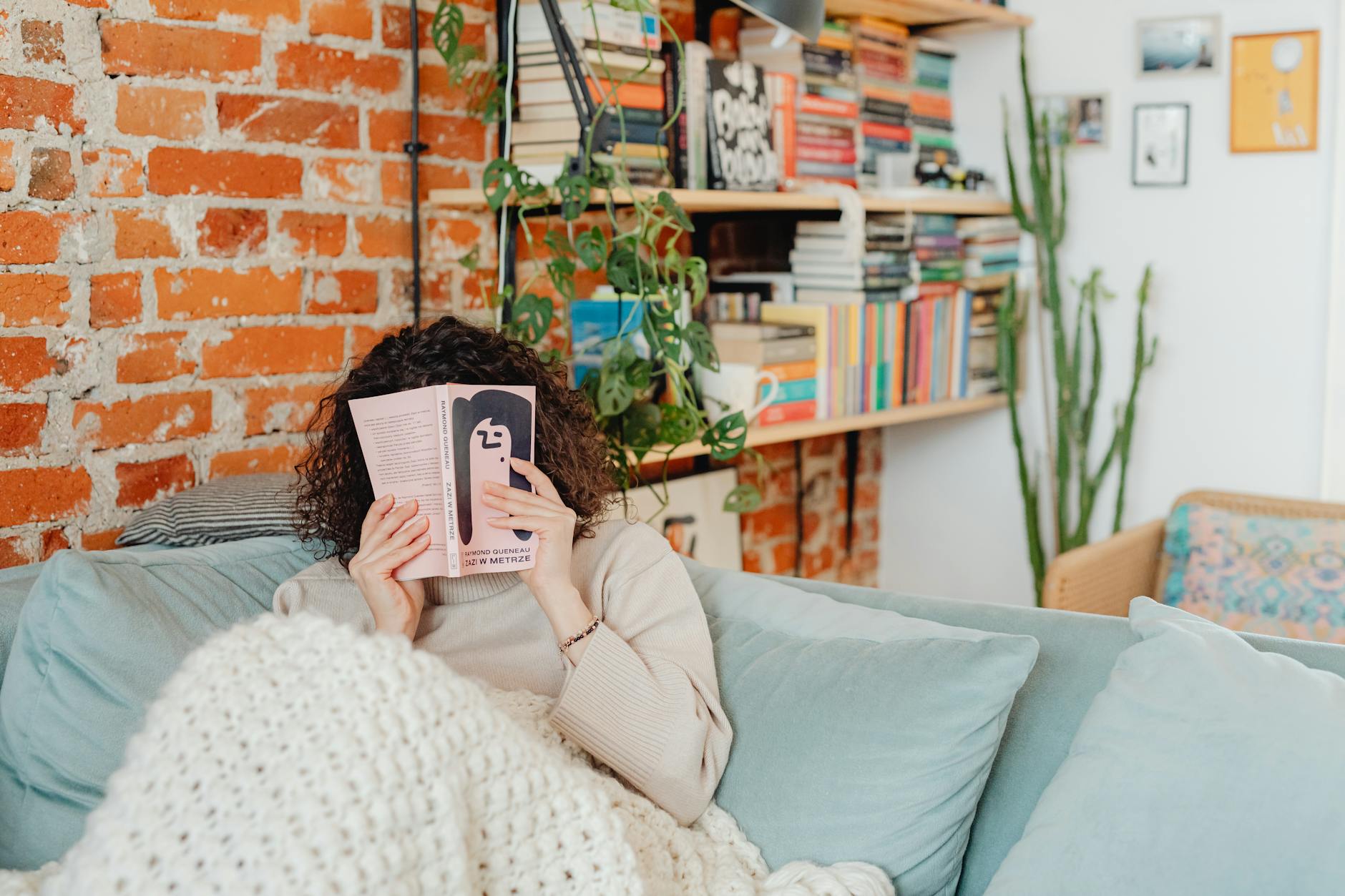
A bookshelf is a perfect example. It contains your books, but it doesn’t hide them. Instead, it displays their spines, telling a story about your interests and journeys. The same goes for neatly stacked dishes in a kitchen or folded towels on a bathroom shelf.
Working with open storage is a practice in simplicity. It can invite us to consider living with less, and perhaps to appreciate what we have more. It’s a way of containing that is also a form of expression.
Closed Storage: Creating Calm Behind Doors
Of course, not everything is meant to be on display. Closed storage—cabinets, closets, dressers, and trunks—is essential for creating a visually calm and uncluttered environment.
A helpful aspect of mindful closed storage can be remembering that what’s inside matters. Even if no one else ever sees inside your closet, you see it. You interact with it every day. The energy of that space is part of your home’s overall feeling.
Creating order within these spaces doesn’t have to be complicated. Simple tools can make a world of difference.
- Drawer dividers: These can bring instant order to a chaotic junk drawer or a jumble of socks.
- Clear bins: Using clear containers inside a pantry or closet allows you to see what you have at a glance. Nothing gets lost in the back.
- Matching hangers: This is a surprisingly simple change that can make a closet feel instantly more cohesive and calm.
When your hidden spaces are organized, there is a sense of integrity to your home. The calm you see on the surface is matched by the calm behind the scenes. It can be a deeply reassuring feeling.
Transitional Storage: The Landing Strip
Life is full of movement. We come and go, and things travel with us. Keys, mail, bags, shoes—these items are in constant transition. Without a plan, they can quickly become clutter.
This is where transitional storage comes in. Think of it as a designated “landing strip” for things entering your home. It’s not their final destination, but a temporary, organized holding place.
This could be a small bowl on an entryway table for keys and wallets. It might be a beautiful tray for incoming mail, or a specific basket for shoes by the door. This simple act contains the daily influx of items, preventing them from scattering throughout your home.
The Energy of Materials and Shapes
The materials of our storage containers also contribute to the feeling of a space. Different materials have different qualities, and you might find you are drawn to some more than others.
Wood is often associated with nature, growth, and stability. A wooden chest or bookshelf can bring a warm, grounding feeling to a room. It feels solid and dependable.
Woven baskets, made from materials like seagrass or rattan, feel soft and breathable. They contain things gently. They are wonderful for holding textiles like blankets and pillows, or for children’s toys, as they have a yielding, flexible quality.
Metal containers can feel precise, cool, and efficient. Think of metal filing cabinets or wire baskets. They can bring a sense of clean lines and order, which can be very helpful in a home office or a workshop.
Glass and clear acrylic promote honesty and visibility. When you store things in clear containers, there are no secrets. This can be very practical in a kitchen pantry or for craft supplies, as it helps you keep track of your inventory and find things easily.
There is no “better” material. The invitation is simply to notice how different materials feel to you. Does a woven basket feel more calming than a plastic bin? Trust that feeling.
A Gentle Invitation to Look Within
If the idea of rethinking all your storage feels overwhelming, that’s completely understandable. The goal is not to create another big project for yourself. The goal is to slowly shift your intention.
You could start with one small space. Not the entire garage, not the whole kitchen. Just one drawer.
Take everything out. As you handle each item, ask yourself a few gentle questions. Do I use this? Do I love this? Does this item have a home? If it feels like it deserves a place in your life, you might consider giving it a clear and accessible place in your home.
This small act is a practice in mindfulness. It’s a way of connecting with your belongings and your space. By containing the contents of one drawer with intention, you are planting a seed of calm that can grow over time.
Letting Go of Perfection
It is important to remember that a home is for living. It will not always be perfectly tidy, and that is more than okay. Life involves a natural cycle of order and disorder.
The practice of containing without hiding is not about achieving a state of flawless, static perfection. It is about creating systems of support for your real life. It’s about making it easier to find what you need, and easier to restore a sense of calm when things get a little chaotic.
Be kind to yourself in this process. Your home is not a museum. It is your sanctuary, your workshop, your resting place. It is allowed to be beautifully imperfect.
Ultimately, the way you organize your home is deeply personal. Many people find that a guiding principle is how your space makes you feel. If your systems bring you a sense of ease and clarity, then they are working perfectly.
Trust your own intuition. Your home is yours, and its story is yours to tell.
Featured Photo by EVG Kowalievska on Pexels.


