
There’s a quiet, unspoken reason we often choose a seat with our back to a solid wall in a busy cafe. We scan the room, find a spot where we can see the entrance, and settle in. It’s not something we consciously think about, but it’s a feeling of ease. A sense of gentle awareness.
This same instinct can be a quiet guide in our most personal space: the bedroom. Where we place our bed can influence how we feel when we wake up, how we settle down at night, and the overall sense of calm in the room.
Exploring traditional Feng Shui perspectives on bed placement isn’t about following strict rules. It’s more like learning a new language to understand the feelings a room can give us. It’s an invitation to pause, observe, and see what feels right for you.
The Feeling of Command and Safety
One of the most well-known ideas in Feng Shui regarding bed placement is called the “Commanding Position.” This sounds formal, but the feeling it describes is simple and deeply human.
Imagine yourself resting in bed. The Commanding Position is one where you can see the door to your bedroom without being directly in line with it. You have a clear view of who or what might be entering your space.
This isn’t about expecting trouble. It’s about a primal sense of security. When our subconscious mind feels aware and safe, it can more easily relax. This position allows you to rest without having your back to the unknown, which can create a subtle, underlying tension.
Why Not Directly Facing the Door?
You might wonder why being directly in line with the door isn’t suggested. In many traditional views, the doorway is a channel for energy, or Qi, moving into and out of the room.
Placing a bed directly in the path of the door is sometimes described as being in a current. The energy might feel too active or direct for a space intended for rest and rejuvenation. Some people find that sleeping in this position can feel a bit unsettled, as if they are on alert.
The Importance of a Solid Foundation
Another core concept is the idea of support. Where does your bed get its sense of stability? Traditionally, this comes from what is behind your head as you sleep.
A Solid Wall Behind You
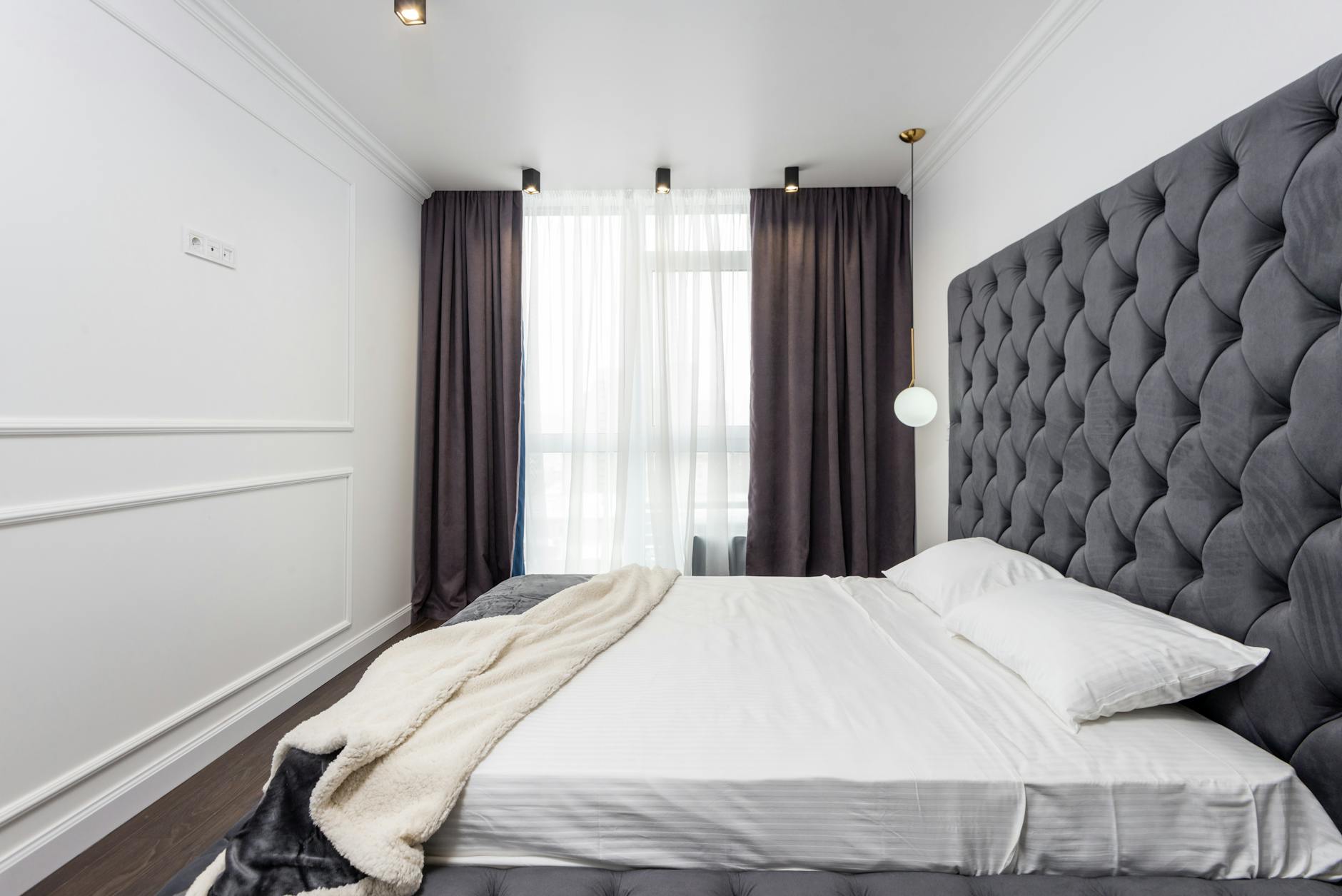
Placing your headboard against a solid wall is often recommended. This creates a feeling of being supported, grounded, and stable. It’s like having a strong mountain behind you, protecting you while you rest.
A solid wall provides a quiet, still energy that is conducive to deep sleep. It anchors the bed and, by extension, anchors you in the space.
What About Placing a Bed Under a Window?
Placing a bed directly under a window is generally something to observe with curiosity. From a practical standpoint, windows can be sources of drafts, light, and sound, which can disturb sleep.
From a Feng Shui perspective, a window is seen as less solid and supportive than a wall. It represents a connection to the outside world, which is wonderful during the day but can feel less secure at night. Some people feel more vulnerable or exposed with a window directly behind their head.
If your room layout means a window is your only option, a strong, solid headboard and heavy curtains can create a greater sense of stability and protection.
Creating Balance and Flow Around the Bed
How we move around the bed is just as important as where the bed itself is placed. The goal is to create a sense of ease and gentle flow, not constriction.
Space on Both Sides
Whenever possible, having open space on both the left and right sides of the bed is considered beneficial. This allows for easy access for both partners if the bed is shared, but the idea goes a little deeper.
Balance is a key theme. Space on both sides is thought to promote a sense of equilibrium and equal opportunity. It creates a feeling of spaciousness and freedom, rather than feeling pinned against a wall.
Even in a small room, leaving just enough space to walk comfortably can make a significant difference in how the room feels.
A Clear Path
Take a look at the path from your doorway to your bed. Is it clear and easy to navigate, even in the dark? Or is it cluttered with furniture, laundry baskets, or stacks of books?
A clear path allows energy to flow smoothly. On a very practical level, it simply makes the room feel more organized, calm, and easy to be in. Waking up to a clear space can feel much more peaceful than waking up to a view of clutter.
Common Placements to Observe
Certain architectural features can also influence how a bed feels in a room. Again, this isn’t about “good” or “bad” placements, but about noticing the subtle pressures or feelings they might create.
Beams and Sloped Ceilings
Sleeping directly under a heavy overhead beam or a sharply sloped ceiling can sometimes create a feeling of pressure. It’s as if something is weighing down on you while you rest.
If you have a beam in your bedroom, the general suggestion is to avoid placing the bed directly under it. If that’s not possible, some people use a canopy or drape fabric to soften the visual weight of the beam.
For sloped ceilings, placing the bed so your head is at the higher end of the slope often feels more expansive and less constricting.
Sharing a Wall with a Bathroom or Kitchen
Think about what’s on the other side of the wall your headboard rests against. Is it a quiet closet, or is it the plumbing for a bathroom or the appliances of a kitchen?
From a practical view, the noise from pipes, flushing toilets, or a running dishwasher can easily disturb sleep. From a Feng Shui perspective, these areas have a lot of active, draining energy (water) or fiery energy (stoves) that may not be ideal for a restful wall.
If this is your situation, a thick, upholstered headboard can act as a buffer, creating a bit more separation between you and the activity on the other side of the wall.
Mirrors Facing the Bed
This is a classic Feng Shui consideration. The suggestion is often to avoid having a mirror directly reflecting the bed. The reasoning is twofold.
First, waking up in the middle of the night and seeing movement in a mirror can be startling. It can trick your half-asleep brain into thinking someone else is in the room, activating your fight-or-flight response.
Second, in Feng Shui, mirrors are seen as activators. They bounce light and energy around a room. While this can be great for a living room or hallway, it might be too much “activity” for a space dedicated to rest.
What If My Room Is “Wrong”?
It’s very easy to read about these traditional ideas and suddenly feel like your bedroom is all wrong. Please, let that feeling go. Most of us live in homes with small rooms, awkward layouts, and immovable architectural features.
The purpose of these perspectives is not to create anxiety. It is to give you tools for observation. You can’t always achieve the “textbook” placement, and that is perfectly okay.
If your bed must be under a window, focus on creating a sense of support with a strong headboard. If it has to be in line with the door, perhaps a beautiful screen placed strategically can soften the direct flow of energy.
The goal is to work with what you have, making small adjustments that feel good to you.
A Gentle Invitation to Observe
The best way to understand these ideas is to experience them yourself. You don’t need to move your furniture right away. Just start by noticing.
The next time you walk into your bedroom, pause at the door. How does the room feel? Does your eye go to the bed, and does it look inviting and restful?
Sit on your bed for a few minutes with no distractions. Look toward the door. Look at the ceiling above you. Notice the space around you. Does it feel cramped or spacious? Supportive or exposed?
There are no right or wrong answers. There is only what feels calm, safe, and nurturing to you.
Your Home, Your Sanctuary
Ultimately, Feng Shui is a personal practice. It’s about cultivating an awareness of your environment and how it makes you feel. The traditional perspectives on bed placement are a wonderful starting point, a map to help you explore.
But you are the ultimate authority on your own space. If you absolutely love sleeping with your bed under the window so you can see the stars, then that is the right placement for you. Your comfort, your peace of mind, and your sense of security are what matter most.
Use these ideas not as rules, but as gentle whispers. Let them guide you toward creating a bedroom that is truly your personal sanctuary—a place where you can rest deeply and wake up feeling refreshed and ready for the day.
Featured Photo by Max Vakhtbovych on Pexels.