
I once moved into an apartment with a bedroom that felt a little off. It wasn’t the color or the furniture.
It was the shape. It was long and narrow, like a hallway with a window at the end.
My old furniture sat awkwardly. I spent weeks rearranging things, trying to make it feel right. That experience got me thinking.
Not every bedroom is a perfect square. Our sleeping spaces come in all shapes and sizes.
The way we place our bed, our dresser, and our nightstands changes with the walls we’re given.
Your Bedroom is Unique
In Feng Shui, the bedroom is often seen as a space for restoration. It’s about the energy of rest and retreat.
But that energy moves differently in a small box room than it does in a grand master suite.
There isn’t one perfect rule for every single room. What works in one layout might feel strange in another.
This is simply a look at five common bedroom layouts.
We’ll explore different approaches to placement, focusing on how the room feels to you.
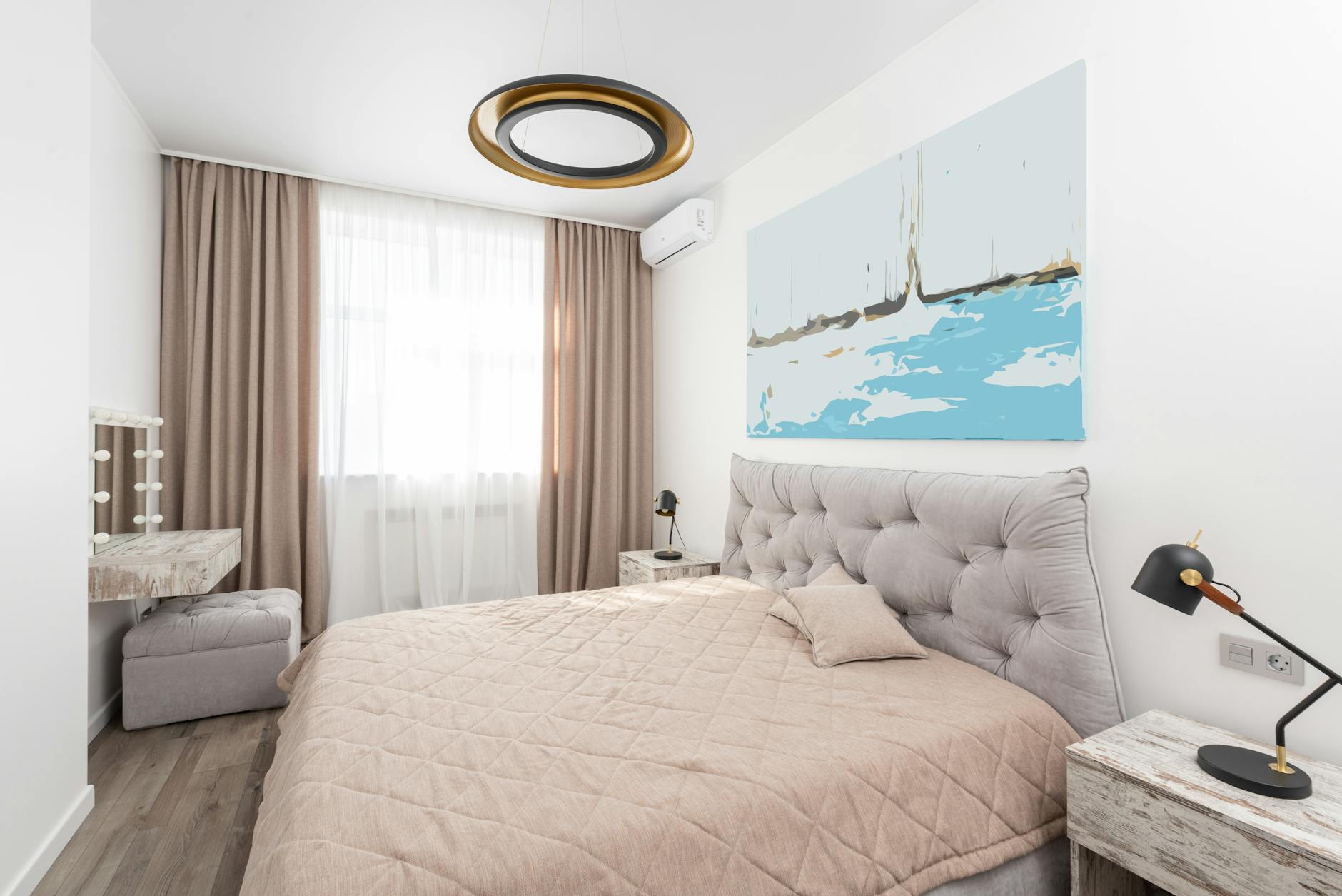
1. The Cozy, Compact Bedroom
This is the small room. The walls feel close. Every inch of floor space matters.
The main challenge here is avoiding a cramped, cluttered feeling.
In Feng Shui, the idea is to allow energy, or ‘qi’, to circulate freely. A blocked room can feel stagnant.
With limited space, bed placement is your biggest decision.
A Gentle Approach to Placement
You might consider placing the bed on the wall opposite the door, if you can.
This often gives you a clear view of the entrance, which some people find creates a subconscious sense of security.
You might also consider avoiding pushing the bed into a corner where two walls meet.
Leaving a little space on either side can make the room feel more open.
Using furniture that fits the scale can help. A tall, bulky dresser can overwhelm a small room.
A lower, wider piece might feel more grounding.
Keeping the space under the bed clear is a common practice.
This isn’t about superstition. It’s a practical tip. An open area below helps the room feel less full.
Mirrors can be interesting in a small bedroom.
They reflect light and can create a feeling of more space. But placing one directly opposite the bed can be visually disruptive when you’re trying to sleep.
2. The Long and Narrow Bedroom
This was my apartment bedroom. It can feel like you’re sleeping in a tunnel.
The energy tends to rush from the door straight to the far wall.
The goal here is to slow that flow and create a sense of width.
Slowing the Flow
Placing your bed on the longest wall, perpendicular to the door, is one approach.
This can act like a gentle dam in a stream. It breaks the long sightline and creates a defined sleeping area.
You could use a room divider, a tall plant, or a low bookcase behind the bed head.
This can further define the space and add a sense of separation from the door.
Using rugs placed width-wise across the room is another idea.
A rug running the long way will emphasize the length. One placed crosswise can visually widen the space.
Consider two smaller nightstands instead of one long one.
This also draws the eye outward, which might make the room feel broader.
3. The Irregular or L-Shaped Bedroom
These rooms have nooks, alcoves, or an L-shape. They are full of potential.
The irregular wall creates a natural separation of areas within one room.
The key is to work with the architecture, not against it.
Defining Zones
You might see the alcove or the short leg of the ‘L’ as its own area.
That can be a lovely spot for the bed, turning it into a cozy sleeping nook.
It creates a natural sense of enclosure and privacy.
The main part of the room can then become a dressing area or a small sitting space.
If the bed is in the main area, the nook could be used for something else.
A reading chair, a small desk, or your dresser can live there.
This honors the room’s unique shape and uses all its space with intention.
A large piece of art on the main wall can help anchor the room and pull the different zones together visually.
4. The Large Master Bedroom
A big, spacious bedroom is a luxury. But it can sometimes feel cavernous or unfocused.
In a very large room, energy can feel scattered. It might lack a defined center.
The approach here is about creating intimacy within the expanse.
Creating a Contained Space
You don’t have to feel pressured to fill every corner. It’s okay to embrace the emptiness.
Placing your bed to create a distinct sleeping zone can help. A large area rug under the bed can anchor this zone.
You might even float the bed away from the walls.
This creates a clear pathway around it and can make the bed the central, important feature.
Using furniture to create subtle boundaries is another thought.
A low bench at the foot of the bed. Two armchairs in a corner with a small table between them.
These pieces can create smaller, conversational areas within the large room.
They give the energy specific places to settle, rather than bouncing around.
5. The Shared or Children’s Bedroom
This room serves more than one person. It needs to support different energies and personalities.
Balance and fairness in layout become more noticeable here.
The focus is on creating individual spaces within a shared whole.
Balancing the Space
If there are two beds, you might try to give each equal access to the door and window.
This isn’t a strict rule. It’s an observation about harmony. A sense of equity in the room can reduce tension.
Placing beds so they are not directly in line with each other is something some people consider.
Staggering them or placing them on perpendicular walls can give each sleeper a greater sense of their own territory.
Using a shared nightstand or a trunk at the foot of the bed can be a central, unifying piece.
Individual storage for each person helps keep personal items contained and organized.
In Feng Shui, this relates to the concept of having a supportive wall behind your head.
If possible, you might place each bed so the headboard is against a solid wall, not under a window.
Some people find this creates a more supportive feeling for sleep.
Listening to Your Room
These are not instructions. They are starting points for your own observation.
The best placement is the one that makes you feel calm and secure when you walk in.
Spend a few moments in your bedroom at different times of day.
Notice where the light falls. Feel where the air moves from the vent or window.
See if you bump into furniture on your way to the bathroom in the dark.
Your own comfort is the most important measure.
Feng Shui at its heart is about awareness of your environment.
It’s noticing how a room’s layout makes you feel, and making small changes to support your wellbeing.
A Gentle Invitation
If your room feels restless, you could try one small change.
Move your bed a few inches. Clear the top of your dresser.
See how it feels for a week.
Your bedroom is yours. It is a sanctuary you design for yourself, one choice at a time.
Whether it’s a cozy nook or a spacious retreat, its layout is simply the canvas.
You get to create the feeling of peace upon it.
Featured Photo by Max Vakhtbovych on Pexels.


