
Some rooms just feel good to be in. You walk in, take a breath, and feel a little lighter. Other rooms can feel heavy or unsettled, even when they are perfectly clean.
We often don’t have words for this feeling, but we all know it. It’s a quiet sense of ease or a subtle feeling of being stuck.
This awareness is the very beginning of understanding Feng Shui. It’s not about magic or complicated rules. It’s about noticing how your home makes you feel.
So, What Does Feng Shui Mean?
At its core, Feng Shui is the ancient art of arranging your space to support a sense of well-being. It comes from a deep observation of the natural world.
The words themselves, “Feng” (wind) and “Shui” (water), point to this connection. In nature, wind and water are constantly moving. They are powerful forces that shape the landscape.
When wind and water flow gently, life thrives. When they are blocked or rush too quickly, things can feel out of balance. Feng Shui applies this simple idea to the spaces we live in.
The Heart of Feng Shui: It’s All About Energy
In Feng Shui, there is a concept called Chi (sometimes spelled Qi). You can think of Chi as the life force energy that flows through everything—including your home.
Imagine a gentle stream flowing through your front door, meandering through each room, and exiting peacefully. This is the ideal. The goal is to encourage a smooth, slow, and nourishing flow of energy.
Sometimes, this energy can get stuck in cluttered corners. Other times, it might rush too quickly down a long, narrow hallway. Feng Shui is simply the practice of noticing this flow and making small adjustments.
More Than Just Tidying Up
Many people associate Feng Shui with decluttering, and that is certainly a part of it. Clearing out things you no longer need can make a space feel instantly lighter.
But it goes a little deeper than just having a tidy house. It’s about creating clear pathways for movement, both for yourself and for the energy of the space.
Think about how it feels to walk through a room where you have to navigate around furniture. Now, imagine that same room with a clear, easy path. That feeling of ease is what Feng Shui is interested in.
The Five Elements: A Language of Nature
To help create balance, Feng Shui uses a system called the Five Elements. These aren’t always literal objects, but rather different types of energy that we can bring into our homes.
Each element has its own qualities, colors, and shapes. Seeing how they interact in a room can help you understand why a space feels the way it does.
Wood
Qualities: Growth, vitality, expansion, new beginnings.
Examples: Healthy plants, tall furniture like a bookshelf, column shapes, shades of green and blue, floral patterns.
Wood energy is about reaching upward and growing. It can bring a feeling of life and freshness to a room.
Fire
Qualities: Passion, inspiration, visibility, energy.
Examples: Sunlight, candles, lamps, fireplaces, shades of red, orange, and bright yellow, triangular shapes.
Fire energy is bright and active. It can make a space feel warm, social, and full of life.
Earth
Qualities: Stability, grounding, nourishment, self-care.
Examples: Ceramic pots, square or rectangular furniture, thick rugs, shades of brown, beige, and sandy yellow.
Earth energy helps a space feel safe and secure. It provides a sense of being grounded and supported.
Metal
Qualities: Clarity, precision, focus, structure.
Examples: Metal objects, round or oval shapes, shades of white, gray, and metallics.
Metal energy brings a sense of calm and order. It can help a mind feel more focused and clear.
Water
Qualities: Flow, wisdom, quiet reflection, connection.
Examples: Mirrors, glass, wavy or flowing shapes, shades of black and very dark blue.
Water energy is about stillness and depth. It can bring a feeling of peace and contemplation to a space.
The Bagua Map: Your Home’s Energy Blueprint
Another tool used in Feng Shui is called the Bagua map. This is an energy map that can be laid over the floor plan of your home. It’s a way to see how different areas of your home connect to different areas of your life.
The Bagua is an octagon, with eight areas around a central one. Each area is associated with a specific life aspect, like family, career, or creativity.
It’s important to see this as a guide for intention, not a rigid set of rules. It’s not about saying “this is my wealth corner, so I must put a money plant here.”
Instead, it’s a way to bring mindful attention to your space. If the area of your home associated with Health is cluttered, you might simply notice that. Clearing it could be a symbolic act of caring for your own well-being.
How to Use the Bagua Simply
The most common way to apply the Bagua is to align the bottom edge of the map with the wall of your front door.
The nine areas are:
- Knowledge & Self-Cultivation: Associated with quiet learning and personal growth.
- Career & Life Path: Connected to your work and journey in the world.
- Helpful People & Travel: Related to support from others and new experiences.
- Family & New Beginnings: Associated with family roots and growth.
- Health & Center: The grounding center of the home, connecting all other areas.
- Children & Creativity: Related to joy, play, and creative projects.
- Wealth & Abundance: Associated with a sense of prosperity and gratitude.
- Fame & Reputation: Connected to how you are seen in the world.
- Love & Relationships: Associated with partnership and connection.
Again, this is a tool for awareness. It helps you see your home as a reflection of your life, and it offers a gentle way to set intentions within your space.
Practical Ways to Notice Feng Shui in Your Home
You don’t need a map or a compass to start noticing the principles of Feng Shui. You can begin right now, just by observing how you feel in your own space.
The Command Position
This is one of the most well-known concepts in Feng Shui. It suggests placing your bed, desk, or main sofa so that you can see the door to the room without being directly in line with it.
This isn’t about expecting danger. It’s about a primal feeling of ease. When your back is to the door, your nervous system can be on a very low level of alert.
Some people find that when they can see who is entering the room, they feel more relaxed and in command of their space.
The Flow of a Room
Take a moment and imagine you are walking through your living room or kitchen in the dark. Can you do it easily, or would you bump into things?
The path you walk through a room is a physical representation of energy flow. A clear, open path allows for a feeling of ease and grace.
If your path is blocked by a coffee table corner or a stray chair, it can create a subtle feeling of frustration. Simply moving an item a few inches can sometimes change the entire feeling of a room.
Light and Air
Feng Shui places great importance on natural light and fresh air. Both are seen as powerful sources of positive Chi.
Notice how a room feels when the curtains are open versus when they are closed. Pay attention to the air. Does it feel fresh or stagnant?
Opening a window for just a few minutes each day can refresh the energy of a space. Cleaning your windows to let in more light can have a surprisingly uplifting effect.
It’s Not About Perfection
It’s easy to get overwhelmed and think you need to rearrange your entire home. But Feng Shui is not about achieving a perfect, magazine-ready space.
Every home has its quirks and challenges. You might have a staircase that faces the front door or a bathroom in an area you’d prefer it not to be, according to the Bagua.
That’s okay. Feng Shui is a practice of observation and gentle adjustment, not a system for judgment. It’s about working with what you have to create a home that feels good to you.
A Gentle Invitation to Begin
If you’re curious to explore this further, start small. You don’t need to do everything at once. In fact, it’s better if you don’t.
Choose one small corner of one room. It could be a nightstand, a section of your kitchen counter, or the chair where you read.
Sit with it for a moment. How does it feel? Is it cluttered? Is it dusty? Does it hold things you love or things you’ve just put there for now?
Ask yourself: What is one small thing I could do to make this spot feel a little better? Maybe it’s removing one object. Maybe it’s wiping it down with a clean cloth. Maybe it’s adding a small flower from your garden.
Do that one thing. Then notice how it feels. This simple act of mindful attention is the true practice of Feng Shui.
Your Home is Your Story
Ultimately, your home is a reflection of you. It’s your sanctuary, your resting place, and the backdrop to your life.
Feng Shui is simply a tool that can help you connect more deeply with your space. It offers a language for the feelings you already have about your home.
There are no hard and fast rules that everyone must follow. The best adjustments are the ones that make sense for you and your life.
Your home is yours. The best Feng Shui is whatever makes you feel truly, deeply at home.
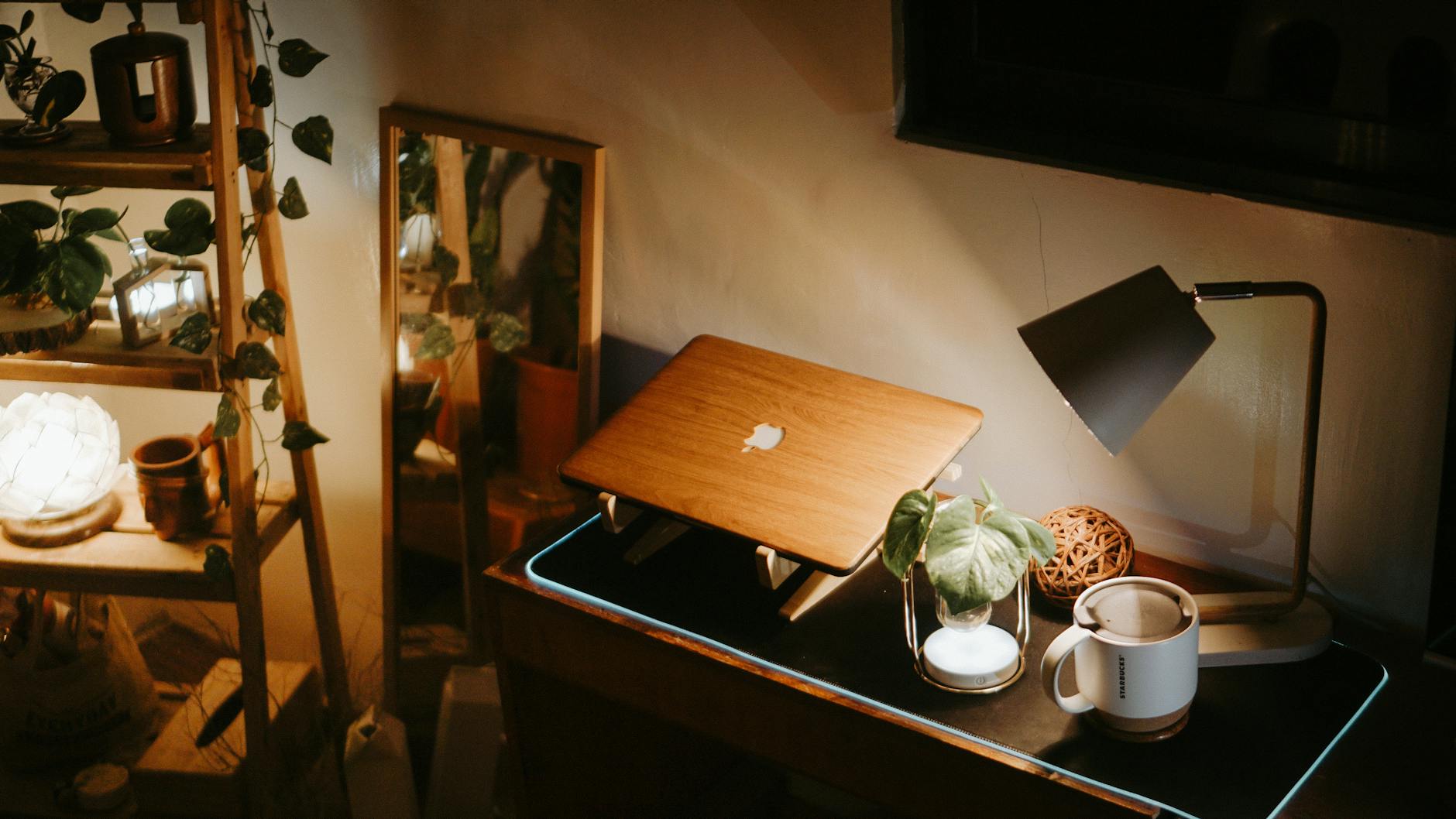
Featured Photo by Elena Golovchenko on Pexels.