
There is a quiet, human instinct to find a safe corner. Think of how a child builds a fort out of blankets, or how we gravitate toward the booth in the back of a quiet cafe. We are always looking for a place where we can let our guard down, even just a little.
Your bedroom is meant to be the ultimate expression of this feeling. It’s more than just a room with a bed; it’s a space dedicated to rest, renewal, and quiet contemplation. It’s the one place in the world where you can fully exhale and relax, a balanced Feng Shui for our bedroom can create harmony.
When we look at our homes through the lens of Feng Shui, we are simply paying attention to how our environment makes us feel. The bedroom, in particular, holds a special significance. It’s the space that supports our most vulnerable state—sleep.
The Bedroom’s Purpose: A Place of Yin
In many Eastern philosophies, the world is seen through the interplay of two complementary energies: Yin and Yang.
Yang is the energy of the sun. It’s bright, active, loud, and outward-focused. Think of your kitchen during a busy morning, your workspace, or a lively living room filled with conversation.
Yin, on the other hand, is the energy of the moon. It’s quiet, dark, soft, and inward-focused. It is the energy of rest and receptivity. Your bedroom is considered the most Yin space in your home.
When a bedroom feels restless or unsettled, it can sometimes be because it has too much Yang energy. The goal isn’t to eliminate Yang entirely, but to create a gentle balance where Yin qualities are allowed to lead.
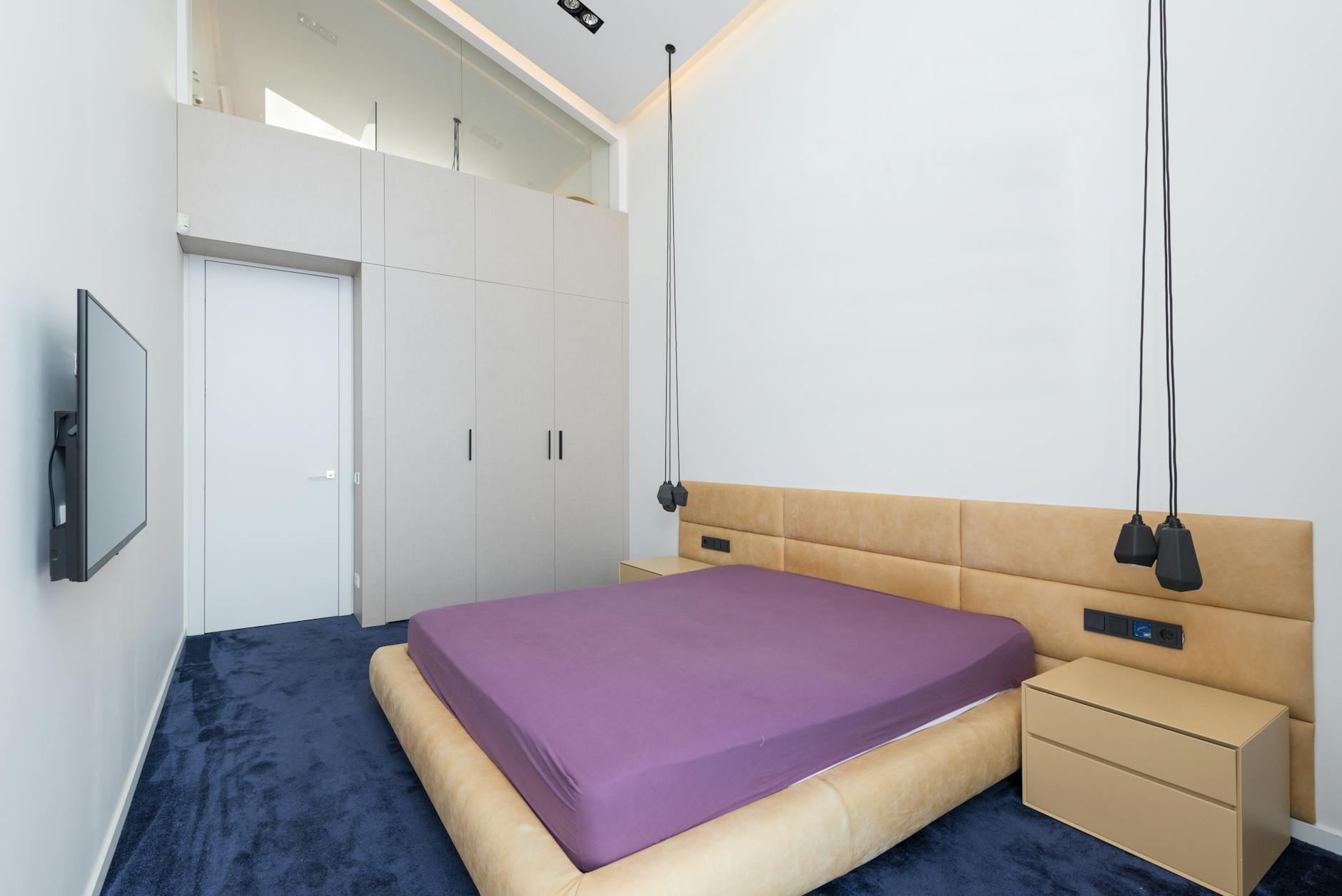
The Commanding Position: A Feeling of Security
One of the most well-known concepts in Feng Shui for the bedroom is the idea of the “commanding position.”
This simply refers to placing the bed so that you can see the door to the room without being directly in line with it. Imagine lying in bed and having a clear, easy view of who might be entering.
This isn’t about superstition. It’s about a deep, instinctual need for security. When our subconscious mind knows we can see the entrance, it can relax more deeply. It doesn’t have to stay on high alert.
If your bed is directly in line with the door, some people feel as though energy rushes toward them too quickly. If your back is to the door, you might feel a subtle sense of vulnerability.
What If My Room Doesn’t Allow It?
Many modern bedrooms have layouts that make this classic placement difficult. That’s perfectly okay. The principle is about the feeling, not a rigid rule.
If you can’t place your bed in the commanding position, you can explore gentle adjustments. Some people place a small, discreet mirror at an angle where they can see a reflection of the doorway from their bed. The key is to find what helps you feel most at ease in your own space.
What Surrounds You? Exploring Your Bedroom’s Elements
Once the bed is situated, we can look at the other elements in the room. Each one contributes to the overall feeling of the space, like notes in a quiet song.
The Bed Itself
Your bed is the centerpiece of the room. In Feng Shui, a strong, solid headboard is often recommended. It is thought to provide a sense of support and stability at your back while you sleep.
Some people find it helpful to place the headboard against a solid wall, rather than under a window. A wall can offer a feeling of protection and groundedness that a window, with its connection to the outside world, may not.
Consider the space under your bed as well. For many, this becomes a convenient storage area. However, some perspectives suggest that keeping this space clear allows for a better flow of air and energy around you as you rest. If you do need to store items, soft things like linens or blankets are often preferred over hard, chaotic objects.
Colors and Light
Color has a profound effect on our mood. For a restful, Yin space, many people are drawn to soft, muted colors. Think of earthy tones, gentle blues, soft grays, and warm, skin-like shades.
These colors are not visually demanding. They allow the eyes and the mind to rest. Bright, saturated colors are more Yang and can feel stimulating, which you might find better suited for more active areas of the home.
Light is just as important. The ability to control the light in your bedroom is key. Blackout curtains or blinds can help create the deep darkness that supports restorative sleep. For the evening, soft, warm, ambient lighting from a lamp is often more calming than harsh overhead lights.
Mirrors and Reflections
Mirrors are a common topic in bedroom Feng Shui. Because they reflect light and movement, mirrors are considered an “activating” element. They bring a type of Yang energy into a space.
Some people find that having a large mirror facing the bed can be disruptive to sleep. The reflection can catch movement or light, subtly disturbing your peace. It can feel as if another presence is in the room.
This is a wonderful opportunity for personal observation. Notice how the mirrors in your room feel to you. If you have a mirror facing your bed and sleep perfectly well, there is no need to change a thing. If you feel a bit unsettled, you might try covering it with a cloth for a few nights to see if you notice a difference.
Technology and Work
In our modern world, the line between work and rest is often blurred. Laptops, televisions, and smartphones frequently find their way into our bedrooms.
From a Feng Shui perspective, these items carry a strong Yang energy. They represent work, communication, and stimulation—the very things we are often trying to retreat from when we enter our sanctuary.
Bringing a desk into the bedroom can create a symbolic link between rest and responsibility, making it harder for the mind to switch off. If you have a workspace in your bedroom, you might consider using a screen or curtain to visually separate it when the workday is over.
Creating a simple ritual, like putting your phone to charge across the room an hour before bed, can help establish a clear boundary. It sends a signal to your mind that the time for rest has begun.
Clearing the Air: Simplicity and Scent
A restful space is often a simple space. Clutter is not just physical; it’s visual. Piles of clothes, stacks of books, and cluttered surfaces can create a subtle sense of chaos or unfinished business.
You don’t need to become a minimalist overnight. The invitation is to simply start small. Clear off one surface, like your nightstand. Leave only a lamp, a book, and perhaps a glass of water. Notice how that small pocket of calm feels.
The quality of the air you breathe also matters. Whenever possible, opening a window to let fresh air circulate can be refreshing. Stale, stagnant air can make a room feel heavy and lifeless.
Scent can also gently shift the energy of a room. Calming scents like lavender or chamomile, used in a diffuser with essential oils, can become a beautiful part of a bedtime routine. They are another signal to the body and mind that it is time to unwind.
Your Bedroom, Your Sanctuary
Exploring these ideas is not about following a set of rigid rules. It is an invitation to become more aware of your own environment and how it makes you feel.
Walk into your bedroom as if for the first time. What is the very first thing you notice? How does the air feel? Where does your eye land? Does it feel like a space that is holding and supporting you?
You might try making one small change. Perhaps you move a plant into the room, or take a stack of papers out. Maybe you simply make your bed with intention each morning. Notice if that small shift changes the feeling of the space, even slightly.
Your intuition is your best guide. The goal is not to create a “perfect” Feng Shui bedroom according to a book. The goal is to create a room that feels deeply and personally restful to you.
Your home is yours. Let your bedroom be the place where you can truly come home to yourself.
Featured Photo by Burst on Pexels.
Related Reading
- Bed Placement: Traditional Perspectives
- Storage: Containing Without Hiding
- Fireplaces: Warmth, Symbolism, and Placement