
There’s a quiet, universal sigh that happens when we come home and walk through our entryway. It’s the sound of keys hitting a table, of bags dropping to the floor, of the day’s weight lifting just a little. That first breath you take inside your own space is different from all the others you’ve taken all day.
This simple moment of transition, from the outside world to our private one, almost always happens in the entryway. It’s a space we pass through without much thought, but it sets the tone for our entire experience of being home.
It’s the first hello and the last goodbye. It’s the handshake of your home, offering a first impression not just to guests, but to you, every single day.
The Feng Shui Perspective: The Mouth of Qi
In Feng Shui, there is a beautiful and simple metaphor for the front door and the entryway. It is called the “Mouth of Qi.”
Qi is a word used to describe the life force or energy that flows through everything. You can think of it as the feeling of a space—the invisible quality that makes one room feel uplifting and another feel heavy.
Just as we need breath to live, some people find that a home feels more vibrant and supportive with a flow of healthy Qi. The front door is where this energy is thought to enter. It’s seen as the primary way your home receives nourishment from the outside world.
This isn’t about complex rules or unseen forces. It’s a way of looking at your home as a living, breathing entity that you are in relationship with. A welcoming, clear entryway can feel like a deep, easy breath.
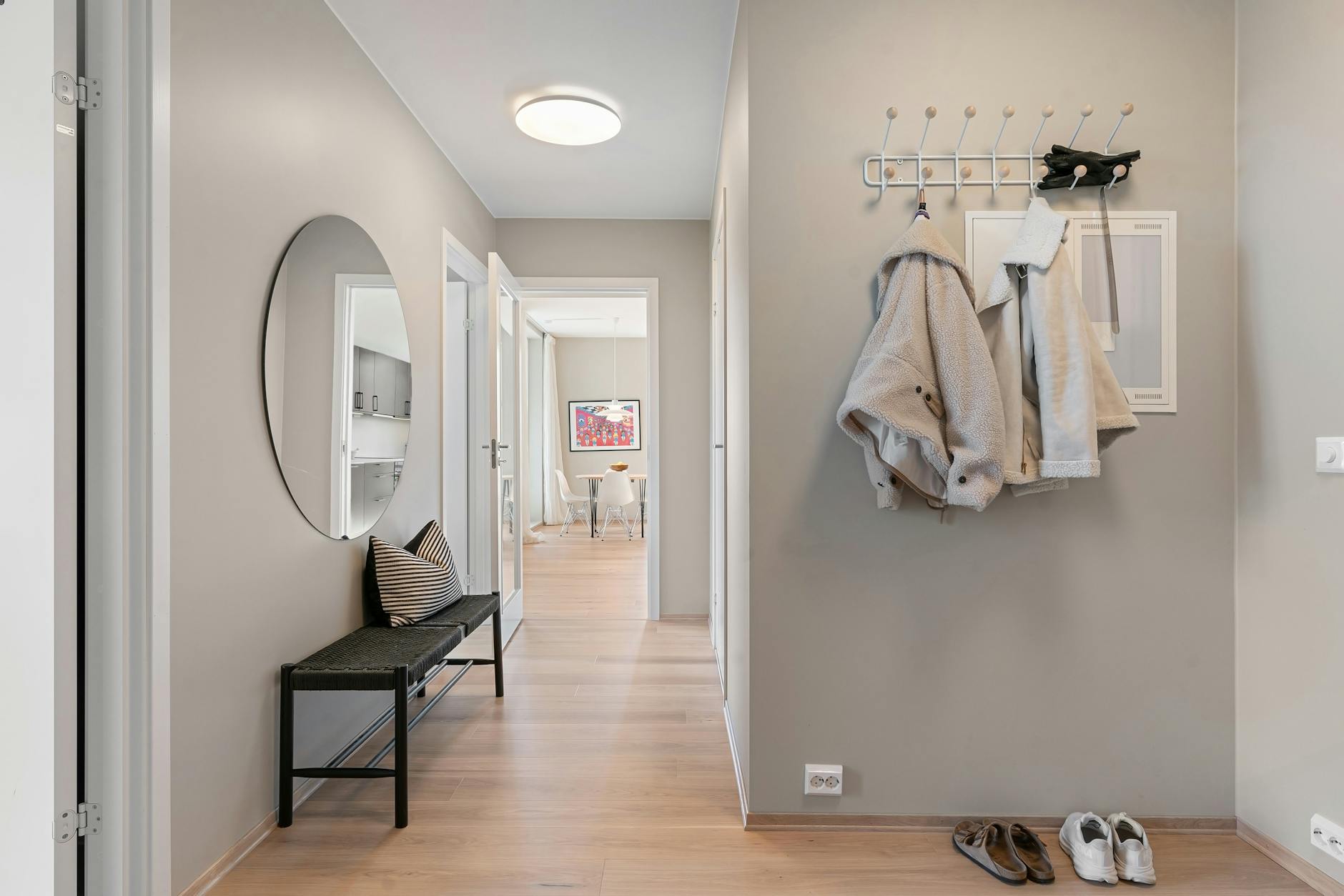
Your Entryway’s First Impression on You
Before we explore any principles, let’s start with a simple observation. How does your entryway make you feel right now?
When you open your front door after a long day, what is the very first thing you see? Is it a clear path into a calm room? A beautiful piece of art? A pile of shoes and a stack of unopened mail?
What is the first thing you do? Do you have a place to easily set down your keys and bag, or is it a bit of a scramble? Do you feel a sense of relief, or a subtle sense of another task waiting for you?
There is no right or wrong answer here. The goal is simply to notice. Your entryway is already communicating with you, and paying attention to its message is the first step.
Exploring the Path to Your Door
The experience of arriving home doesn’t begin the moment you step inside. It starts on the path leading to your door. This journey, however short, prepares you for the transition.
The View from the Outside
Take a moment to stand on the street or in the hallway and look at your front door as a visitor would. What do you see?
Is the path to your door clear and easy to walk? A clear path is literally welcoming. It can make the approach feel effortless and pleasant.
Is your house number easy to see? This is a practical detail, but it also sends a message of clarity. It says, “You have arrived at the right place.”
Look at the small details. A clean welcome mat, a pot with a healthy plant, or a porch light that works can all contribute to a feeling of care and intention. These are simple signals that this home is tended to.
The Door Itself
In Feng Shui, the front door is given special attention. It’s seen as the main portal between your personal world and the public one.
How does your door function? Does it open smoothly and fully, or does it stick or squeak? A door that opens with ease can create a feeling of effortless flow.
Consider its condition. Is the paint fresh, or is it peeling? Is the hardware clean and polished? Again, this isn’t about expense or having a brand-new door. It’s about maintenance and care. A well-tended door often feels more inviting.
Inside the Threshold: Creating a Gentle Landing
Once you cross the threshold, you are in a unique transition zone. This small area has the important job of helping you shift from your public self to your private self.
Clarity and Openness
The most immediate feeling in an entryway comes from the sense of space. Can you walk in without having to navigate around obstacles?
In Feng Shui, a clear, open space at the entrance is thought to allow Qi to enter and gather before circulating through the home. From a purely practical standpoint, it just feels better. Not having to trip over a stray boot or squeeze past a bulky piece of furniture reduces a tiny bit of daily friction.
This area is sometimes called a “Ming Tang,” or Bright Hall. It’s a concept for a small, open area right inside the door that acts as a welcoming landing spot.
Light and Air
Lighting has a profound effect on our mood. How is the light in your entryway?
A well-lit entrance often feels safe, optimistic, and welcoming. A dark or shadowy foyer can feel heavy or unwelcoming, even to the person who lives there.
If you don’t have much natural light, you might consider adding a lamp with a warm bulb. Placing a mirror on a wall perpendicular to the door can also help bounce light around the space, making it feel brighter and larger.
The First Glimpse
What your eyes land on first can set an immediate emotional tone. What is the first view from your front door?
Some schools of Feng Shui suggest being mindful of what is directly opposite the door. For example, some people find that a mirror placed directly facing the door can make a space feel less settled, as if the energy doesn’t linger.
Similarly, a staircase directly facing the door is sometimes seen as a path for energy to rush up or down, bypassing the main living areas. You can observe this for yourself—does it feel like the energy of the home is pulling away from the entrance?
These are not rigid rules. They are invitations to notice the feeling of flow. Many people find that the ideal first view is something beautiful and calming: a piece of art, a vase of flowers, or a glimpse into a peaceful room.
Common Entryway Situations and Gentle Ideas
Not all homes have a grand, formal foyer. Many of us live with entryways that are small, awkward, or non-existent. Here are a few common scenarios and some gentle ways to think about them.
The “No Entryway” Entry
Many apartments and homes open directly into a living room or kitchen. When there’s no architectural separation, it can feel like the outside world is spilling directly into your personal space.
In this case, you might create a symbolic entryway. A small, durable rug can help define the “landing zone.” A narrow console table or a small shelf against the wall can create a designated spot for keys and mail.
Even a single, dedicated hook on the wall for your coat can create the psychological boundary you might need. It’s a way of saying, “This is the spot where the transition happens.”
The Narrow Hallway
A long, narrow hallway can feel constricting. The goal here is often to create a sense of spaciousness and slow the flow down.
- Mirrors: A mirror on one of the long walls can create an illusion of width, making the space feel less cramped.
- Lighting: You might find that ensuring the hallway is well-lit helps. Sconces or a series of ceiling lights can be more effective than a single overhead fixture.
- Artwork: Hanging a series of pictures can encourage you to pause and look, which gently slows down your movement through the space.
The Clutter Zone
Let’s be realistic: entryways are workhorses. They are the natural dumping ground for shoes, coats, backpacks, mail, and sports equipment. This is normal.
The feeling of chaos often comes not from the items themselves, but from the lack of a system for them. The invitation here is to create simple, easy-to-use storage.
A basket or a tray for mail can keep it from spreading across a surface. A shoe rack or a bin keeps shoes from becoming a tripping hazard. A few sturdy hooks are often more effective for daily-use coats than a closet you have to open and close.
The aim isn’t sterile perfection. It’s about creating a system that makes your daily life a little bit easier and the space feel a little bit calmer.
Color, Art, and Personal Touches
Beyond function, your entryway is a wonderful opportunity to express your personality and set a welcoming tone.
Choosing Colors
Color has a direct impact on our emotions. When choosing a color for your entryway, think about the feeling you want to create when you come home.
Warm colors like soft yellows, peaches, or terracotta can feel welcoming and social. Cool colors like light blues, greens, or grays can feel more calm and serene. There is no “lucky” color; there is only the color that feels right to you.
What to Hang on the Walls
The art in your entryway is the first thing you see when you arrive and the last thing you see when you leave. You might choose something that makes you feel good.
This could be a family photo that makes you smile, a landscape painting that feels peaceful, or an abstract piece with colors you love. It’s a personal statement about what your home represents to you.
A Touch of Nature
Bringing a living element into the entryway is a simple way to add vitality. A healthy plant is a classic Feng Shui symbol for growth and life.
If your entryway has low light, many hardy plants like the snake plant can thrive. Even a simple vase with fresh flowers or a bowl of stones can connect the space to the natural world.
A Gentle Invitation to Observe
All of these ideas are simply tools for observation. The real wisdom comes from your own experience in your own space.
Sometime this week, try this simple exercise. Open your front door and just stand there for a full minute. Don’t do anything. Just breathe and notice.
Notice the quality of the light. Notice the sounds. Notice what objects are in your line of sight. Most importantly, notice how your body feels. Do you feel yourself relax? Do you feel a subtle tension?
This quiet moment of awareness will tell you more than any book or article ever could. Your home is already speaking to you. All you have to do is listen.
Your Home, Your Sanctuary
Feng Shui offers a beautiful lens through which to view our homes, but it is not a set of rigid rules. It is a practice of awareness and intention.
Your entryway is deeply personal. The most important principle is that it feels good to you. It can be a space that welcomes you home, that offers you a moment of peace, and that reflects the life you are creating within its walls.
Your home is your sanctuary. Let its very first room be a gentle reminder of that, every time you walk through the door.
Featured Photo by Allyson SALNESS on Pexels.
Related Reading
- The Bagua Map: Your Home’s Energy Map
- Key Terms Glossary: 20 Words You’ll Encounter
- Cul-de-Sacs and Dead Ends