
Think about the last time you walked into a quiet coffee shop. Where did you choose to sit? Many of us, without even thinking about it, will pick a spot with our back to a wall and a clear view of the entrance. We just settle in, feeling a little more at ease.
This quiet, instinctual choice is something we do all the time. We are naturally drawn to positions where we feel safe, aware, and in control of our surroundings. It’s a simple human preference for comfort and security.
When we bring this awareness into our home office, it can gently shift how we feel about our work. The place where we spend so many hours—our desk—has a subtle but steady influence on our focus and state of mind. One of the most explored ideas in Feng Shui for the office is this very instinct, often called the Command Position.
What is the Command Position?
In Feng Shui, the Command Position is often considered an empowering and supportive placement for your desk, bed, or even your favorite armchair. It’s not about being domineering or controlling others. It’s about feeling in command of your own life and energy.
Imagine you are the captain of a ship. You would want to be at the helm, with a clear view of the horizon, the weather, and anything approaching. You wouldn’t want to face a wall with your back to the open sea. The Command Position is simply the “captain’s seat” of your room.
The idea is that this placement allows you to see opportunities coming your way and feel prepared for whatever the day holds. It’s a position of quiet confidence.
The Three Core Elements
The Command Position is generally understood through three simple principles:
- You can see the door. Your desk is positioned so you have a clear line of sight to the main entrance of the room without having to turn your head too much.
- You are not directly in line with the door. Some people prefer not to sit right in the path of the doorway. They imagine a river of energy flowing in; they like to be on the bank, not in the direct current.
- You have a solid wall behind you. This can provide a sense of support and stability. It’s like having someone “watch your back.”
When these elements come together, they can create a space that feels both secure and expansive.
Why This Placement Often Feels Better
Beyond the philosophy of Feng Shui, there are practical, psychological reasons why the Command Position can feel so good. Our brains are wired for safety and awareness, and our environment plays a big role in that.
The Comfort of a Clear View
When your back is to the door, you can’t see who is entering the room. Every time the door opens, you might experience a tiny, subconscious startle. Your nervous system might spend a little bit of energy being on alert.
Over the course of a long workday, this low-level vigilance can feel draining for some. It can pull at your focus and create a subtle feeling of unease. Being able to see the door can eliminate this element of surprise. You become aware of your surroundings, which might allow your mind to relax more deeply into your work.
The Support of a Solid Wall
Having a solid wall behind you can be a primal comfort. It can create a protective, stable anchor for your energy. There are no surprises coming from behind, no open space that might feel vulnerable.
Think of it like leaning against a strong, old tree. The feeling can be one of grounding and support. This might translate into feeling more confident and secure in your decisions and tasks throughout the day.
In contrast, sitting with a window or another door directly behind you can sometimes feel less stable for some people, as if your support is less solid or your attention is being pulled in two directions.
Exploring Common Desk Placements
Most of us don’t have a perfectly shaped, dedicated office. We work in spare bedrooms, corners of living rooms, or oddly shaped nooks. Let’s look at some common desk setups and the feelings they are sometimes associated with.
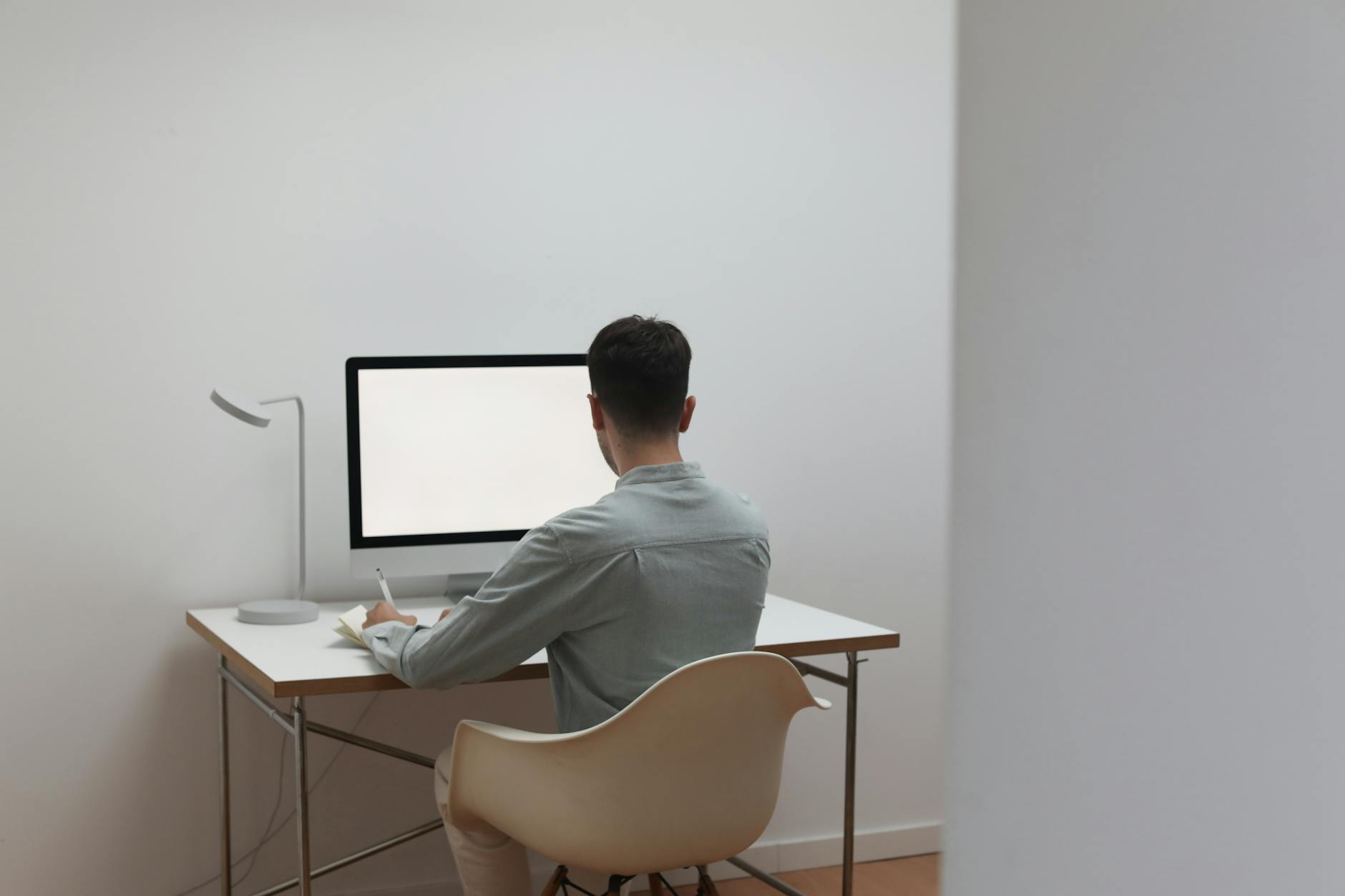
Facing a Wall
This is one of the most common desk placements, especially in smaller spaces. It’s practical and saves room. For some, it can feel cozy and help with focus by limiting distractions.
For others, staring at a blank wall all day can feel limiting or stagnant. It can feel like you are facing a constant obstacle. Your view is restricted, which can sometimes be reflected in a feeling of being “stuck” on a problem or project.
Back to the Door
As we’ve explored, this position can create a sense of vulnerability for some. You are unaware of what is happening behind you, which can lead to a feeling of being on edge.
This doesn’t mean it’s “bad,” but it’s worth noticing if you often feel startled or have trouble concentrating in this position. It might be that your subconscious is simply trying to keep an eye on the door for you.
Facing a Window
Looking out a window can be wonderful. It provides natural light and a connection to the outside world. It can be inspiring and give your eyes a much-needed break from the screen.
However, for some people, it can also be very distracting. The movement of cars, people, or even swaying trees can pull your attention away from your work. It’s a personal preference—some find it energizing, while others find it hard to focus.
Sitting With a Window Behind You
This placement can have two potential effects. First, the light from the window can cause a glare on your computer screen, leading to eye strain. Second, similar to having your back to a door, an open window behind you can feel less supportive than a solid wall to some.
It can feel as though your energy, or your great ideas, are flowing right out the window instead of being contained and nurtured in your workspace.
Floating in the Middle of the Room
Placing a desk in the center of a room can feel very powerful and expansive. It can be a true command position, especially if you can see the door and have a clear view of the entire space.
The only potential downside is that without a wall behind you, it can sometimes feel a bit ungrounded or exposed. You are open to energy and movement from all sides, which can be invigorating for some and overwhelming for others.
What If the “Perfect” Position Isn’t Possible?
Please, do not worry if your room’s layout makes the classic Command Position impossible. Most of us have to work with the space we have. Feng Shui is not about achieving perfection; it’s about making small, intentional adjustments to improve the feel of a space.
Here are a few gentle ideas if your desk placement feels less than ideal.
If You Face a Wall…
You might consider giving yourself a beautiful view. Hang a piece of art that you love, something that inspires a feeling of depth and possibility. A landscape painting, a photo of the ocean, or an abstract piece with uplifting colors can all work.
You could also put up a vision board. This turns the wall from a barrier into a source of inspiration, reminding you of your goals and dreams.
If Your Back is to the Door…
A simple solution some people find helpful is to place a small mirror on your desk or on the wall in front of you. It doesn’t have to be large. Just a little mirror, angled so you can see the reflection of the doorway, can be enough.
This small tool gives you awareness. You can see when someone is entering without having to turn around. This can instantly calm that subconscious need to be on alert.
If You Don’t Have a Solid Wall Behind You…
You might create a sense of support in other ways. Choosing a chair with a high, solid back is one option. A tall, healthy plant placed behind your desk can also create a symbolic buffer, representing growth and stability.
A bookshelf or a decorative screen can also serve as a substitute for a solid wall, creating a defined and protected space for your work area.
If Your Desk Feels Ungrounded…
If your desk is floating in the middle of the room and it feels a bit adrift, you might consider placing a rug underneath it. A rug can define the space as your own and provide a grounding anchor. It visually and energetically says, “This is my spot.”
A Gentle Invitation to Observe
You don’t need to rearrange your entire office today. The most valuable step is simply to bring a new awareness to your space. Take a moment right now. Sit at your desk and just notice how you feel.
Do you feel supported? Do you feel relaxed? Do you feel a little on edge? There are no right or wrong answers. It’s just an observation.
If you feel curious, you could try a small experiment. If possible, try moving your desk to a different position for a few days. Don’t judge it immediately. Just live with it and notice if anything feels different. Does your focus change? Does your mood shift? You are the best expert on what works for you.
Your Office, Your Comfort
Ultimately, the goal of arranging your home office is to create a space that supports you and your work. The principles of Feng Shui, like the Command Position, are not rigid rules. They are ancient observations about how our environment can affect our state of being.
Use these ideas as a guide, a starting point for your own exploration. The most powerful and supportive home office is one that feels right to you. Your home is yours, and your comfort is the most important thing of all.
Featured Photo by Curtis Adams on Pexels.