
There is a quiet language our furniture speaks. A sofa turned away from the door says something very different than one that seems to welcome you in. We often feel this language without quite knowing how to name it.
A room can feel open and easy, or it can feel a little stuck. Sometimes, the difference is simply the placement of a chair or the path you take to cross the floor.
This is where we can gently explore the ideas of seating and flow in our living rooms. It’s not about following strict rules, but about listening to the story your space is telling, and seeing if you’d like to help it tell a new one.
The Heart of the Home
The living room is often called the heart of the home. It’s where we gather, relax, connect, and share our time with others. It’s a space meant for comfort and conversation.
In Feng Shui, there is a concept of Qi (pronounced “chee”). You can think of Qi as the life-force energy that flows through a space. It’s not something mystical, but more like a gentle breeze or the current in a quiet river.
When the flow is smooth and gentle, a room tends to feel more restful and balanced. When it’s blocked or moves too quickly, the space can feel a bit chaotic or stagnant.
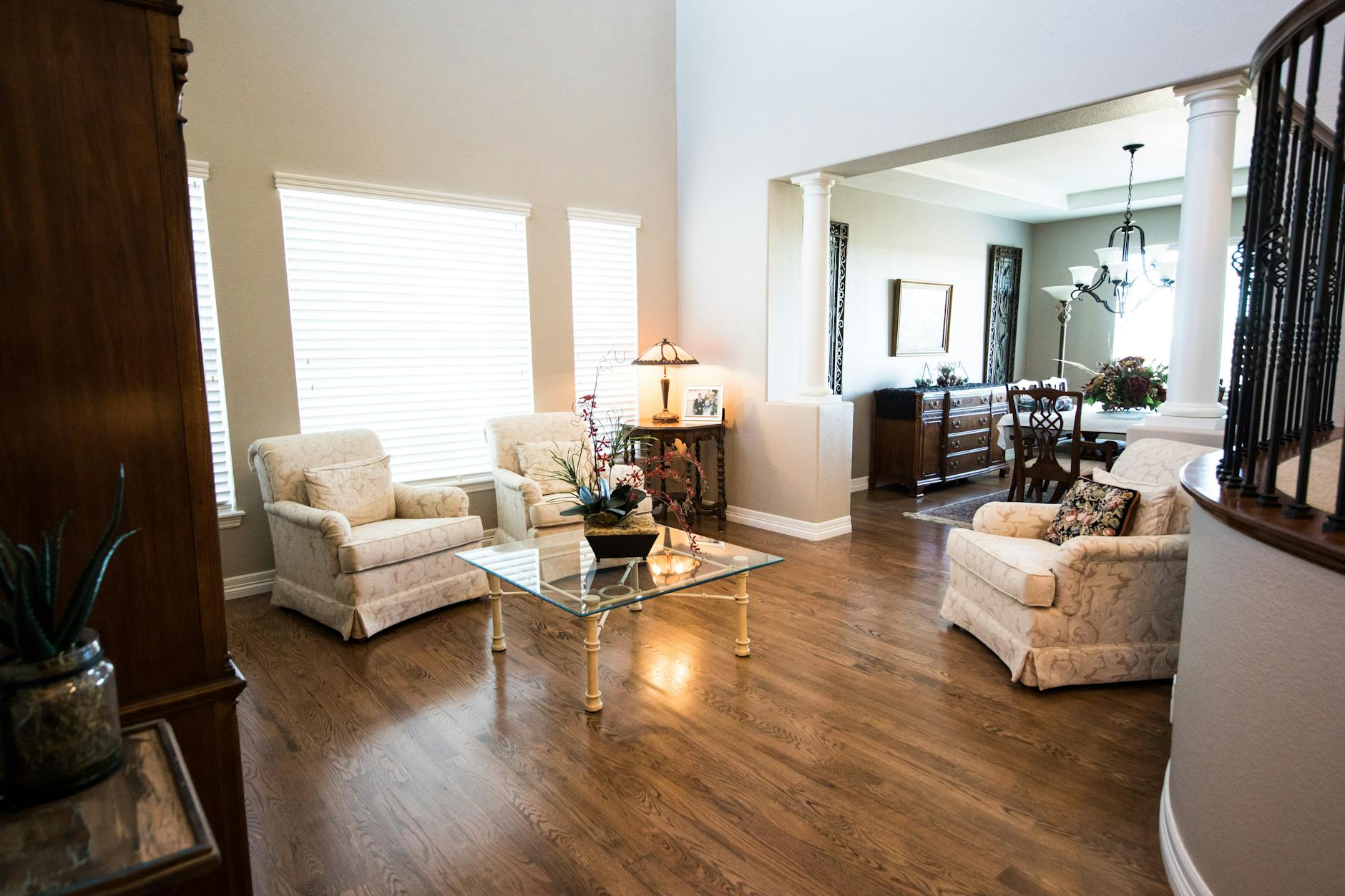
The Commanding Position in Conversation
One of the foundational ideas in Feng Shui is the “commanding position.” This isn’t about power or control, but about a feeling of safety and ease.
Typically, this means being able to see the entrance to the room without being directly in line with it. When we can see who is coming and going, our nervous systems can relax on a very subtle level.
For a living room, this often applies to the main seating piece, usually the sofa. Some people find that placing the sofa against a solid wall, with a clear view of the main doorway, creates a wonderful sense of security.
What if You Can’t?
Many modern living rooms have open floor plans or multiple doorways, making this arrangement tricky. Don’t worry. This is an observation, not a command.
If you can’t place your sofa against a solid wall, you can create a sense of support in other ways. A console table placed behind a “floating” sofa can provide a subtle boundary. A tall lamp or a healthy plant can also create a symbolic sense of protection.
Creating Connection, Not Confrontation
The primary purpose of living room seating is to bring people together. The way we arrange our furniture can either encourage or discourage easy conversation.
You might consider creating comfortable groupings where people can speak without having to raise their voices or crane their necks. A distance for conversation that feels connected, but not crowded, can often be quite pleasant.
An L-shape or a U-shape arrangement is often very conducive to this. It allows people to face each other comfortably, creating a natural circle of connection.
The Art of the Angle
Sometimes, even a small adjustment can change the entire feeling of a room. If you have two chairs facing a sofa, try angling them slightly inward toward each other.
This simple shift breaks up rigid, formal lines and creates a more welcoming, inclusive feeling. It’s a gentle invitation for energy—and conversation—to gather and settle.
Pathways and Gentle Rivers of Qi
Now, let’s think about flow. How do you and your guests move through the living room? Are the pathways clear and easy to navigate?
In Feng Shui, some people find that a meandering and gentle flow of Qi, like a slow-moving stream, feels most harmonious. You might consider whether pathways are blocked by furniture, or if energy seems to rush through in a straight line from a door to a window.
Take a moment to walk the main paths in your living room: from the doorway to the sofa, from the sofa to the window, from one seating area to another. Do you have to squeeze past a coffee table or sidestep a chair?
Clearing these pathways, even by a few inches, can make a space feel significantly larger and more peaceful. It allows energy to circulate freely, which often translates to a feeling of ease for the people in the room.
The Coffee Table Question
The coffee table is often the centerpiece of the seating area, but its shape and placement matter.
Some people observe that a table with sharp, square corners, especially if they point directly at where people sit, can sometimes contribute to a feeling of ‘cutting energy’ or ‘sha qi’ in Feng Shui. This doesn’t mean you need to get rid of your table, but it’s something you might notice in how the space feels.
If a seating area feels a bit “sharp” or uncomfortable, you might observe if a corner is pointed at it. A round or oval coffee table can soften this feeling, encouraging a more gentle, circular flow of energy around the space.
Anchoring Your Space
A well-defined seating area feels grounded and intentional. One of the simplest and most effective ways to achieve this is with a rug.
A rug acts as an anchor, visually tying all the different pieces of furniture together into one cohesive group. It creates a clear zone for conversation and relaxation.
When choosing a size, many designers suggest a rug that is large enough for at least the front legs of your sofa and all your chairs to rest on it. This creates a generous, unified foundation for the entire grouping.
Common Arrangements and Their Feeling
- The L-Shape: This classic setup, often with a sofa and a loveseat or two chairs, is wonderful for defining a corner. It feels cozy and contained, making it great for both conversation and TV watching.
- The U-Shape: A sofa flanked by chairs or loveseats on either side creates a deep, welcoming pocket. This is a very sociable arrangement, perfect for larger rooms where you want to encourage lots of interaction.
- Parallel Sofas: Placing two sofas directly facing each other creates a sense of balance and symmetry. It can feel a bit more formal, but it is one of the best layouts for promoting face-to-face conversation.
- The Floating Arrangement: In a large or open-plan space, pulling all the furniture away from the walls can create a much more intimate and cozy seating area. It defines the living space without needing walls to do so.
A Gentle Invitation to Observe
The most powerful tool you have is your own awareness. You don’t need a compass or a complex chart to begin understanding the flow of your own home.
Take some time to simply sit in your living room. Pour a cup of tea and just be in the space. Notice how it feels.
Where does your eye naturally go when you walk in? Is there a chair that no one ever seems to sit in? Where do guests tend to gather when they visit?
Your own observations are your best guide. The answers to these questions can tell you more about your room’s energy than any book could.
Try a Small Experiment
If you feel inspired, try making one small change. You don’t have to rearrange everything at once. Just move a single side table, or angle a chair differently.
Live with it for a few days. See how it feels. Notice if it changes how you use the room. This gentle process of observation and adjustment is the true heart of creating a space that supports you.
Your Home, Your Sanctuary
Remember, these are simply perspectives and observations, not rigid rules. The goal of exploring Feng Shui is not to create a “perfect” home according to an external standard.
The goal is to create a home that feels perfectly supportive and comfortable for you. If your current arrangement brings you joy and comfort, then it is the right one.
Your living room is a reflection of your life and your connections. Let it be a place of ease, warmth, and happy gatherings. Trust your intuition, and allow your space to be a true sanctuary.
Featured Photo by Max Vakhtbovych on Pexels.