
There’s a reason we feel drawn to certain chairs in a cafe. It’s the same reason some rooms invite you to stay for hours, while others make you feel restless, eager to leave.
We often dismiss these feelings as simple preference or mood. But what if it’s something more? What if the room itself has a quality, a flow, that we are sensing?
In the world of Feng Shui, this subtle current is known as Qi (pronounced “chee”). It’s a simple concept that helps us understand the feeling of a space.
What is Qi? A Simple Look
Qi is often translated as “life force” or “vital energy.” This can sound a bit abstract, but you can think of it in more familiar terms.
Imagine Qi as the gentle breeze that flows through an open window, or the current in a slow-moving river. It’s the invisible energy that animates a space, making it feel alive and welcoming, or stagnant and heavy.
You don’t need to believe in anything mystical to observe it. You’ve already felt it. It’s that sense of ease in a well-arranged living room, or the feeling of calm in a tidy, sunlit bedroom.
The aim in Feng Shui is not to control this energy, but to encourage it to move smoothly and gently throughout your home, much like a healthy circulatory system.
The Path of Qi: How Energy Enters and Moves
To understand how Qi moves, it helps to think of your home as a living, breathing entity. It has points of entry, pathways for circulation, and areas where it rests.
The Mouth of Qi: Doors and Entryways
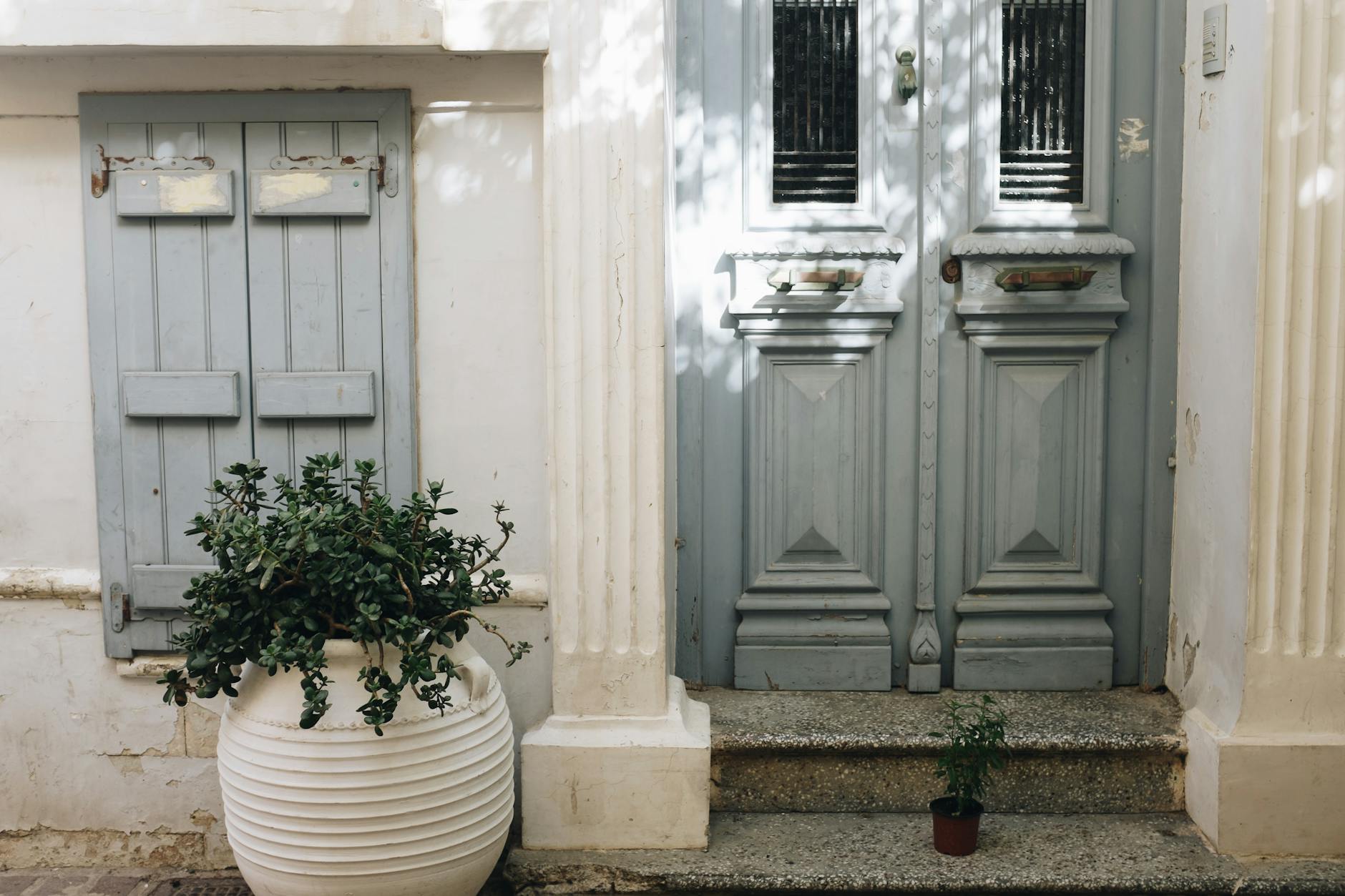
In Feng Shui, the main entrance to your home is often called the “Mouth of Qi.” This is the primary point where energy from the outside world enters your personal space.
Think about how it feels to approach your own front door. Is the path clear and easy to navigate? Or is it cluttered with recycling bins, overgrown plants, or forgotten shoes?
A clear, welcoming entryway allows energy to flow in effortlessly. When this area is blocked or cramped, it can feel like you have to push your way into your own home, both physically and energetically.
A simple observation is to stand outside your front door and then walk in. Notice the feeling. Does it feel like a welcoming embrace or a slight struggle?
The Eyes of the Home: Windows
Windows are another key way that Qi enters and interacts with your home. They bring in light, air, and views of the world outside, all of which are forms of energy.
Clean, clear windows can make a room feel instantly brighter and more expansive. They allow the maximum amount of natural light to pour in, which can lift the mood of a space.
Conversely, dirty windows or heavy, constantly drawn curtains can make a room feel dim and disconnected from the outside. The energy can feel a bit trapped or subdued.
Hallways: The Arteries of the Home
Once inside, Qi moves through your home along hallways and pathways. These are the arteries that connect the different rooms, carrying energy from one area to another.
Have you ever been in a home with a very long, straight, narrow hallway? Sometimes, this can create a feeling of energy moving too quickly, almost like a wind tunnel.
In Feng Shui, this is sometimes called Sha Qi, or “cutting” energy. It doesn’t mean it’s bad, but it can feel a bit unsettling or rushed. The energy doesn’t have a chance to meander and nourish the rooms it passes.
On the other hand, a hallway that is completely blocked with furniture or boxes can make the energy feel stuck. The flow between rooms feels constricted.
Observing Qi in Different Rooms
Each room in your home has a different purpose, and ideally, a different quality of energy. By paying attention to the flow, you can see how it supports, or perhaps hinders, the room’s function.
The Living Room: A Place of Gathering
The living room is often a social hub where the energy often feels most supportive when it is welcoming and circulatory. It’s a place for connection and relaxation.
Look at the furniture arrangement. Is it easy to walk through the room? Or do you have to squeeze past the coffee table or sidle around a large armchair?
An arrangement that creates easy, flowing pathways between the furniture encourages movement and interaction. When seating is arranged to face each other, it supports conversation.
If furniture is pushed up against all the walls with a large empty space in the middle, the room can sometimes feel less intimate and the energy a bit scattered.
The Bedroom: A Space for Rest
In the bedroom, the desired quality of Qi is calm, slow, and restorative. This is your sanctuary for rest and rejuvenation.
Many people find they sleep more soundly when their bed is in what’s called the “commanding position.” This simply means you can see the door to the room from your bed, without being directly in line with it.
This isn’t a strict rule, but an observation about human instinct. Being able to see who is entering the room can create a subconscious feeling of safety and security, allowing for deeper rest.
Heavy clutter, especially under the bed, can contribute to a feeling of stagnation. Similarly, an excess of electronics can create a more active, “buzzing” energy that may not be conducive to sleep.
The Kitchen: The Heart of Nourishment
The kitchen is a place of vibrant, active energy. It’s where we transform raw ingredients into nourishment for ourselves and our families.
The flow in a kitchen is very practical. Think about the path between your refrigerator, your sink, and your stove. This is often called the “work triangle.”
When this path is clear and efficient, cooking can feel like a graceful dance. When it’s blocked or awkward, the process can feel frustrating and chaotic.
A clean, organized kitchen with clear countertops tends to feel more inspiring. It invites you to create and nourish, whereas a cluttered kitchen can feel like a chore before you’ve even begun.
When Qi Gets Stuck or Rushes
Sometimes, the energy in a home doesn’t flow smoothly. It can either become blocked and stagnant, or it can move too quickly and erratically.
Stagnant Qi: The Feeling of Heaviness
Stagnant Qi is like a still, murky pond. The energy has stopped moving. This often collects in places we neglect.
Common areas for stagnant energy include:
- Cluttered corners or closets
- Piles of old mail and papers
- Rooms that are rarely used
- Areas with poor ventilation or little natural light
A room with stagnant Qi can feel heavy, stuffy, or even draining to be in. You might find yourself avoiding that particular corner or room without consciously knowing why.
Rushing Qi: The Feeling of Unease
Rushing Qi is like a river that has been forced into a narrow, straight channel. It moves too fast and can create a feeling of instability.
This is often observed in homes where the front door is in a direct line with a back door or a large window. The energy seems to enter the front and shoot straight out the back, without circulating through the home.
Some people find that this alignment can make a space feel less settled, as if opportunities and resources are passing through too quickly to grasp.
Again, this is not about “bad luck.” It’s about a feeling. A home that feels transient or unsettled is simply not as restful.
A Gentle Invitation to Observe
The best way to understand Qi is to become an observer in your own home. You don’t need any special tools or knowledge. You only need your own senses and a little bit of curiosity.
Take a slow walk through your home. Start at the front door and move from room to room. As you enter each space, pause for a moment.
Ask yourself a few simple questions:
- How does this room make me feel? Calm? Energized? Anxious? Tired?
- Where do my eyes naturally go when I enter?
- Is it easy to move around in this space?
- Are there any areas I consistently avoid? Why might that be?
- Where do I love to spend time? What is it about that spot?
There are no right or wrong answers. This is simply an exercise in awareness. The goal is to connect with the subtle language of your home.
If you feel inspired, try a small experiment. Clear one cluttered surface. Open a window in a stuffy room. Move a chair to a different position. Then notice if the feeling of the room changes, even slightly.
Your Home is Your Own
Feng Shui is a beautiful and ancient practice, but it is a tool, not a set of unbreakable laws. It offers a framework for observing the energy in our environment and how it affects us.
The true expert on your home is you. Your feelings and your comfort are the most important guides.
If a certain arrangement feels right to you, then it is right. The ultimate goal is to create a space that feels supportive, restful, and uniquely yours—a place where your own life energy can flourish.
Featured Photo by Lisa from Pexels on Pexels.