
There’s a reason we crave a quiet evening after a busy, noisy day. It’s the same reason a cool drink feels so good on a hot afternoon. We are constantly, and often unconsciously, seeking balance.
This natural rhythm of life is at the heart of a very old idea: Yin and Yang. You’ve likely seen the symbol, a perfect circle of black and white, swirling into one another.
For many, it’s easy to mistake this for a symbol of good versus evil. But its meaning is much gentler, and far more useful. It’s simply a picture of Yin Yang balance.
What Are Yin and Yang, Really?
Think of Yin and Yang not as opposing forces, but as partners in a dance. They are two halves of a whole, and one cannot exist without the other. They define each other.
You can’t understand “up” without “down,” or “light” without “dark.” Day gives way to night, and night gives way to day. This is the essence of Yin and Yang.
It’s a concept that helps us observe the world without judgment. It’s not about one being better than the other. Both are necessary.
The Qualities of Yin
In Feng Shui, Yin is associated with energy that is quieter, slower, and more restorative. It’s the energy of rest and reflection.
Think about the qualities of the moon:
- Quiet
- Dark
- Cool
- Still
- Soft
- Receptive
- Feminine energy
- Downward or inward movement
In our homes, Yin energy is found in things that encourage us to slow down. Think of a cozy armchair, soft lamplight, or the quiet stillness of a bedroom at night.
The Qualities of Yang
Yang, on the other hand, is the complementary energy. It’s active, bright, and expansive. It’s the energy of doing, creating, and socializing.
Think about the qualities of the sun:
- Loud
- Bright
- Warm
- Active
- Hard
- Creative
- Masculine energy
- Upward or outward movement
Yang energy in a home might be found in a bright, busy kitchen, the chatter of a family dinner, or the sunlight streaming through a large window.
Seeing Yin and Yang in Your Home
Feng Shui often uses Yin and Yang as a lens to observe the feeling of a space. It’s not about labeling rooms as “good” or “bad,” but simply noticing the dominant energy.
Every room has a mix of both. The goal isn’t a perfect 50/50 split everywhere. Instead, it’s about finding the appropriate balance for the room’s purpose.
Spaces That Often Favor Yin
Some rooms in our homes are naturally meant for rest and retreat. In these spaces, a stronger Yin presence often feels more comfortable and supportive to many people.
Your bedroom is perhaps the most Yin space in the house. Its primary purpose is rest, sleep, and rejuvenation. Too much active, Yang energy here can sometimes feel disruptive to some.
Yin elements in a bedroom might include:
- Soft bedding and plush pillows
- Thick curtains that block out light
- A soft rug underfoot
- Dim, warm lighting from lamps
- Cool, calming colors on the walls
- Curved lines in furniture, like a rounded headboard
A bedroom that is very Yang—with bright overhead lights, a television, exercise equipment, or a lot of clutter from work—might not feel as restful to some people.
A small corner dedicated to quiet activities also often benefits from more Yin energy. A comfortable chair, a soft blanket, and a small table for a cup of tea can create a wonderful sense of calm.
Spaces That Often Favor Yang
Other areas of the home are hubs of activity. These spaces are where we cook, work, and gather. A stronger Yang presence here can feel energizing and appropriate.
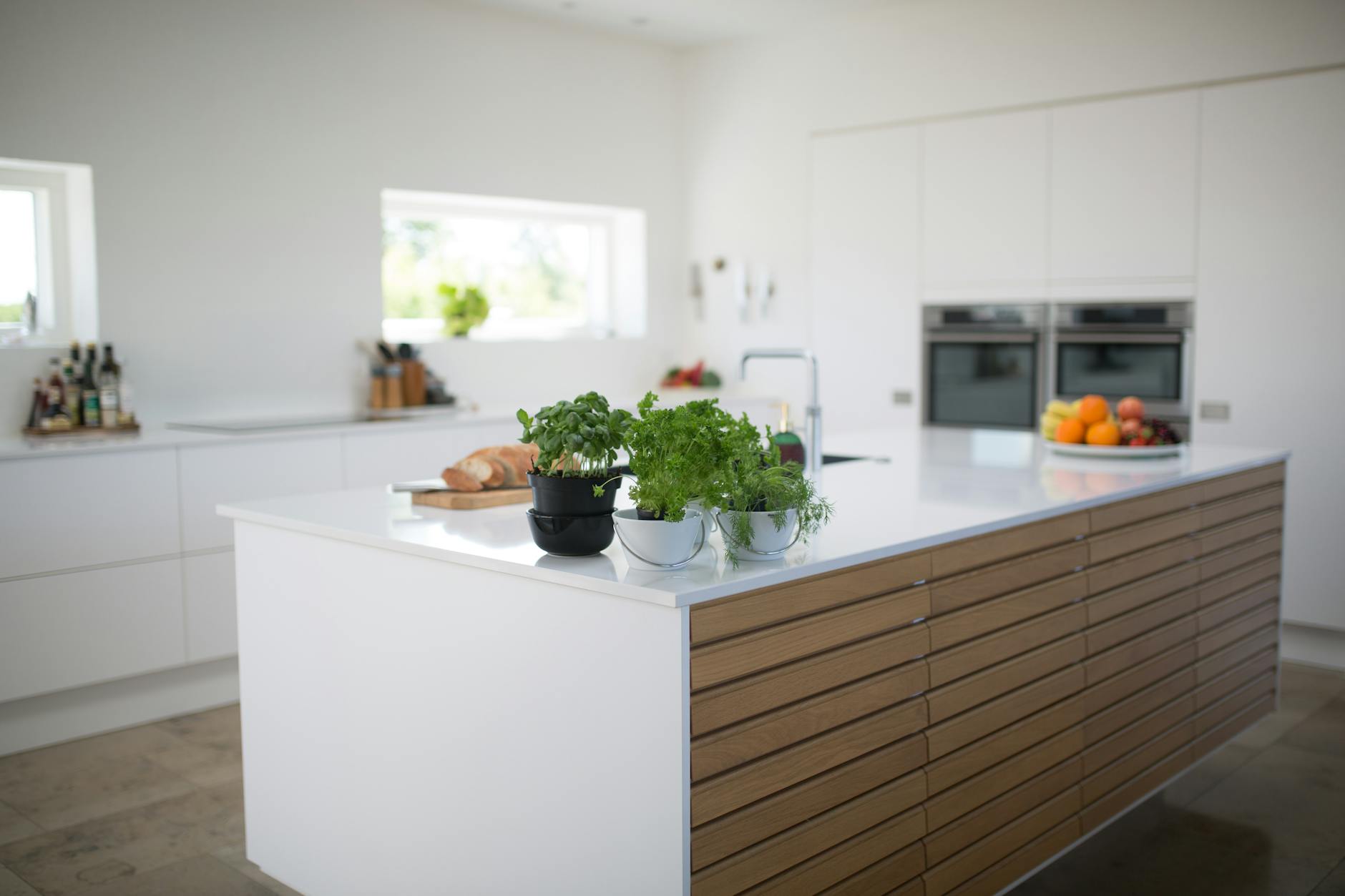
The kitchen is a classic Yang space. It’s full of activity: the heat of the stove, the sound of chopping, the bright lights needed for cooking. This energy is productive and necessary.
Yang elements in a kitchen often include:
- Bright, functional lighting
- Hard surfaces like countertops and tile floors
- The heat and fire from the stove
- The sounds of appliances and activity
- The vibrant colors of fresh food
A kitchen that is very Yin—perhaps dark, cramped, and unused—can feel stagnant or uninviting to some.
A workspace is another area where active, focused energy is often helpful. Good lighting, an organized desk, and a supportive chair are all expressions of Yang energy that can support productivity for some.
The Entryway
Your entryway, or foyer, is the first impression of your home. It’s a transitional space. A bright, open, and welcoming entryway is considered very Yang and can set a positive tone for the whole house.
Finding the Right Balance for You
The most interesting part is how Yin and Yang work together. A room that is 100% one or the other would likely feel uncomfortable. A completely Yang room might feel harsh and sterile, while a completely Yin room could feel heavy and draining.
The magic is in the mix.
A Balanced Living Room
Let’s look at a typical living room. This is often a multi-purpose space, so it often benefits from a healthy blend of both energies.
It might need to be comfortable for relaxing (Yin) but also suitable for conversation and entertaining (Yang).
Here’s how the two might appear together:
- A big, soft sofa (Yin) sits on a hard, wood floor (Yang).
- Thick, soft curtains (Yin) frame a large window that lets in bright sunlight (Yang).
- A quiet, dark painting (Yin) hangs on a bright, light-colored wall (Yang).
- A low, round coffee table (Yin) is placed in the center of a tall, open-plan room (Yang).
See how they complement each other? The soft elements balance the hard ones. The dark balances the light. This interplay can create a space that feels both comfortable and alive.
The Little Dot of Opposite
If you look closely at the Yin-Yang symbol, you’ll see a small white dot in the black swirl, and a small black dot in the white swirl.
This is a beautiful reminder that nothing is absolute. Within the darkest night (Yin), there is the promise of the morning sun (Yang). Within the brightest day (Yang), shadows still exist (Yin).
In our homes, this can be a useful idea. Even in a very Yin bedroom, a small source of light like a reading lamp (a touch of Yang) is often necessary. In a very Yang kitchen, the cool water from the sink (a touch of Yin) provides essential balance.
A Gentle Invitation to Observe
You don’t need to change anything in your home right now. The first step is simply to notice. This isn’t about finding flaws; it’s about building awareness of how your space feels to you.
Try this simple exercise. Walk through your home, room by room, and just ask yourself a few gentle questions.
In your bedroom:
Does this space feel restful? Is it easy to wind down here at the end of the day? Notice the quality of the light, the textures of the fabrics, and the overall quietness.
In your kitchen:
Does this space feel energetic? Does it feel like a place where you can be productive and creative? Notice the surfaces, the lighting, and the level of activity.
In your living room:
How does this room feel? Is it a place for quiet reading, lively conversation, or both? Notice how the hard and soft elements, and the light and dark areas, work together.
There Are No Wrong Answers
What feels balanced to one person might feel different to another. Someone who loves to entertain might prefer a more Yang living room, with bright lights and lots of open space.
Someone who uses their living room primarily for watching movies and relaxing might prefer a more Yin setup, with dimmer lights and cozier furniture.
The concept of Yin and Yang is a tool for observation, not a set of rigid rules. It gives us a language to describe the subtle energies that make a house feel like a home.
By noticing the interplay of these energies, you can begin to understand why some rooms feel so good to be in, and why others might feel a little bit off.
It’s a gentle way to connect with your environment and understand its impact on your well-being. It’s not about perfection. It’s about creating a supportive and harmonious balance that is uniquely yours.
After all, your home is yours. The most important thing is that it feels right to you.
Featured Photo by Max Vakhtbovych on Pexels.
Related Reading
- The Bagua Map: Your Home’s Energy Map
- Key Terms Glossary: 20 Words You’ll Encounter
- The Ecological Origins: Feng Shui as Ancient Observation