
There’s a quiet language our furniture speaks. A sofa pushed against a wall might say one thing. A chair angled toward a window says another. We often arrange our rooms based on habit or necessity, without pausing to notice the story they tell.
The living room, more than any other space, is where the life of the home unfolds. It’s a place for quiet mornings, lively conversations, and cozy evenings. How we arrange the furniture in this central hub can quietly shape the way we feel and interact within it.
This isn’t about finding the one “perfect” layout. Instead, let’s gently explore three common living room arrangements. We can observe how they feel, how energy might move through them, and what they offer to the people who call that space home.
A Gentle Look at Qi and Flow
In Feng Shui, there’s a concept called Qi (pronounced “chee”). You can think of it as life force energy. This energy is believed to flow through our homes, much like a gentle stream.
When furniture is arranged thoughtfully, the Qi can meander and circulate freely, creating a feeling of ease and vitality. When the path is blocked or cluttered, the energy can feel stagnant or stuck.
One related idea is the “Commanding Position.” This refers to placing your main seating—usually the sofa—where you have a clear view of the room’s entrance without being directly in line with it. For many people, this creates a subconscious feeling of safety and relaxation. You can see who is coming and going, allowing you to fully settle into the space.
As we look at these three layouts, we can hold these ideas lightly. We can ask: Where does the energy seem to flow? Where does it get stuck? From the main sofa, how does the room feel?
Arrangement 1: The Classic Conversation Circle
The first arrangement is one centered entirely on connection. It’s a timeless layout that prioritizes people over screens or other focal points.
The Layout
Imagine a sofa and two armchairs facing each other, perhaps with a soft ottoman or a round coffee table in the middle. The pieces are pulled away from the walls, creating an intimate island of comfort within the larger room.
The furniture is arranged to be in conversation. The sightlines are clear from one seat to another. This layout physically encourages people to turn towards each other.
How It Might Feel
A room arranged this way often feels welcoming and social. It sends a clear, quiet message: this is a place to talk, to listen, and to connect. There is a natural sense of balance and inclusion.
When you walk into a space like this, you feel invited to join the circle. It can feel formal and elegant, or cozy and casual, depending on the style of the furniture itself. The core feeling, however, is one of engagement.
A Feng Shui Lens
From a Feng Shui perspective, this arrangement is wonderful for circulating Qi. Because the furniture isn’t pressed against the walls, energy can flow freely around the entire grouping.
The central space—the coffee table or ottoman—acts as a grounding point, a mini energy center for the room. It gathers the focus and helps contain the conversational energy, preventing it from dissipating into the corners of the room.
If the sofa is in a commanding position, this layout feels both secure and sociable. It supports the inhabitants while warmly welcoming guests.
Practical Considerations
This layout is particularly lovely for people who enjoy hosting gatherings or have families that value conversation. It creates a dedicated zone for interaction, separate from other activities.
It can be less practical for households where watching television or movies together is the primary living room activity. While a TV can exist in the room, it won’t be the central focus, which might not suit everyone’s lifestyle.
Arrangement 2: The Media-Focused Flow
This is perhaps the most common living room layout in modern homes. It’s practical, comfortable, and designed around a shared activity we enjoy: relaxing with a good movie, show, or even a fireplace.
The Layout
In this arrangement, the main seating pieces—a sofa, a sectional, and maybe an armchair—are all oriented towards a single focal point. This is usually a media console with a television, but it could also be a beautiful fireplace and mantel.
The coffee table sits in front of the sofa, and chairs are often angled inward to get a good view. The entire room is designed to direct attention forward.
How It Might Feel
A media-focused room can feel incredibly cozy and relaxing. It’s a space designed for unwinding and shared entertainment. It signals that this is a place to put your feet up and decompress.
However, it can sometimes feel less conducive to conversation. When everyone is facing the same direction, it’s harder to make eye contact and have a natural, flowing discussion. The energy is directed outward, toward the screen, rather than inward, toward each other.
A Feng Shui Lens
The focal point in this layout holds a great deal of energetic weight. The television or fireplace becomes the point where all the Qi in the room is drawn. This isn’t inherently a “good” or “bad” thing; it’s just an observation.
To create more balance, it can be helpful to soften this strong pull. Some people do this by:
- Placing plants on either side of the media unit to introduce living energy.
- Using a cabinet that can close to hide the screen when not in use.
- Arranging art on the surrounding walls to give the eye other places to rest.
The goal is to allow the room to have more than one purpose. It can be a media room when you want it to be, but it can also feel like a living room for other moments.
Practical Considerations
This layout is undeniably practical for the way many of us live. It makes movie nights comfortable and easy. The main challenge is to ensure it doesn’t feel like a waiting room or a miniature theater.
Using comfortable chairs that can be easily swiveled or moved can help. When guests come over, a chair can be turned to face the sofa, instantly creating a more conversational pocket.
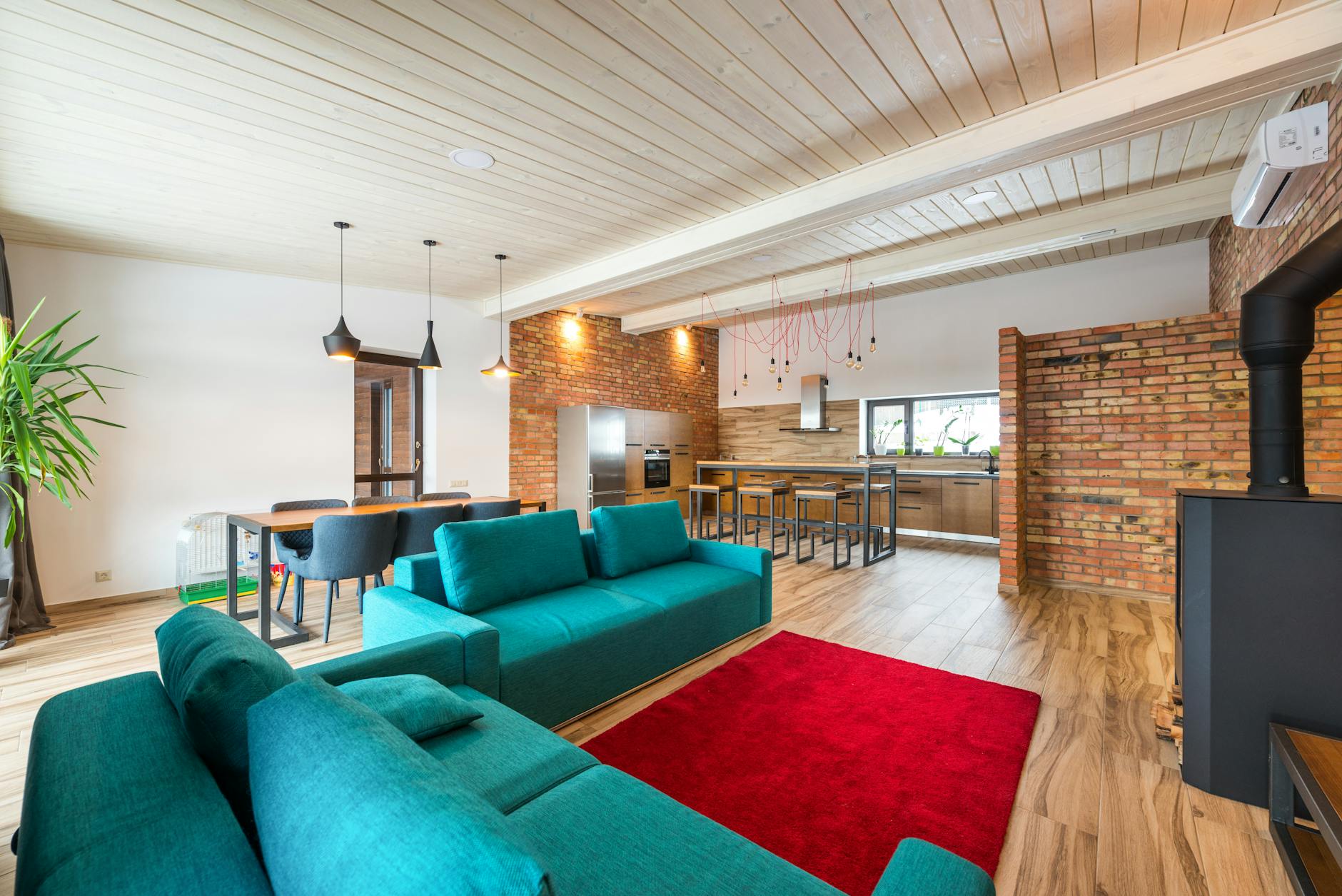
Arrangement 3: The Open-Concept Connector
Many modern homes feature large, open-concept spaces where the living room, dining room, and kitchen all flow into one another. In this scenario, furniture placement isn’t just about comfort—it’s about creating definition.
The Layout
In an open-concept room, furniture is used to create zones. The back of a sofa might act as a “soft wall,” separating the living area from the dining space. A large area rug is often used to anchor the living room furniture, creating a visual “room within a room.”
Bookshelves, consoles, or even a pair of chairs can be used to signal a transition from one functional area to another. The pathways for walking through the space are very important here.
How It Might Feel
When done with intention, this arrangement feels expansive, airy, and connected. It allows for a family to be together while doing different things—one person cooking, another reading on the sofa, and another at the dining table.
If the zones aren’t clearly defined, however, the space can feel a bit chaotic or ungrounded. It might feel like all the furniture is floating in a sea of open space, without a clear purpose or place to settle.
A Feng Shui Lens
This layout is all about creating energetic containers without physical walls. The area rug is a powerful tool here. In Feng Shui, a rug can define a field of energy, holding the Qi for a specific activity, like relaxation or conversation.
The pathways, or “flows of Qi,” are often considered important. Many people find that being able to move easily from the kitchen to the sofa to the door without weaving around awkwardly placed furniture can contribute to a sense of ease. A clear path can allow energy to move smoothly.
Using furniture to create a “soft” commanding position is also helpful. Even if the sofa can’t be against a solid wall, placing a sturdy console table behind it can create a sense of stability and support.
Practical Considerations
This is the essential layout for anyone living in a loft, studio, or great room. The key is to think in terms of function. What happens in this zone? What furniture supports that activity?
Lighting can also help define these spaces. A pendant light over the dining table and a soft floor lamp in the living room corner can create distinct moods and boundaries, even in one large room.
An Invitation to Observe
There is no final exam or perfect score. The only thing that matters is how your living room feels to you. So, take a moment this week to simply stand in the doorway of your own living room and notice.
Where does your eye go first? How easy is it to walk to the sofa? When you have guests, where do they naturally choose to sit? Does the room invite you to relax, or does it feel a little unsettled?
You might even try a small experiment. Move a single lamp from one table to another. Angle an armchair just a few inches differently. Notice if this tiny shift changes the feeling of the room, even just a little.
Your Home is Yours
These three arrangements are just starting points—simple observations of common patterns. Your home may be a hybrid of two, or something else entirely unique.
The most beautiful and supportive living room is not one that follows a set of rules. It is one that has been arranged with care, attention, and a gentle understanding of what makes you feel at home.
Trust your intuition. The best arrangement is simply the one that brings you and your loved ones a sense of comfort, ease, and quiet joy.
Featured Photo by Level 23 Media on Pexels.