
Think about the last time you cooked a simple meal. You pulled ingredients from the fridge, washed them at the sink, and moved to the stove to cook.
Without realizing it, you were tracing a path. Your feet moved in a familiar pattern that exists in so many kitchens.
This pattern has a name. In design, it’s called the work triangle. In Feng Shui, we simply observe it as a dance of three core elements.
A Kitchen’s Natural Rhythm
The idea is simple. The refrigerator, sink, and stove are the three most used points in a kitchen. The space between them forms the invisible triangle.
When these points are in a comfortable relationship, moving between them can feel effortless. It’s like finding a flow state for cooking.
When they are very far apart, or blocked, the dance can become more of a shuffle. You might notice a subtle sense of fatigue or frustration.
Feng Shui is deeply interested in these patterns of movement. It looks at how energy, or qi, moves through our spaces.
The kitchen triangle offers a beautiful, practical example of this. It’s not about strict rules. It’s about noticing what makes a space feel easy to live in.
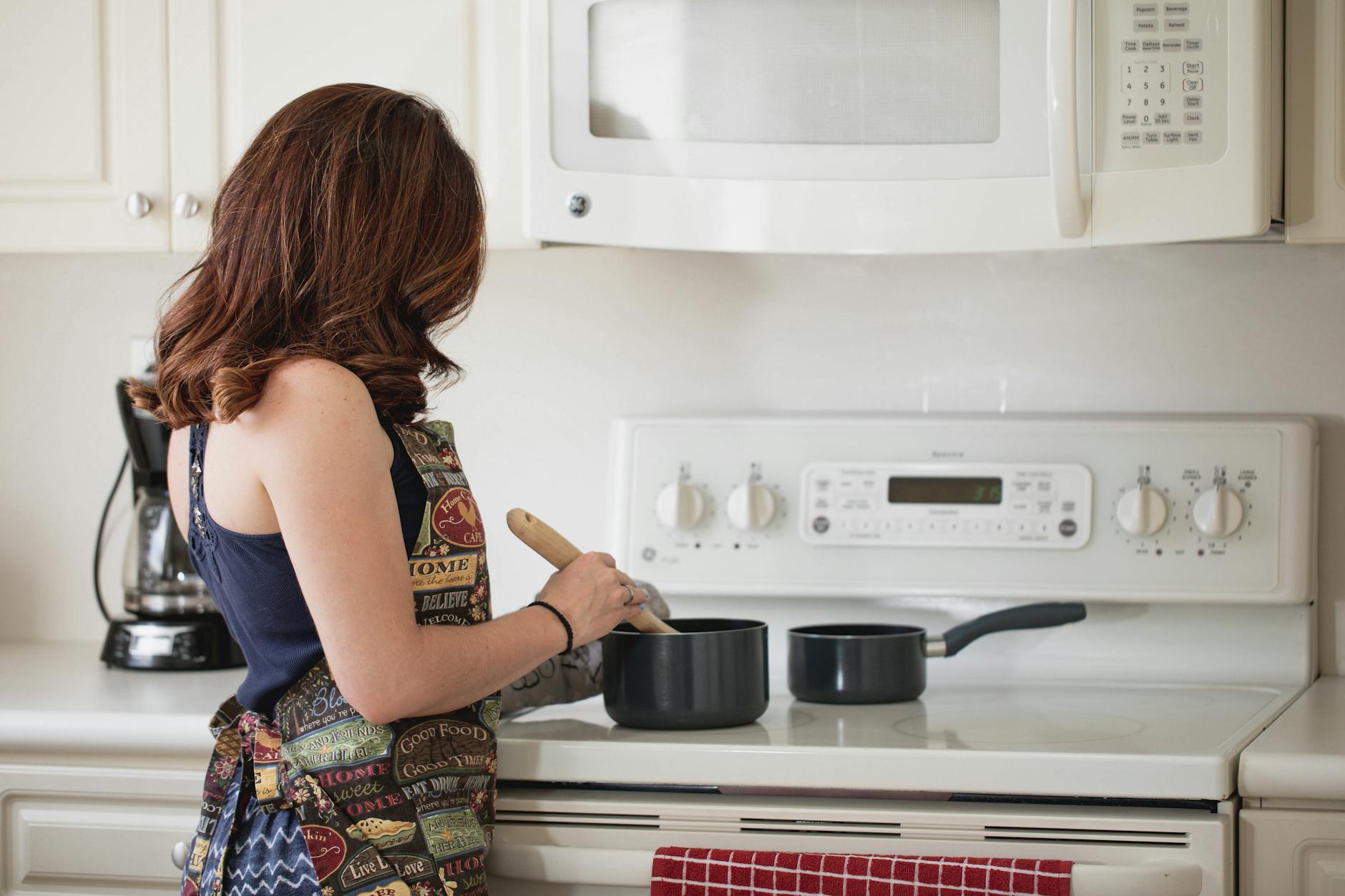
The Feng Shui Perspective on Flow
Feng Shui sees the home as a living system. We often explore how energy can move smoothly, without rushing or getting stuck.
The kitchen is often called the heart of the home. It’s where nourishment is created.
If the heart feels congested, the whole system can feel it. A kitchen that feels difficult to work in might add a low hum of stress to daily life.
The triangle concept mirrors this. It’s about noticing the path for the most important task of the room: preparing food.
When the path feels clear, your focus can be more on the food and the people, not the logistics.
The Three Points as Elements
In Feng Shui, everything connects to the five elements: Wood, Fire, Earth, Metal, and Water. We can see echoes of them here.
The Refrigerator (Water & Metal) preserves and cools. It often connects to the Water element. Its metal construction can also tie to the Metal element.
The Sink (Water) is a clear source of the Water element. It’s for cleansing and flow.
The Stove (Fire) is an undeniable source of Fire. It’s for transformation, warmth, and cooking.
Already, we see a story. We have Water and Fire in close proximity. In nature, these elements can be in balance or in a dynamic relationship.
This isn’t a problem to solve. It’s simply an observation. A kitchen naturally holds this interesting tension.
Observing Your Own Triangle
You don’t need a measuring tape to start noticing. The next time you make dinner, you might just pay attention.
How does it feel to move from one point to the next?
- Do you find yourself taking more than five or six steps between them?
- Do you have to walk around an island or table?
- Is a cabinet door or a chair often in the way?
- Does one leg of the triangle feel much longer than the others?
There are no wrong answers. This is just information.
Some people find that a very tight triangle makes them feel cramped. Others find a very spread-out one makes cooking feel like a chore.
The goal is to find what feels right for you and your space.
When the Path Isn’t Perfect
Many of us don’t have a textbook kitchen layout. That’s perfectly fine. Feng Shui is about working with what you have.
If your triangle feels broken or very large, small adjustments can sometimes help the energy feel more connected.
Creating a Sense of Connection
You might explore creating visual or energetic links between the three points.
- Lighting: Using similar warm lighting above or near each appliance can tie them together visually.
- Color: A shared color on the backsplash, a utensil holder, or small appliance can create a visual thread.
- Clear the Counters: A powerful adjustment is often simply clearing the countertops along the paths between these points. This can make the “walkways” feel more open.
- Flooring: A continuous floor material, without big rugs breaking the flow, can help the space feel unified.
These aren’t fixes. They are gentle nudges toward cohesion.
The Elemental Conversation in Your Kitchen
Let’s return to the elements. Remember the Water (sink, fridge) and Fire (stove) sitting close together.
In some Feng Shui views, placing these elements directly opposite or adjacent is sometimes seen as creating a dynamic conversation. But life is more nuanced than that.
A kitchen needs both water and fire to function. The question is about the quality of their relationship.
Is the sink sprayer pointed directly at the stove burners? That’s a very literal water-fire interaction.
More commonly, it’s about feeling. Does the space between your sink and stove feel chaotic or calm?
If it feels tense to you, some people like to introduce the Wood element. Wood can act as a mediator between Water and Fire.
A beautiful wooden cutting board left on the counter between them. A small potted herb on the windowsill. A green rug.
These aren’t magical cures. They are symbolic reminders of balance and growth. They can soften the visual space.
The Fourth Point: The Cook
There’s a vital fourth point in this triangle that often gets forgotten: you.
Your position at the stove is especially interesting to consider. In Feng Shui, having a solid wall behind you and a view of the room is often considered supportive.
It can feel like a position of awareness, where you can see who is entering the room.
If your stove is on an island with your back to the room, it might feel less secure to you. Notice if that’s true for you.
If it is, some people find a simple mirror or a reflective backsplash helpful. This lets you see the reflection of the room behind you.
Again, it’s about exploring a feeling of comfort and ease while you do the important work of cooking.
Beyond the Triangle: The Kitchen as a Whole
The triangle is a great starting point for awareness. But the entire kitchen matters.
Clutter in corners, expired food in the fridge, a burned-out bulb over the sink—these all can add up.
They might create little pockets of stagnant energy in a room that thrives on freshness and flow.
A clean, functioning kitchen, where tools are in good repair, can support the triangle beautifully. It all works together.
Permission for Imperfection
Maybe your fridge is at one end of a long galley and your stove is at the other. Maybe your sink is under a window, far from everything else.
That’s your kitchen’s reality. The invitation is not to rebuild.
The invitation is to ask: “Within this layout, what can I do to make my movement feel more graceful?”
Perhaps you create a dedicated prep station in the middle. Maybe you ensure the most common tools are stored at the midpoint.
You work with the triangle you have, not an ideal one from a magazine.
A Simple Starting Place
If you want to explore this in your own home, you could start with a single meal.
Cook something you know well. Pay attention to your feet. Notice where you pause, where you turn, where you feel a slight hesitation.
That’s all. Just notice.
Then, you might try one small thing. Clear off one counter path. Add a plant. Hang a small mirror.
See if the feeling in the room shifts, even just a little.
The kitchen triangle isn’t a rule to obey. It’s a lens to look through. It helps us see the connection between our physical movements and our feeling of ease.
Your kitchen is yours. Its layout, its quirks, its memories—they are part of your home’s story. This is simply about tuning into that story and seeing if a small edit makes the next chapter flow a bit more smoothly.
Featured Photo by Curtis Adams on Pexels.